World Labs × AMD: Where World Models Meet Compute
AMD’s $8.2 billion acquisition of World Labs is more than another AI deal. It is a bet that world models, simulation and Physical AI will become major future compute workloads.
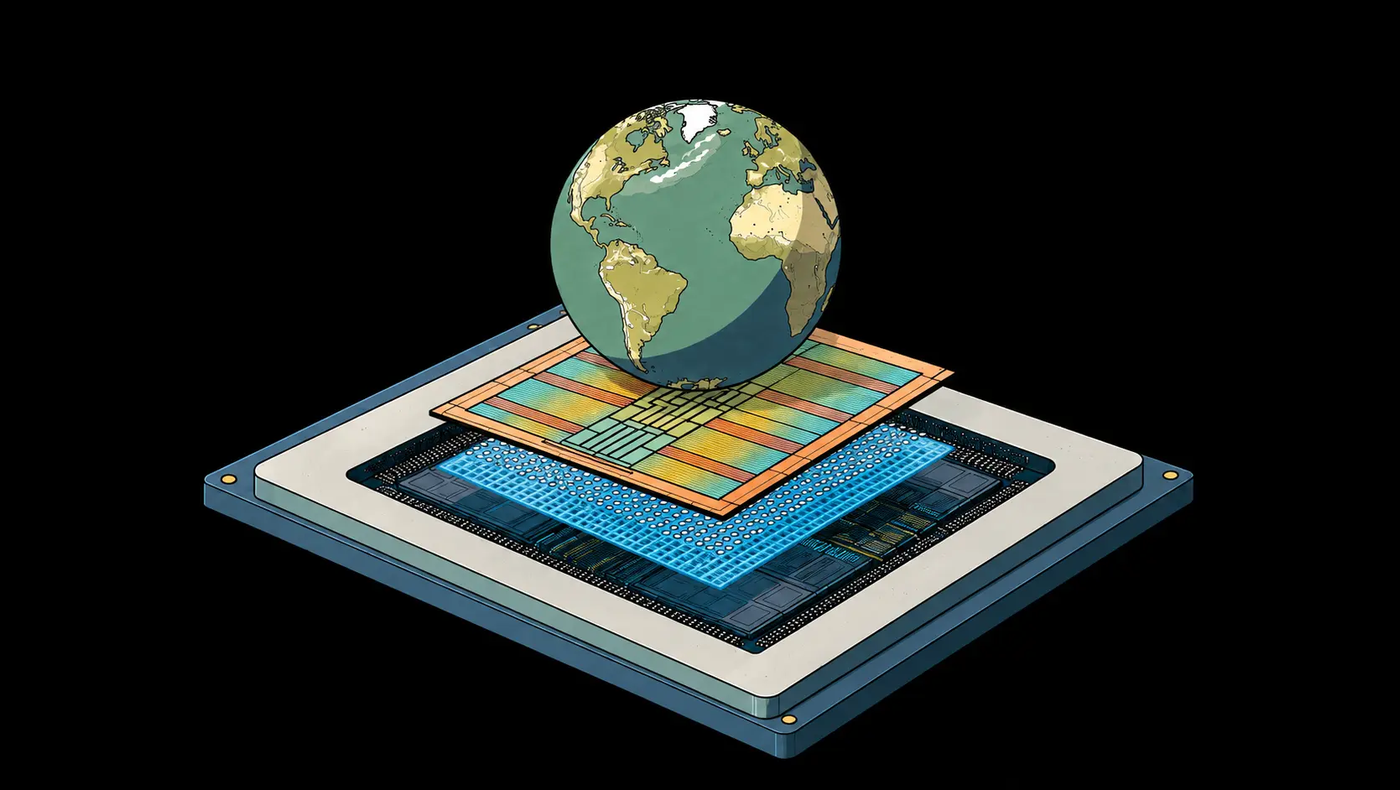
On September 28, AMD agreed to acquire World Labs for about $8.2 billion in stock. World Labs co-founder and CEO Fei-Fei Li will join AMD as EVP and Chief Scientist, while the World Labs team will continue its model research inside AMD. The companies were already working together on training and inference optimisation using AMD GPUs.

The deal matters because AMD is not simply buying another model company. It is bringing one of the leading world-model labs directly into a chip company, giving each side something the other needs.
What does World Labs build?
World Labs develops spatial-intelligence and world models: AI systems designed to understand, reconstruct and generate 3D environments from text, images and video, and eventually reason about how those environments behave. AMD also highlights World Labs’ work in robotic learning and simulation.
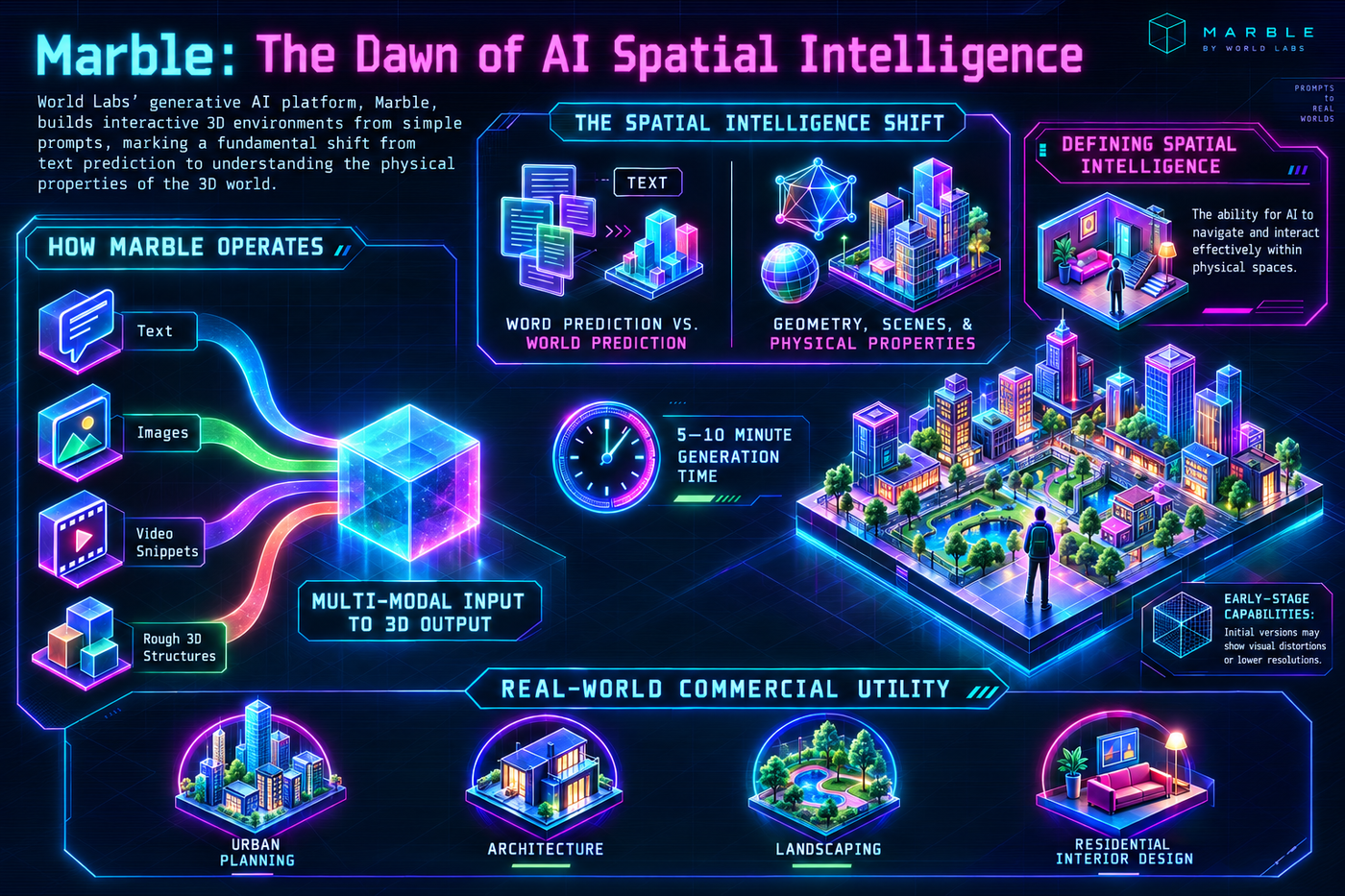
This matters for Physical AI because robots and autonomous systems need more than language intelligence. They need some understanding of space, objects, movement and what is likely to happen when they act.
A world model can also become a training environment. Instead of teaching a robot entirely through expensive real-world trial and error, developers can simulate environments, let the system practise thousands or millions of scenarios, and then transfer what it learns back into the real world.


That puts world models somewhere in the middle of the Physical AI stack:
compute → world models & simulation → robot models → physical machinesWhy World Labs benefits
World models are extremely compute-intensive. As World Labs pushes toward larger 3D environments, richer simulation and robotic learning, it needs more training capacity, faster inference, memory bandwidth and systems engineering.
Joining AMD gives it direct access to that infrastructure:
GPUs + ROCm + networking + systems engineering + hardware optimisation
The relationship had already started before the acquisition. World Labs says the two companies were working together on model training and inference optimisation on AMD GPUs, and that this collaboration led them to combine their hardware, software, models and applications more closely.
That can accelerate World Labs in two ways. First, its researchers can work much closer to the hardware instead of treating compute as an external dependency. Second, AMD gives it broader distribution across cloud, enterprise and edge infrastructure.
The trade-off is independence. As a standalone company, World Labs could remain relatively hardware-neutral. Inside AMD, its research and product roadmap will naturally become more closely tied to AMD’s ecosystem.
Why AMD benefits
For AMD, the deal is about getting much closer to the workloads its future chips will need to run.
Chip roadmaps are planned years in advance. If AMD owns a frontier model lab developing spatial intelligence, simulation and robotics workloads, it gets an early view into where the real bottlenecks are emerging: memory capacity, bandwidth, networking, latency, inference efficiency or entirely new computational patterns.
The loop becomes:
new models → expose compute bottlenecks → inform AMD hardware and software → better infrastructure → larger modelsThe competitive context is also hard to ignore.
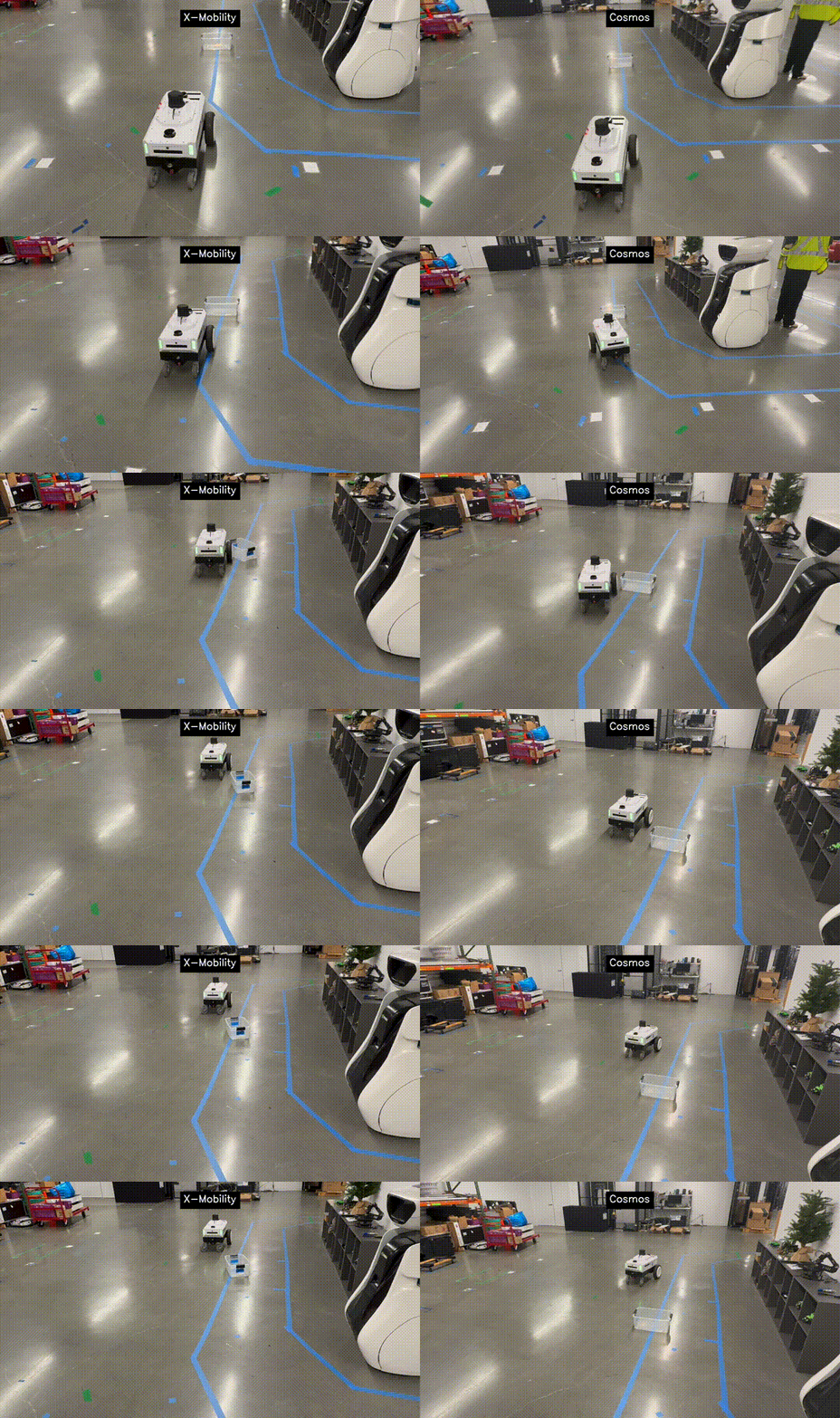
NVIDIA’s advantage is not only GPUs. It has built an ecosystem around them spanning CUDA, networking, simulation and increasingly Physical AI. Cosmos, for example, provides world foundation models that can simulate future states, generate synthetic training data and support robot-policy learning.
AMD already has the lower layers:
Instinct GPUs → ROCm → networking and systemsWorld Labs adds capabilities further up the stack:
world models → spatial intelligence → simulation → robotic learningSo the acquisition pushes AMD from being primarily a supplier of compute toward owning more of the software and model layers that create demand for that compute.
What does this signal about Physical AI?
The biggest signal is that Physical AI is merging with the infrastructure market, not just a standalone robotics market.
It is easy to think about Physical AI as humanoid robots, autonomous vehicles or drones. But those machines sit at the end of a much larger stack. Before a robot can operate reliably, developers need data, simulation environments, world models, training infrastructure, reasoning models and huge amounts of compute.
World models are becoming particularly important because physical systems cannot learn everything through real-world experience. Real-world data is expensive, slow and sometimes dangerous to collect.
Simulation changes the economics. A robot can fail millions of times virtually without breaking a machine or injuring anyone.
NVIDIA is already pushing heavily in this direction with Cosmos and Omniverse. Cosmos can simulate possible futures and generate synthetic data specifically for robots and autonomous vehicles.

AMD’s acquisition suggests it believes this layer is strategic enough that it should not simply rely on third-party model companies to build it.
My post about world models becoming a core Physical AI layer
The broader trend: AI is becoming more vertically integrated
The deal also fits a wider shift across AI. The industry once looked relatively modular:
chip company → cloud → model company → applicationThose boundaries are increasingly disappearing. NVIDIA builds hardware, networking, software and models. Cloud companies are designing their own accelerators. Model companies are becoming more involved in infrastructure.
AMD acquiring World Labs is another step in that direction. Physical AI may accelerate this trend because the connection between the layers is particularly tight. Better simulation changes how models are trained; model behaviour changes compute requirements; new hardware changes what simulations and models are possible.
Owning more of the stack allows these layers to be designed together.
The $8.2 billion price does not mean Physical AI is already mature
The acquisition is a strong signal about where AMD expects the market to go, not proof that world models already support an $8.2 billion standalone business.
World Labs is still a young company. Large-scale robotic learning remains difficult, and it is still unclear exactly where world models will sit in the eventual Physical AI stack. AMD is therefore buying more than current commercial traction, it’s buying:
research talent + models + IP + spatial-intelligence expertise + strategic access to a future workloadThat makes the deal as much about positioning as it is about World Labs’ products today.
Final thoughts
The tension seems moving beyond infrastructure competition to who can turn that infrastructure into products, workflows and systems for the next generation of technology (in this case Physical AI as that next gen of tech).