PSI: Can AI Industrialize Physics?
Inside PSI’s attempt to build virtual physicists, optimize the physical infrastructure behind AI, and turn scientific discovery into a scalable industry.

AI has become remarkably good at manipulating things humans have already created: text, images, software and increasingly mathematics. Physics is much harder to move.
That is the premise behind Physical Superintelligence a.k.a PSI, a Cambridge, Massachusetts startup that launched publicly in September 2026 with more than $58 million in seed funding led by Breakthrough Energy Ventures. Its ambition is enormous: build AI systems capable of eventually discovering new physics at machine scale. Its first commercial application, however, is much more practical: optimizing AI data centres.
What is PSI?
PSI describes itself as an AI-native physics laboratory. Its core idea is to automate parts of scientific research that currently depend heavily on humans: generating hypotheses, running simulations, checking results, designing experiments and deciding what to investigate next.
SO, my understanding is that PSI is trying to build AI that behaves like a team of physicists
At the centre is Emmy, PSI’s system of “virtual physicists”. Rather than generating one answer like a conventional chatbot, Emmy is designed to break a problem into competing hypotheses, investigate them in parallel and reject results that fail physical constraints.
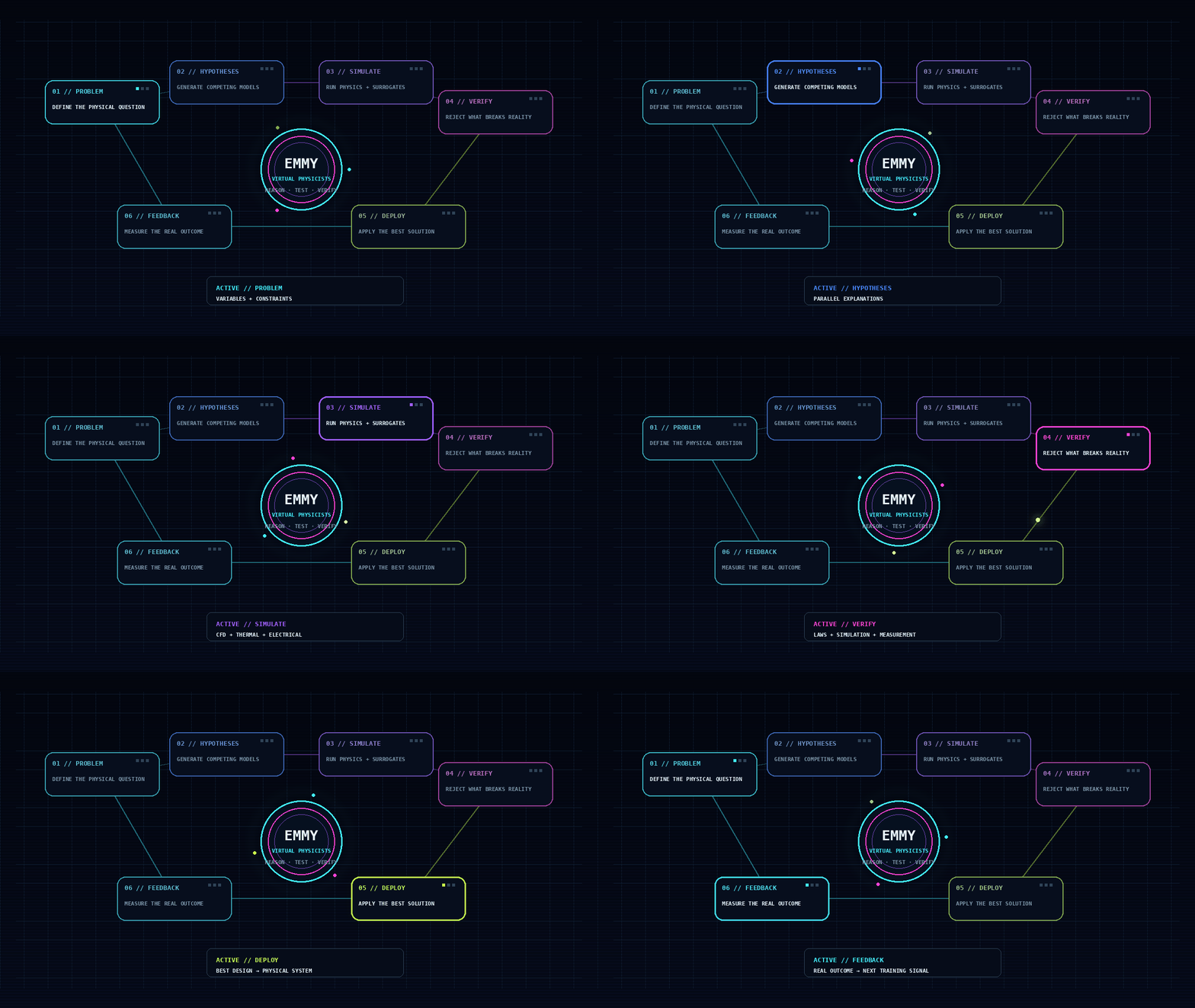
PSI calls longer workflows Autonomous Campaigns, where AI agents can move from initial problem formulation through modelling, experimentation and engineering.
Traditional physics tools such as computational fluid dynamics, thermal models and electrical simulations provide high-fidelity results. ML models can then approximate those simulations, allowing the system to explore much larger design spaces.
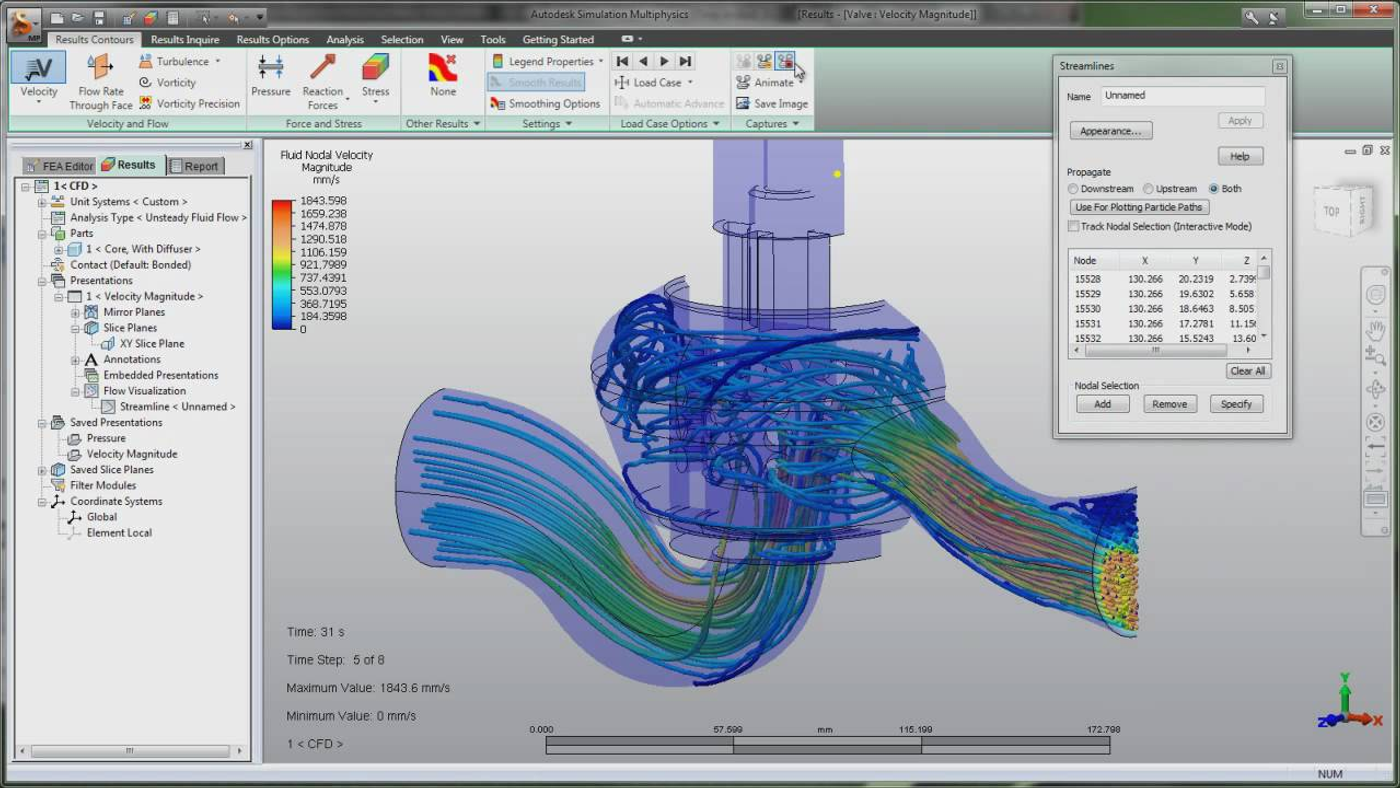
For example, running a detailed CFD simulation hundreds of thousands of times would be too slow and expensive. PSI can instead use AI agents to generate possible designs, then use fast surrogate models to estimate how those designs would behave. Only the most promising candidates are sent through slower, high-fidelity simulations for validation.
AI agents propose → surrogate models screen → physics simulations verify → verified results improve the system.
AI therefore does not replace physics simulation. It helps PSI explore far more possibilities while reserving expensive simulations for the designs most worth testing. Over time, this verification loop could become more defensible than the underlying language model itself.
What is the business?
PSI’s first market is AI data centres, which are increasingly constrained not only by access to chips but by power, heat and physical infrastructure.
A modern AI data centre is a tightly connected system. GPUs consume electricity and generate heat. Cooling systems consume more electricity. Network architecture determines where computation happens, changing where heat is generated. Electrical and cooling limits ultimately determine how much compute can operate safely inside a facility.
These systems are often modelled separately. PSI wants to create a physics twin of the whole facility and optimize power, compute, networking and cooling together.
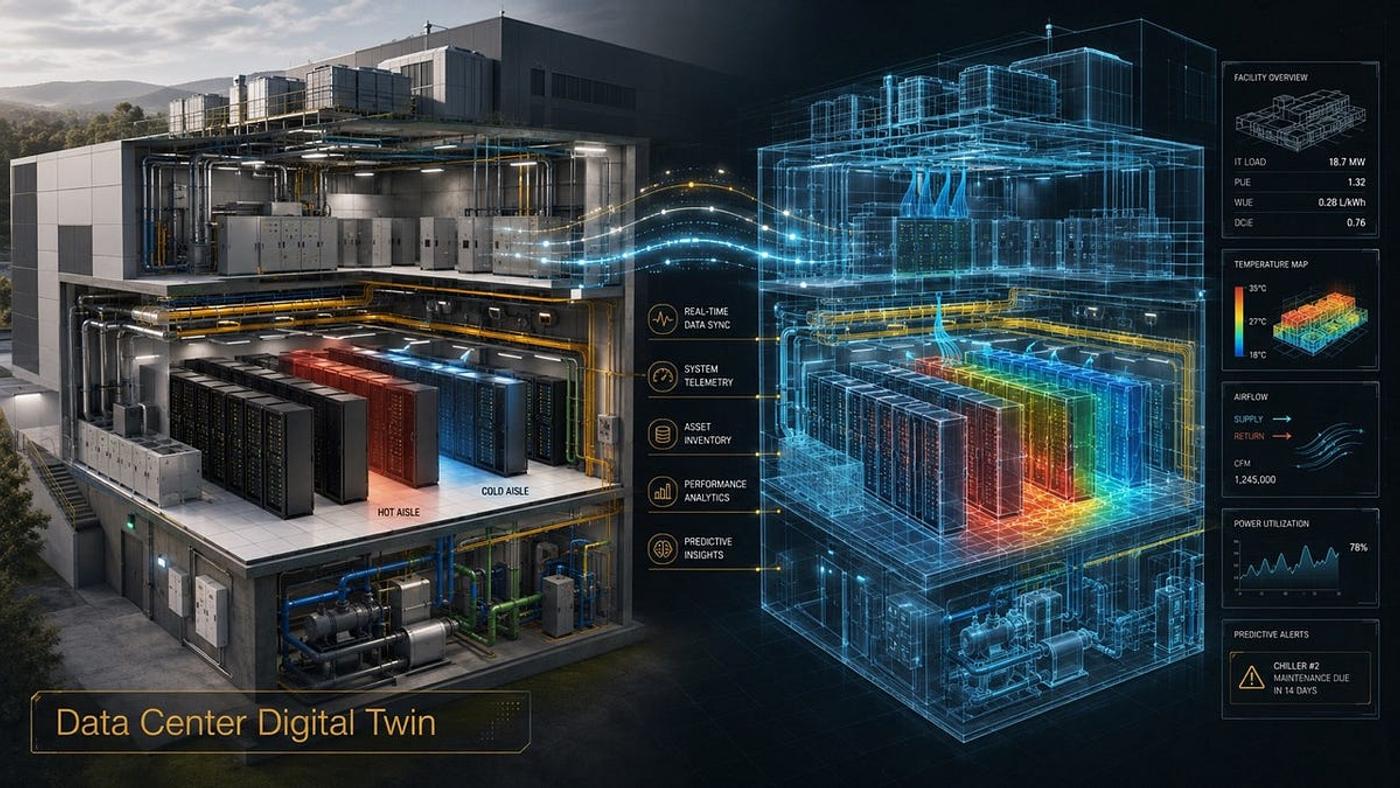
For customers, the proposition is simple:
Can PSI unlock more compute from the same physical infrastructure?
That could mean lower cooling costs, higher rack density, fewer thermal bottlenecks or more GPUs within the same power envelope.
Data centres are an attractive starting market because improvements are highly valuable and facilities generate rich operating data. Each deployment gives PSI real-world feedback on how its models perform, creating a potential flywheel:
customer deployment → proprietary data → better models → better outcomes → more deployments.
The challenge is scalability. If every customer requires months of custom engineering, PSI remains closer to a consultancy. If each deployment makes the next one faster and more repeatable, it can become a true software platform.
The founders
PSI has three co-founders with complementary backgrounds.
Matt Pines, CEO, comes from physics, technology strategy and national security. Before PSI, he worked across emerging technology, intelligence and technology policy.
Dr. Alexander Wissner-Gross, Chief Scientist and Chief Strategy Officer, is the scientific centre of gravity. His background spans physics, mathematics, electrical engineering, machine learning and computational science, with degrees from MIT and a physics PhD from Harvard.
Alex Klokus, President, comes from company building and venture creation. He previously co-founded science and technology media company Futurism.
The wider team brings experience across organisations including MIT, Harvard, Stanford, Oxford, Los Alamos, NVIDIA, Google and Meta. This multidisciplinary structure matters because PSI is simultaneously trying to build frontier AI, scientific-computing infrastructure, physics models and enterprise software.
Market Landscape
PSI sits between scientific AI and industrial engineering. Its ecosystem spans potential enterprise customers, enabling technology suppliers and competitors across physics AI, engineering simulation and autonomous science. Customer entries are potential customers only and do not imply a publicly confirmed relationship.
▣ Customers
▣ Suppliers & Enablers
▣ Competitors
PSI sits between scientific AI and industrial engineering. Its ecosystem has three sides: companies that could buy its optimisation technology, infrastructure and software providers that enable it, and competitors trying to automate parts of the same engineering or scientific workflow.
The same company can occupy more than one position. NVIDIA can supply the compute PSI needs while also building physics-AI software. Ansys and Siemens can provide simulation infrastructure while adding AI directly into their own engineering workflows. AWS could theoretically be both a compute provider and an eventual data-centre optimisation customer.
This makes PSI’s position in the value chain strategically important: suppliers and enablers → PSI → customers, while PSI simultaneously competes with companies trying to control the engineering workflow or the autonomous-science layer.
What are the constraints?
Simulation is not reality
Every model contains assumptions. Real systems contain sensor noise, manufacturing tolerances, unexpected environmental conditions and behaviours not represented in training data. A model can perform extremely well in familiar operating regimes and fail badly when conditions change.
Trust
Physics AI has far less room for hallucination than consumer AI. A wrong paragraph is inconvenient; a wrong recommendation inside a billion-dollar data centre can be extremely expensive.
Industrial customers need evidence: what assumptions were made, which simulations support the conclusion, how uncertain the model is and whether an engineer can reproduce the result.
Compute
PSI wants to use AI and simulation to reduce the cost of physical infrastructure, but those models themselves consume expensive compute. If discovering £100,000 of savings costs £500,000 in GPU time, the economics do not work.
The system therefore needs to intelligently combine cheap reasoning, fast surrogate models and expensive high-fidelity simulation.
Services trap
PSI could still build a good business by doing highly customized engineering projects, but it would be less scalable and less profitable per additional customer than a true software platform. The critical question is whether customer 10 is materially easier to deploy than customer 1.
How to be commercially successful?
For a data-centre customer, success should look like lower cooling costs, higher compute density, more usable power capacity, faster facility design or avoided infrastructure capex.
The second requirement is repeatability. Deployment needs to become faster and cheaper over time. Otherwise PSI remains a services business.
Third, PSI must build a proprietary data advantage. Frontier AI models will continue improving, and incumbents will keep adding AI. What competitors cannot easily reproduce is a private history of prediction → simulation → deployment → physical measurement → verification.
Fourth, engineers need to trust the system. PSI needs to show assumptions, simulations, uncertainty ranges, telemetry and reproducible evidence.
Finally, for this stage, it may need focus. Data centres alone represent a huge market. Semiconductors, aerospace, energy and materials are equally tempting, but trying to solve everything too early risks turning a potentially strong platform into a collection of research projects.
Final thoughts
The bet is: customer problems generate real-world data, that data improves verification, better verification improves the AI, and better AI can solve harder problems.
The challenge is proving this works at scale. PSI is still early, customer traction is limited, and competition is intense. The near-term test is simple: can Emmy outperform existing engineers and software in real data centres, repeatedly and with software-like economics?
If it can, PSI gains something powerful: customers who pay for the product while also making the AI smarter.