
Isar Aerospace Just Reached Orbit, Why It Matters?
Isar Aerospace reached orbit from continental Europe. Here is why the milestone matters for launch, defence demand, satellite services and the next wave of space winners.
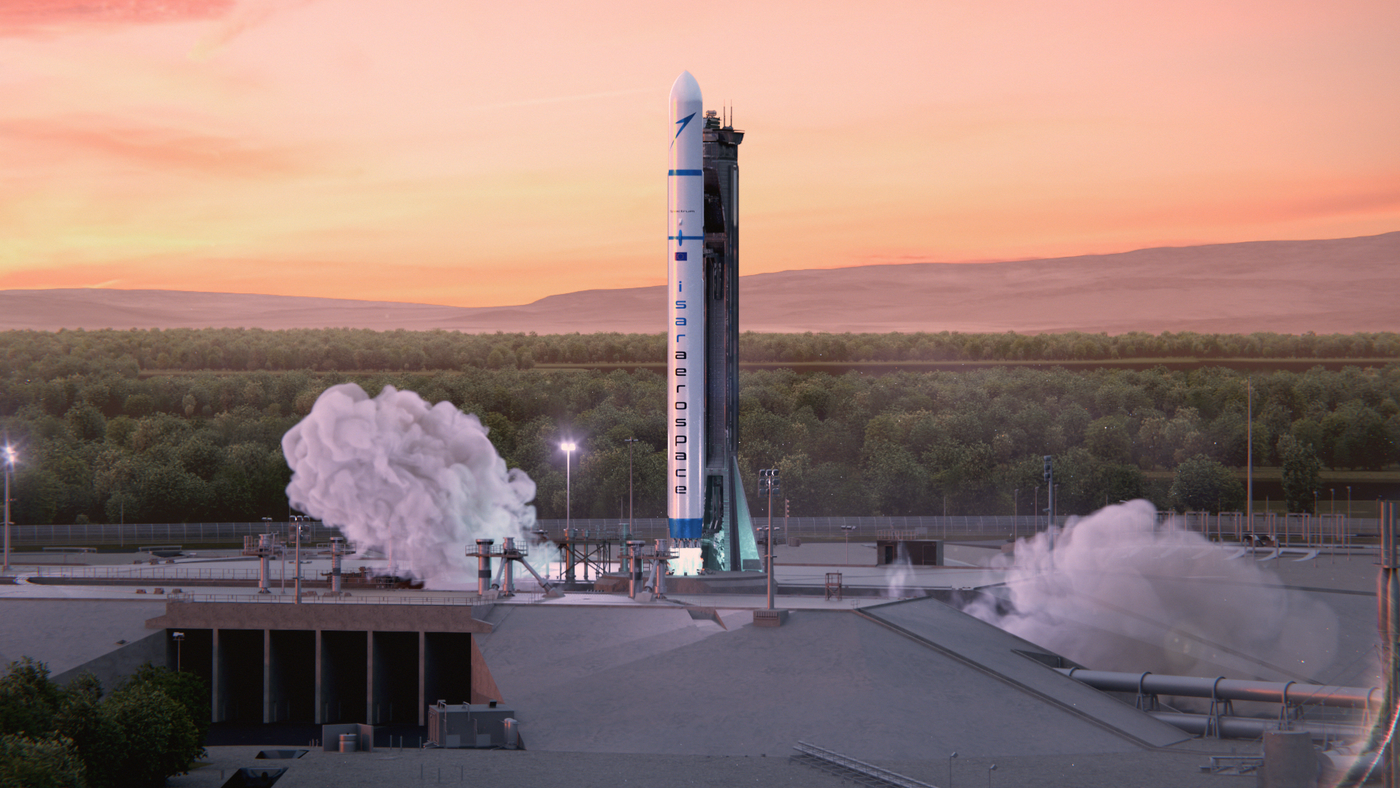
On 5 September 2026, a German startup did something no continental European company had done before: Isar Aerospace's Spectrum rocket reached orbit, launching from Andøya, Norway, carrying five small satellites and a technology experiment. Four days later, Isar confirmed all customer payloads had been released and most satellites were up and running.
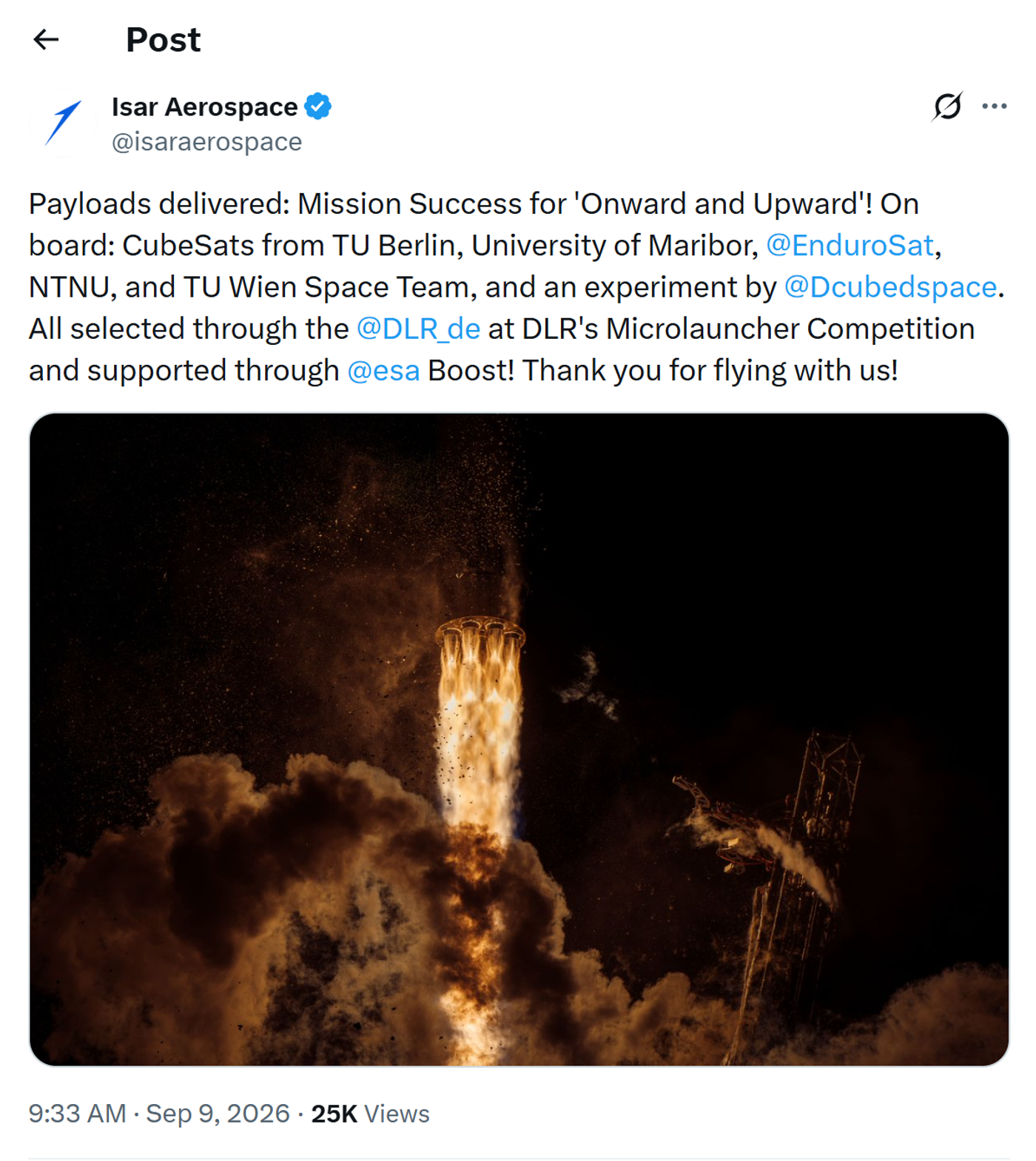
Its first flight was in March 2025, ended after about 30 seconds. Eighteen months later: orbit. That turnaround says a lot about the company.
What is Isar Aerospace?
Isar is a German launch company founded in 2018, headquartered near Munich. It builds rockets and sells rides to orbit for satellite operators, governments and research organisations, and it manufactures and tests almost everything in-house. Spectrum is advertised to carry up to 1,000 kg to low Earth orbit; this flight was about proving the rocket works, not maxing out capacity.
Two money moves make the launch bigger than a technical milestone:
- June 2026: a €270 million Series D to scale production and launch infrastructure.
- August 2026: a €197.8 million ESA contract under the European Launcher Challenge. It is milestone-based, so it's conditional programme support rather than cash in the bank.
What it means for Europe and globally
In Europe, Ariane and Vega already fly. What Isar adds is another provider, another launch site, real competition (which is exactly what ESA's Launcher Challenge was designed to encourage).
The deeper value is control. When a customer needs a specific orbit, a specific launch window, or dependable access while geopolitics get messy, having options on your own continent is worth real money, not just the sticker price of the launch.
Globally, the effect is one more credible supplier for specialised missions. Real traction arrived: Isar has already signed to launch Astroscale Japan's debris-removal mission in 2027–2028. Whether Isar becomes a true competitor depends on what comes next: frequent, reliable, affordable launches. Orbit once is capability. Orbit repeatedly is a business.
What this says about the market
Three signals stand out:
Defence as demand engine
Isar says its demand shifted from almost entirely civilian to 60% defence within twelve months (company-reported, not a revenue breakdown). Security is very much the potential buyer.
Capital is concentrating
Global space investment +60% to €11.7 billion in 2025, while Europe's -8% to €1.4 billion, with five rounds contributred €629 million of it. Investors are picking a few horses they believe can actually deliver.
The real money is downstream
ESA estimates satellite communications, navigation and Earth-observation services generated a ~€490 billion market in 2025, versus €75 billion for manufacturing and launch.
Who thrives over the next few years?
My watchlist for next few years (confidence = demand growth, not stock tips):
| Area | Companies | Why |
|---|---|---|
| Defence satellite intelligence, high confidence | ICEYE, Rheinmetall | Their JV won a German reconnaissance contract worth (~€1.7 billion through 2030), with customers buying ongoing intelligence, not one-off hardware. |
| Secure comms & ground infrastructure, high confidence | Airbus DS, Thales Alenia, OHB, Aerospacelab | The EU's IRIS programme names these suppliers and plans (348 satellites, first launches 2029). Manufacturing work starts long before service revenue. |
| Satellite manufacturing & components, high confidence | MDA Space, Rocket Lab | Already converting demand into revenue: MDA's satellite systems grew (42.8% in H1 2026). |
| Satellite data in everyday business, medium-high confidence | ICEYE, analytics specialists | Sompo Japan just signed to use ICEYE's (flood intelligence for disaster and claims response). Same model extends to infrastructure monitoring and planning. |
| Dedicated launch, medium confidence | Isar Aerospace | Orbit + institutional backing de-risk it. The next proof points: consecutive successes, repeat customers, cadence, margins. |
| Servicing & debris removal, speculative | Astroscale | Funded missions like (ADRAS-J2) prove the need; repeatable commercial service still has to prove the economics. |
And beyond space itself, I'd bet on the same priorities spilling into industrial automation, precision manufacturing, cybersecurity and infrastructure resilience. Anyone helping customers build dependable systems and cut critical dependencies.
The bottom line
Reaching orbit answers Isar's technical question. The business question, including its ambition to build up to 40 rockets a year, gets answered by cadence, not announcements.