Quantum 101: Quantum Sensing - The Very First Application of Quantum
A beginner-friendly deep dive into quantum sensing: what it is, how quantum mechanics makes it possible, and how it is used in fields like healthcare, navigation, geology, semiconductors, and defense.
Quantum sensing is one of the most practical and commercially interesting areas of quantum technology. While quantum computing gets most of the attention, quantum sensing may reach useful real-world applications earlier in some industries because it does not always require a large fault-tolerant quantum computer.
At the simplest level:
Quantum sensing means using quantum systems to measure the physical world with extremely high sensitivity.
It uses atoms, photons, electrons, defects in crystals, or other quantum systems as tiny probes. These probes react to the world around them. By measuring how their quantum state changes, we can detect magnetic fields, gravity, time, acceleration, rotation, temperature, electric fields, and more.
1. What is sensing?
A sensor is anything that detects a change in the world and turns it into useful information.
Examples:
- A thermometer senses temperature.
- A microphone senses sound waves.
- A camera senses light.
- A compass senses magnetic fields.
- A GPS receiver uses timing signals to sense position.
- An MRI machine senses signals from atoms in the body.
So sensing means:
Measuring something physical and converting it into information.
Quantum sensing does the same thing, but it uses quantum systems as the sensing material.
2. What is quantum sensing?
Quantum sensing is a technology that uses quantum physics to measure tiny changes in the environment.
A simple definition:
Quantum sensing uses atoms, photons, electrons, or defects in crystals as ultra-sensitive probes to measure things like magnetic fields, gravity, time, motion, temperature, or electric fields.
Examples of quantum sensors include atomic clocks, quantum magnetometers, quantum gravimeters, quantum accelerometers, quantum gyroscopes, nitrogen-vacancy diamond sensors, superconducting sensors, and atom or photon interferometers.
The key idea is:
Prepare a quantum system
→ let the environment affect it
→ measure how the quantum state changed
→ calculate the physical signal
3. Why quantum objects are useful as sensors
Quantum objects are useful because they are extremely sensitive to the environment.
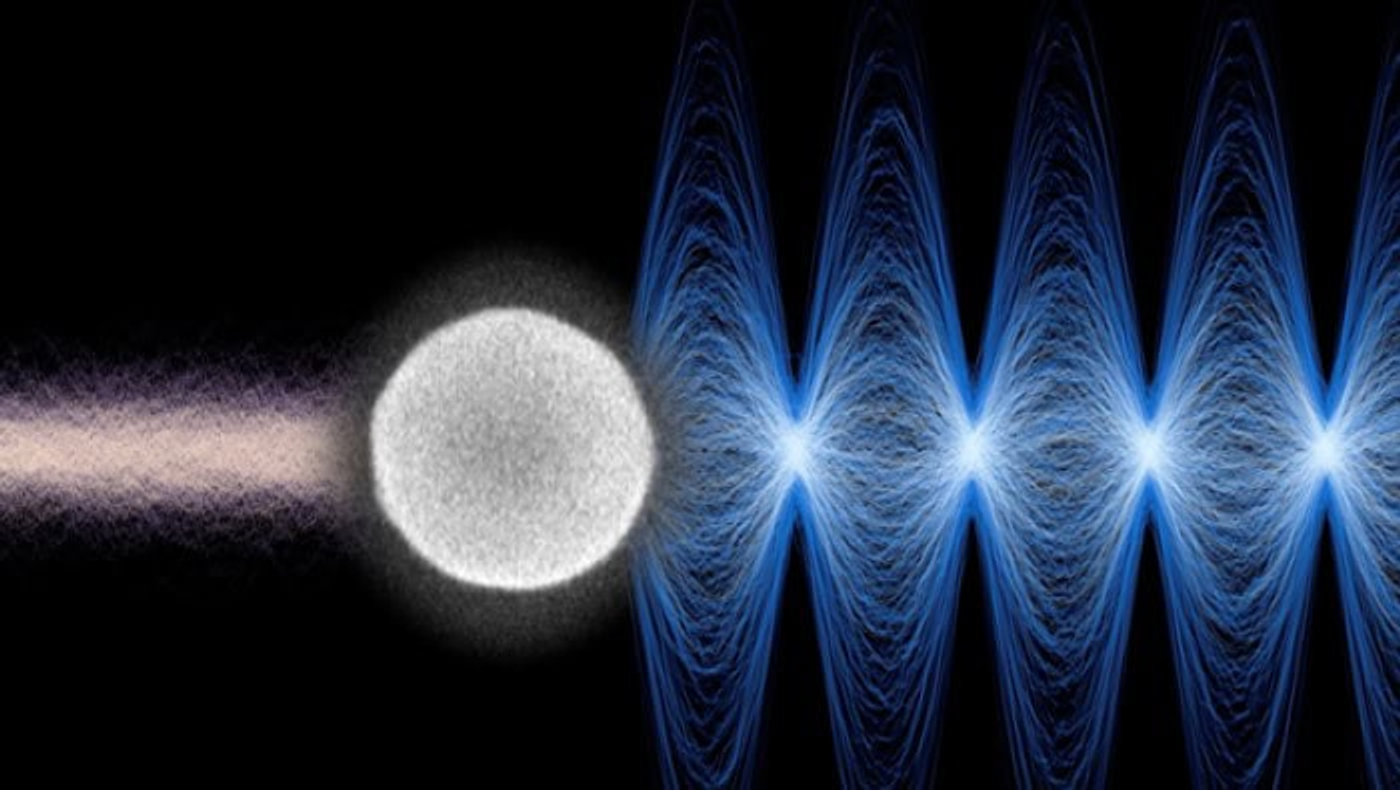
A small change in magnetic field, gravity, motion, temperature, or time can slightly change a quantum state. If we measure that change carefully, we can infer what happened in the environment.
Quantum object starts in a known state
→ environment affects it
→ quantum state changes
→ we measure the change
→ we infer magnetic field / gravity / time / motion / temperature
A simple analogy:
A quantum system is like a very delicate musical instrument. The environment slightly changes its pitch, and by measuring the pitch shift, we know what changed outside.
4. The quantum physics behind quantum sensing
Quantum sensing mainly uses these quantum mechanics ideas:
- Quantization
- Superposition
- Phase
- Interference
- Spin
- Entanglement
- Measurement
Let’s break down what these are!
4.1 Quantization: nature has discrete energy levels
In classical physics, energy can feel continuous, like turning a volume knob.
In quantum physics, many systems have discrete energy levels. An atom cannot have just any energy. It has allowed energy levels, like steps on a staircase.
Energy level 3  ─────────
Energy level 2  ─────────
Energy level 1  ─────────
Ground state    ─────────
An atom can jump between these levels by absorbing or emitting energy.
This matters for sensing because the gap between quantum energy levels can shift when the environment changes. A magnetic field, electric field, gravity, acceleration, or temperature can all affect the quantum system in measurable ways.
So if we track quantum energy levels very precisely, we can sense the environment.
4.2 Superposition: a quantum system can be in two states at once
A classical bit is either:
0 or 1A quantum bit, or qubit, can be in a combination of both:
α|0⟩ + β|1⟩This is called superposition.
In sensing, superposition is powerful because the quantum system can act like it is comparing two possible states or paths at the same time.
Please revisit Quantum 101: My Understanding of Quantum Physics in here.
Imagine splitting one quantum object into two possibilities:
Path A + Path BThen the environment affects each path slightly differently. When the paths come back together, the difference between them tells us something about the environment.
That is the basis of many quantum sensors.
4.3 Phase: the hidden clock of a quantum state
Phase is one of the most important concepts in quantum sensing.
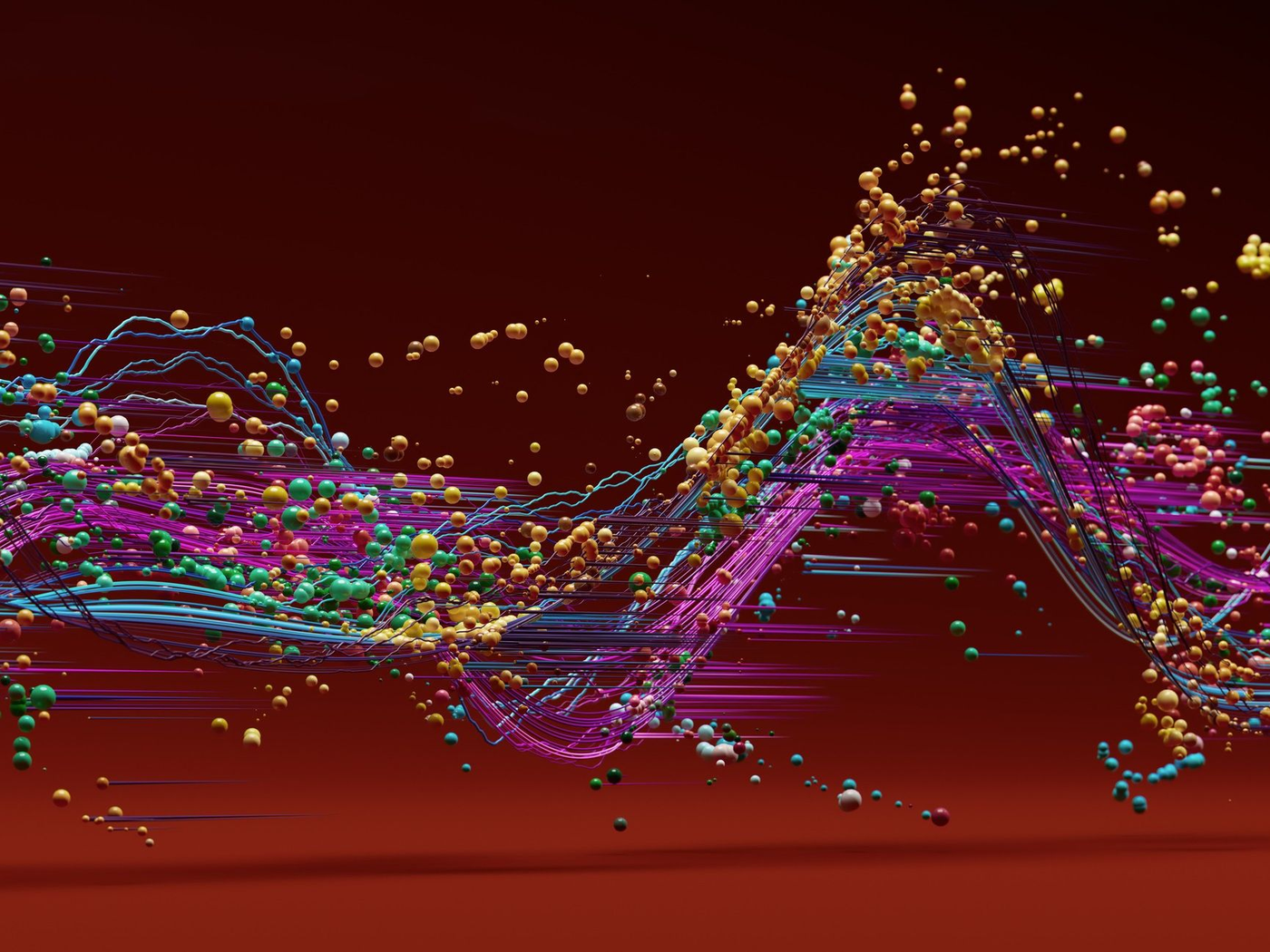
A quantum state behaves like a wave. Phase describes where that wave is in its cycle.
Wave 1:   /\/\/\/\/\
Wave 2:     /\/\/\/\/\
The second wave is shifted slightly. That shift is a phase difference.
When a quantum system experiences a magnetic field, gravity, acceleration, or time difference, its phase can shift.
Many quantum sensors are really measuring:
How much did the quantum phase change?
That phase change can reveal the physical quantity we care about.
Magnetic field changes quantum phase
→ measure phase shift
→ calculate magnetic field strength
or:
Acceleration changes phase between atomic paths
→ measure phase shift
→ calculate acceleration
Quantum sensors can be very sensitive because phase can be measured extremely precisely.
4.4 Interference: turning invisible phase into measurable signal
Phase itself is not always directly visible, so quantum sensors often use interference.
Interference means waves combine.
If two waves align, they amplify each other. If two waves are opposite, they cancel each other.
Please revisit Quantum 101: My Understanding of Quantum Physics in here.
Quantum sensors use interference to convert tiny phase differences into measurable changes in probability.
Create superposition
→ environment changes phase
→ recombine states
→ interference pattern changes
→ measure output
This is similar to how quantum computers use interference, but in quantum sensing the goal is not to compute an answer. The goal is to measure the environment.
4.5 Spin: a tiny quantum compass
Many quantum sensors use spin.
Spin is a quantum property of particles like electrons, atoms, or atomic nuclei. It is not literally a spinning ball, but it behaves a bit like a tiny magnetic compass.
Because spin is magnetic, it reacts to magnetic fields.
Electron spin starts in a known state
→ magnetic field affects it
→ spin phase changes
→ laser or microwave measurement reads the change
→ calculate magnetic field
This is the basis of some diamond quantum sensors.
4.6 Measurement: converting quantum information into classical data
Quantum states are delicate. When we measure them, we usually get a classical result.
For example:
Quantum state: α|0⟩ + β|1⟩
Measurement result: 0 or 1
In quantum sensing, we usually repeat the experiment many times because quantum measurement is probabilistic. One measurement gives one result, but many repeated measurements reveal the probability pattern.
Prepare quantum state
→ expose to environment
→ measure
→ repeat many times
→ calculate signal statistically
5. The general structure of a quantum sensor
Almost every quantum sensor follows this pattern:
Step 1: Choose a quantum system
This could be atoms, ions, photons, electrons, superconducting circuits, defects inside diamonds, or ultra-cold atom clouds.
Step 2: Prepare the quantum state
Use lasers, microwaves, magnetic fields, or cooling systems to put it into a known state.
Put atom into ground state
Put electron spin into |0⟩
Create superposition of |0⟩ and |1⟩
Step 3: Let the environment interact with it
The thing we want to measure affects the quantum state.
Magnetic field changes spin phase
Gravity changes atom path phase
Temperature changes energy transition
Electric field shifts energy level
Step 4: Manipulate the state
Use quantum control pulses, lasers, or microwave pulses to make the change measurable.
Step 5: Measure the final state
Read out light, fluorescence, atomic population, interference pattern, voltage, or current.
Step 6: Convert the result into a physical measurement
Use calibration and math to translate the measured quantum change into magnetic field strength, gravity gradient, time difference, rotation, acceleration, temperature, or electric field.
6. Example:
6.1 Atomic clocks
An atomic clock is one of the most successful quantum sensors.
It uses atoms as extremely stable timekeepers.
Atoms have very stable energy transitions. For example, an electron in an atom can jump between two energy levels at a very specific frequency. That frequency becomes the clock tick.
Classical clock:
pendulum swing
quartz vibration
Atomic clock:
atom energy transition frequencyAtomic clocks are essential for GPS, telecom networks, financial market timing, scientific experiments, navigation, and testing relativity.
Atomic clocks are quantum sensors because they use quantum transitions to measure time.
6.2 Quantum magnetometers
A magnetometer measures magnetic fields.
A quantum magnetometer uses quantum systems like atoms or electron spins to measure magnetic fields very precisely.
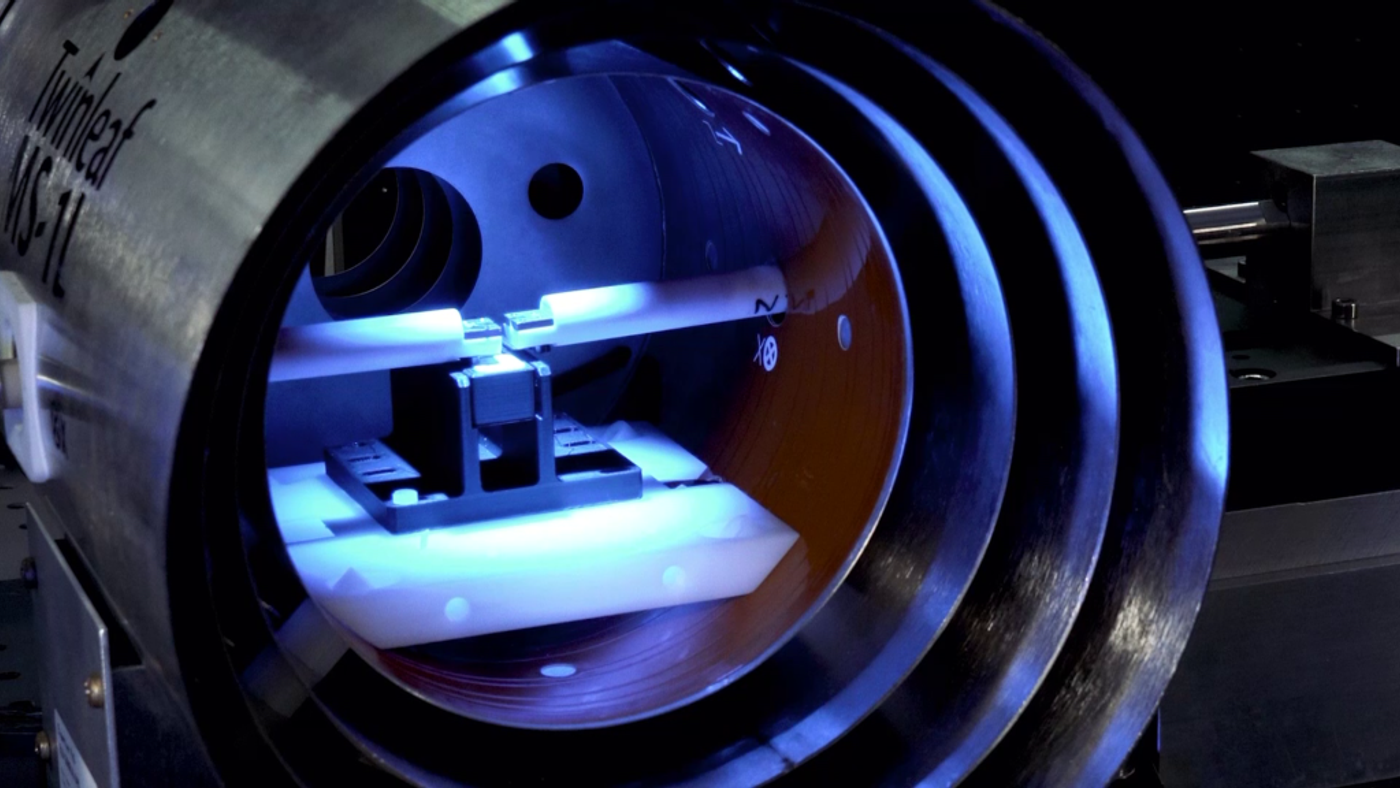
One famous type uses NV centers in diamond.
NV means nitrogen-vacancy. Inside a diamond crystal, one carbon atom is replaced by nitrogen, and next to it there is a missing carbon atom. That defect behaves like a tiny quantum system.
Diamond crystal
→ tiny defect inside
→ defect has electron spin
→ spin reacts to magnetic field
How it works:
- Shine green laser on the diamond.
- The NV center is prepared into a quantum spin state.
- Apply microwave pulses to manipulate the spin.
- External magnetic field changes the spin energy or phase.
- The NV center emits red light.
- The brightness of the red light tells us the spin state.
- From that, we calculate the magnetic field.
Potential applications include brain signal sensing, medical imaging, battery diagnostics, semiconductor testing, material science, navigation, and detecting tiny currents in chips.
Simple version:
The diamond defect behaves like a tiny quantum compass. Magnetic fields change its spin, and light reveals the change.
6.4 Quantum gravimeters
A gravimeter measures gravity.
A quantum gravimeter often uses cold atoms.
The idea is to let atoms fall and behave like waves. Quantum mechanics says atoms are not just particles; they also have wave-like behavior.
So we can create an atom interferometer.
Cool atoms
→ use lasers to split atomic wave into two paths
→ gravity affects the paths differently
→ recombine paths
→ interference pattern reveals gravitational acceleration
Applications include underground mapping, detecting tunnels or caves, mineral exploration, monitoring water reservoirs, geology, navigation without GPS, and infrastructure monitoring.
Simple version:
A quantum gravimeter measures how gravity changes the phase of falling atom waves.
6.5 Quantum accelerometers
An accelerometer measures acceleration.
Your phone already has a classical accelerometer. It knows when you rotate or move your phone.
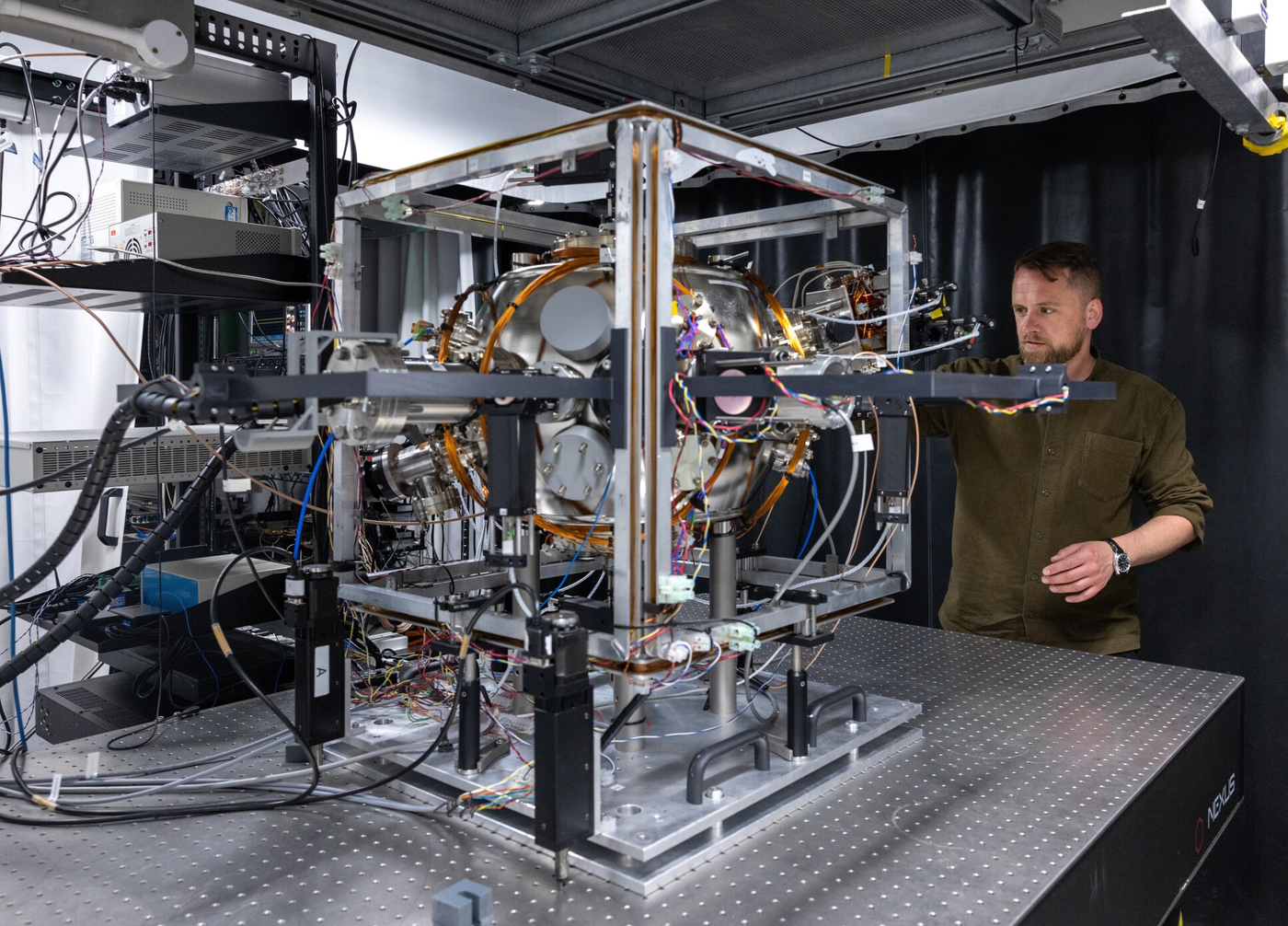
A quantum accelerometer can use atoms as very precise inertial sensors.
cold atoms
→ split into quantum paths
→ acceleration changes phase
→ interference gives acceleration
A highly accurate quantum accelerometer could help navigation when GPS is unavailable, especially for submarines, aircraft, underground vehicles, spacecraft, military navigation, and autonomous systems.
Simple version:
If you know acceleration over time, you can estimate movement and position without GPS.
6.6 Quantum gyroscopes
A gyroscope measures rotation.
Classical gyroscopes are used in phones, planes, ships, rockets, and drones.
A quantum gyroscope can use atoms or photons in an interferometer. Rotation causes a phase shift between paths. The sensor measures that phase shift to calculate rotation.
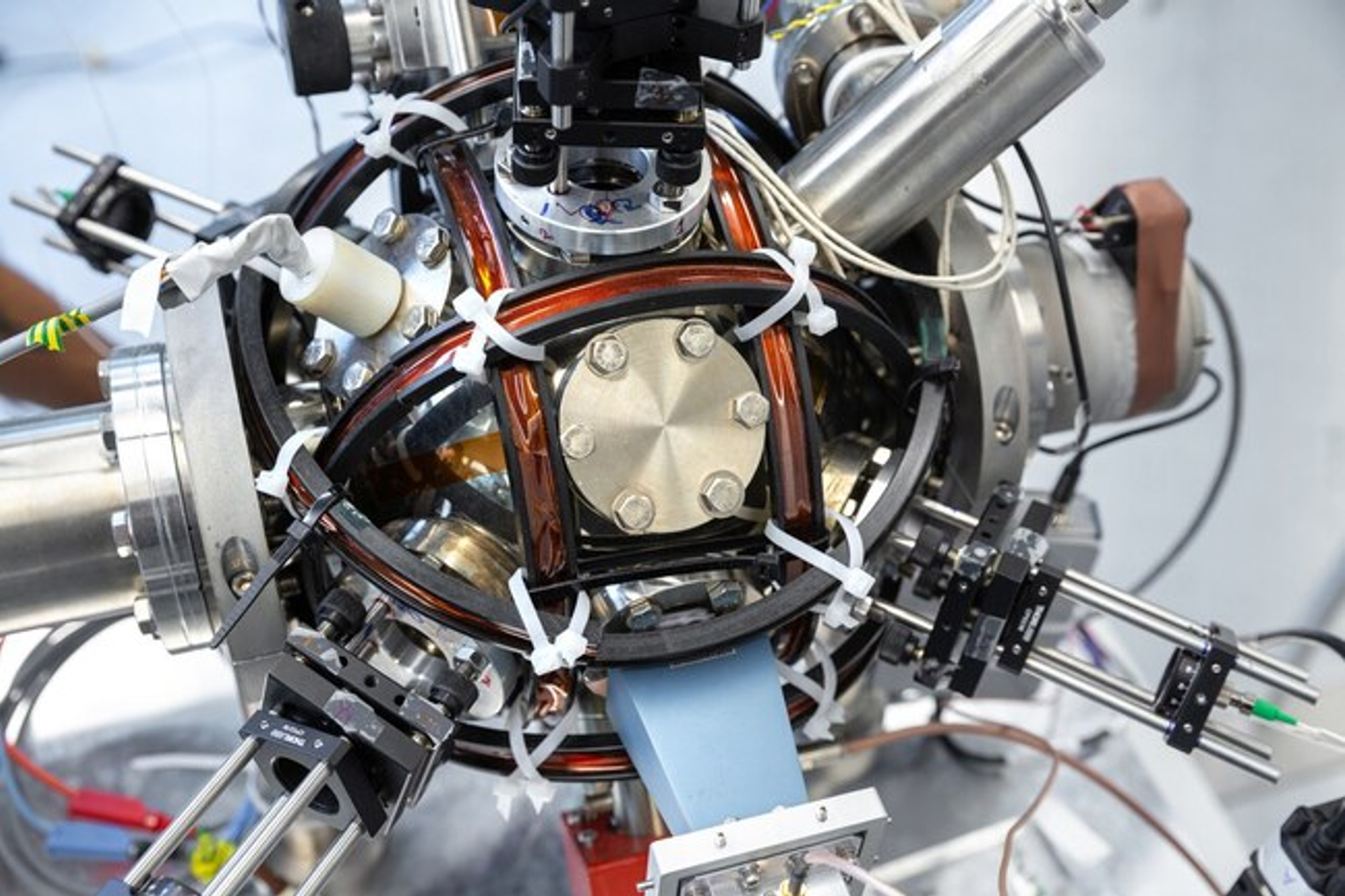
Applications include navigation, aerospace, defense, robotics, autonomous vehicles, and geophysics.
Simple version:
A quantum gyroscope measures rotation by seeing how rotation changes the phase of matter waves or light waves.
6.7 Quantum imaging
Quantum physics can also improve imaging.
One approach is to use quantum properties of light, such as single photons or entangled photons, to improve imaging sensitivity or reduce noise.
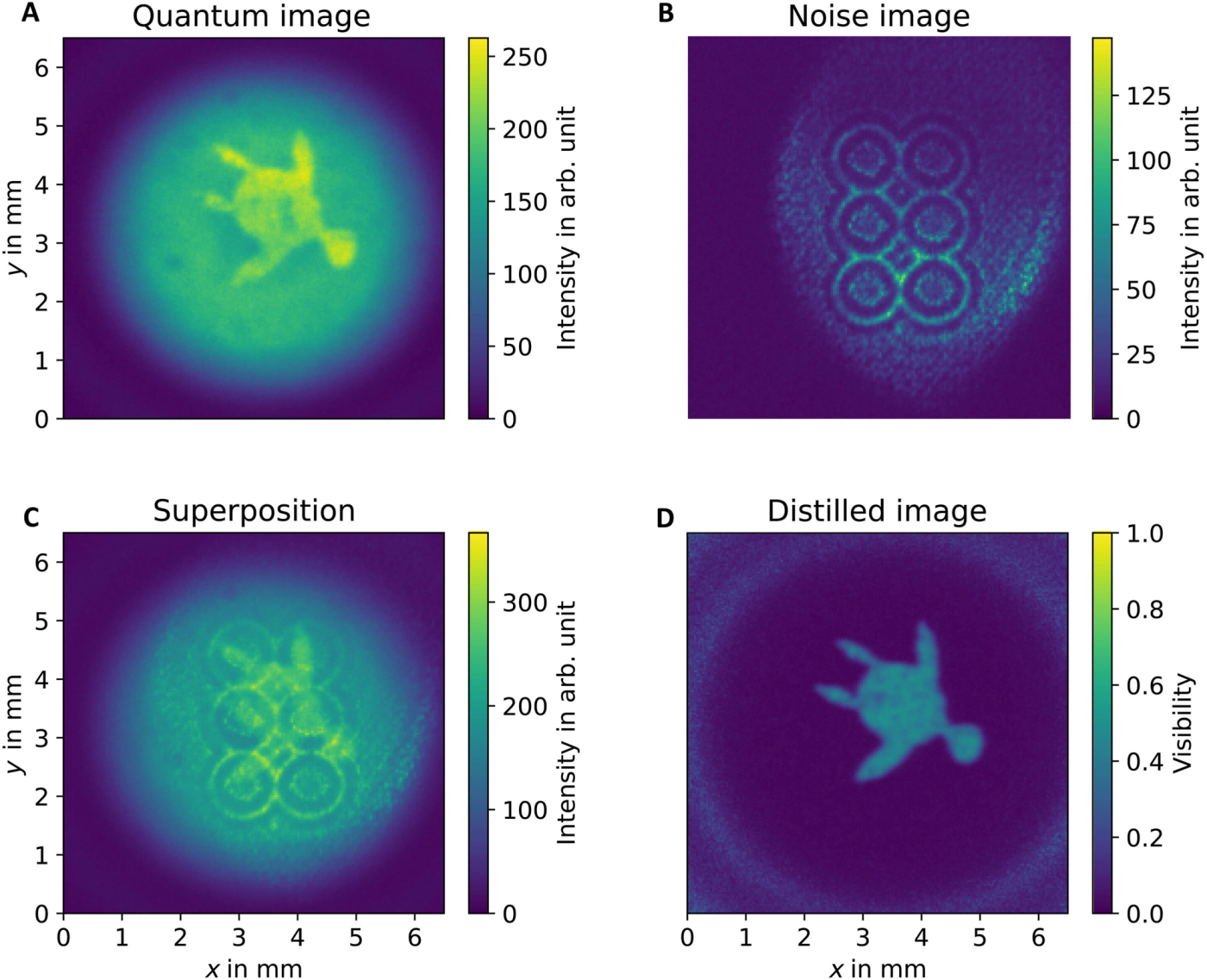
Potential uses include low-light imaging, biomedical imaging, microscopy, detecting objects in noisy environments, and imaging without exposing samples to too much light.
The key idea:
Quantum light can carry information in ways that classical light cannot always match.
7. Why quantum sensing can be better than classical sensing
Quantum sensors may offer higher precision, better sensitivity, new types of measurement, strong stability, and miniaturization potential.
For example, atomic properties are universal. One cesium atom is identical to another cesium atom. This makes atomic clocks extremely stable (i.e. the underlying quantum properties — like atomic energy levels or transition frequencies — are extremely consistent and reproducible).
Some quantum sensors, like diamond NV sensors, could also become compact and chip-scale.
But quantum sensing is not automatically better for everything.
8. The limitations of quantum sensing
Quantum sensors face several challenges.
Noise
Quantum states are fragile. Environmental noise can distort the signal.
Decoherence
Decoherence happens when a quantum system loses its delicate quantum behavior because it interacts too much with the environment.
In sensing, this is tricky because:
We want the quantum system to interact with the signal we care about, but not with unwanted noise.
Hardware complexity
Some systems require lasers, vacuum chambers, cryogenic cooling, microwave control, magnetic shielding, or vibration isolation.
Cost and deployment
High-end quantum sensors can be expensive. A lab device may work beautifully, but making it robust enough for factories, hospitals, vehicles, or outdoor environments is harder.
Readout challenge
The system must convert tiny quantum changes into reliable classical data.
So the challenge is not only quantum physics. It is also engineering.
9. The core equation idea, without scary math
Many quantum sensors measure a phase shift.
Conceptually:
phase shift = sensitivity × external signal × timeFor example:
phase shift ∝ magnetic field × exposure timeor:
phase shift ∝ acceleration × time²The longer the quantum system can stay coherent, the more signal it can accumulate. But if it waits too long, noise may ruin the state.
So quantum sensing is always balancing:
more interaction time = stronger signal
too much time = more noise and decoherence
That is why coherence time is such a big deal.
10. How superposition helps sensing
Imagine a quantum system with two states:
|0⟩ and |1⟩We create:
|0⟩ + |1⟩Then the environment affects the two parts differently.
For example, a magnetic field may make |1⟩ rotate in phase faster than |0⟩.
After some time, the quantum state has a phase shift. That phase shift contains information about the magnetic field.
Then interference and measurement estimate the phase shift.
Superposition creates two reference states
Environment creates phase difference
Interference reveals phase difference
Phase difference tells us the signal
This is the heart of many quantum sensors.
11. How entanglement helps sensing
Entanglement means multiple quantum particles share a connected state.
In sensing, entanglement can sometimes improve precision beyond what independent particles can achieve.
Normally, if we measure with many independent atoms, noise decreases like:
1 / √Nwhere N is the number of atoms.
With special entangled states, in theory, precision can improve closer to:
1 / NThis is called moving from the standard quantum limit toward the Heisenberg limit.
Simple version:
Entangled particles can act like a coordinated team instead of isolated sensors, potentially improving measurement precision.
But entanglement is difficult to create and protect, so many real-world quantum sensors do not rely heavily on large entangled states yet.
12. How quantum sensing is applied in real industries
Healthcare
Quantum sensors may help detect tiny magnetic fields from the brain or heart. Potential applications include brain imaging, heart monitoring, early disease research, and biomagnetic measurements.
Navigation
Quantum accelerometers and gyroscopes could support navigation without GPS. This matters because GPS can be blocked, jammed, unavailable underground, unavailable underwater, or unreliable in some environments.
Defense and aerospace
Applications include submarine navigation, aircraft navigation, detection of hidden structures, precise timing, and magnetic anomaly detection.
Geology and mining
Quantum gravimeters can detect tiny gravity differences caused by underground structures, including tunnels, caves, mineral deposits, oil and gas reservoirs, groundwater movement, and volcanic activity.
Climate and environment
Quantum sensors can help monitor groundwater, ice sheets, sea level changes, underground carbon storage, and gas emissions, depending on the sensor type.
Semiconductor industry
Quantum sensors can detect tiny electric or magnetic fields in chips. This can help with chip failure analysis, current mapping, material defects, and next-generation electronics testing.
Energy and batteries
Quantum sensors may help inspect battery materials, internal currents, degradation, magnetic signatures, and chemical processes.
13. One complete example: diamond NV magnetic sensing
Let’s take magnetic field sensing with a diamond NV center.
- You have a diamond.
- Inside the diamond is a tiny defect.
- That defect has an electron spin.
- The electron spin behaves like a tiny quantum magnet.
- You shine a laser to prepare the spin into a known quantum state.
- You apply microwave pulses to create and control superposition.
- External magnetic field changes the spin’s energy levels or phase.
- The defect emits light.
- The brightness of the emitted light depends on the spin state.
- A detector counts photons.
- The light signal tells us how much the spin changed, and therefore how strong the magnetic field was.
Full pipeline:
Diamond defect
→ laser prepares spin
→ microwave controls spin
→ magnetic field shifts spin
→ red fluorescence changes
→ detector reads light
→ software calculates magnetic field
That is quantum sensing in action.
14. Beginner summary
Quantum sensing means:
Using quantum systems to measure the physical world.
It applies quantum mechanics because:
- Quantum systems have discrete energy levels.
- Quantum states can be in superposition.
- Environmental signals change quantum phase, frequency, spin, or energy.
- Interference turns tiny phase changes into measurable signals.
- Measurement converts quantum information into classical data.
- Entanglement can theoretically improve precision.
The basic formula is:
Quantum state + environment interaction = measurable quantum changeThe full workflow is:
Prepare quantum system
→ expose it to the signal
→ let the signal change phase/spin/energy
→ use interference or readout
→ measure final state
→ calculate the physical quantity
In one sentence:
Quantum sensing uses fragile but extremely sensitive quantum states as probes, allowing us to measure tiny changes in magnetic fields, gravity, time, motion, temperature, and other physical signals.