Quantum 101: My Understanding of Quantum Physics
Before the electron hits the screen, it has a probability of being found wherever the square of the wave function is bigger than zero; this many-possible-states situation is called quantum superposition.
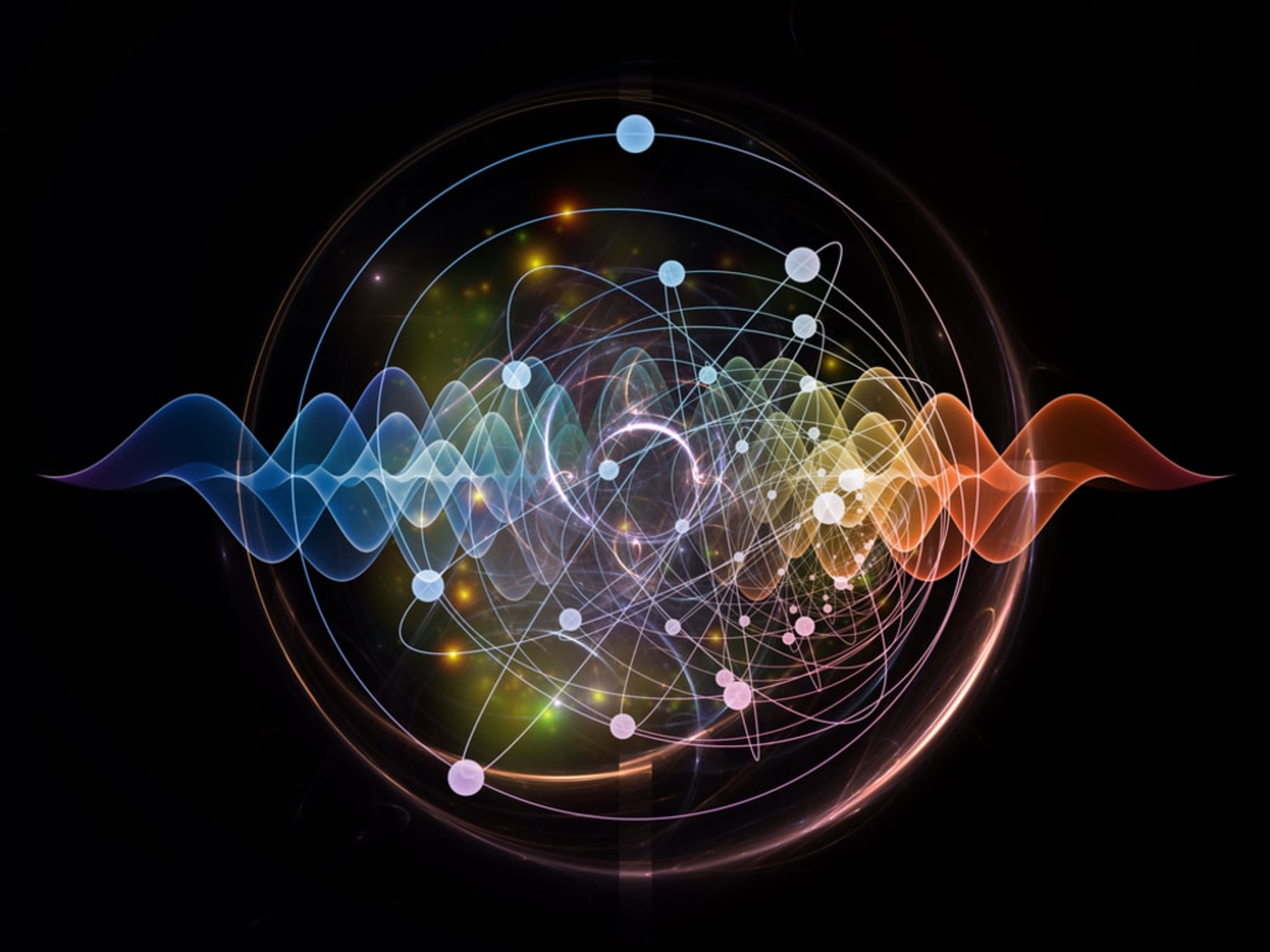
Quantum is one of the sexiest topics I have ever found, it’s physics but the concept and the whole study sounds philosophical.
Particles behaving like waves. Waves behaving like particles. A cat that is somehow both alive and dead until being checked.
But underneath all the weirdness, quantum physics is simply the branch of physics that explains how matter and energy behave at extremely small scales — the level of atoms, electrons, photons, and other subatomic particles.
Classical mechanics explains the motion of everyday objects: tennis balls, cars, rockets, planets. Quantum mechanics explains the motion and behaviour of things so small at molecular, atomic, and subatomic levels, such as photons and electrons.
The Beginning: Energy Comes in Packets
The story starts with a problem in the late 19th century: radiation.
Max Planck was studying something called black-body radiation and found that energy seemed to be absorbed and emitted in tiny discrete packets. He called these packets quanta.
This was already weird because classical physics expected energy to flow smoothly and continuously. But Planck’s idea suggested that at small scales, nature does not always work like a smooth dimmer switch. Sometimes it behaves more like a staircase.
A few years later, Einstein pushed this idea further. He suggested that light itself comes in discrete packets of energy. Today, we call these packets photons.
Is Light a Wave or a Particle?
Before Einstein, light was mostly understood as a wave. That made sense because light can diffract and interfere.
A classic experiment is the double-slit experiment. If you shine light through two narrow slits, it creates an interference pattern on a screen: alternating bright and dark bands. This is classic wave behaviour, like ripples in water overlapping.
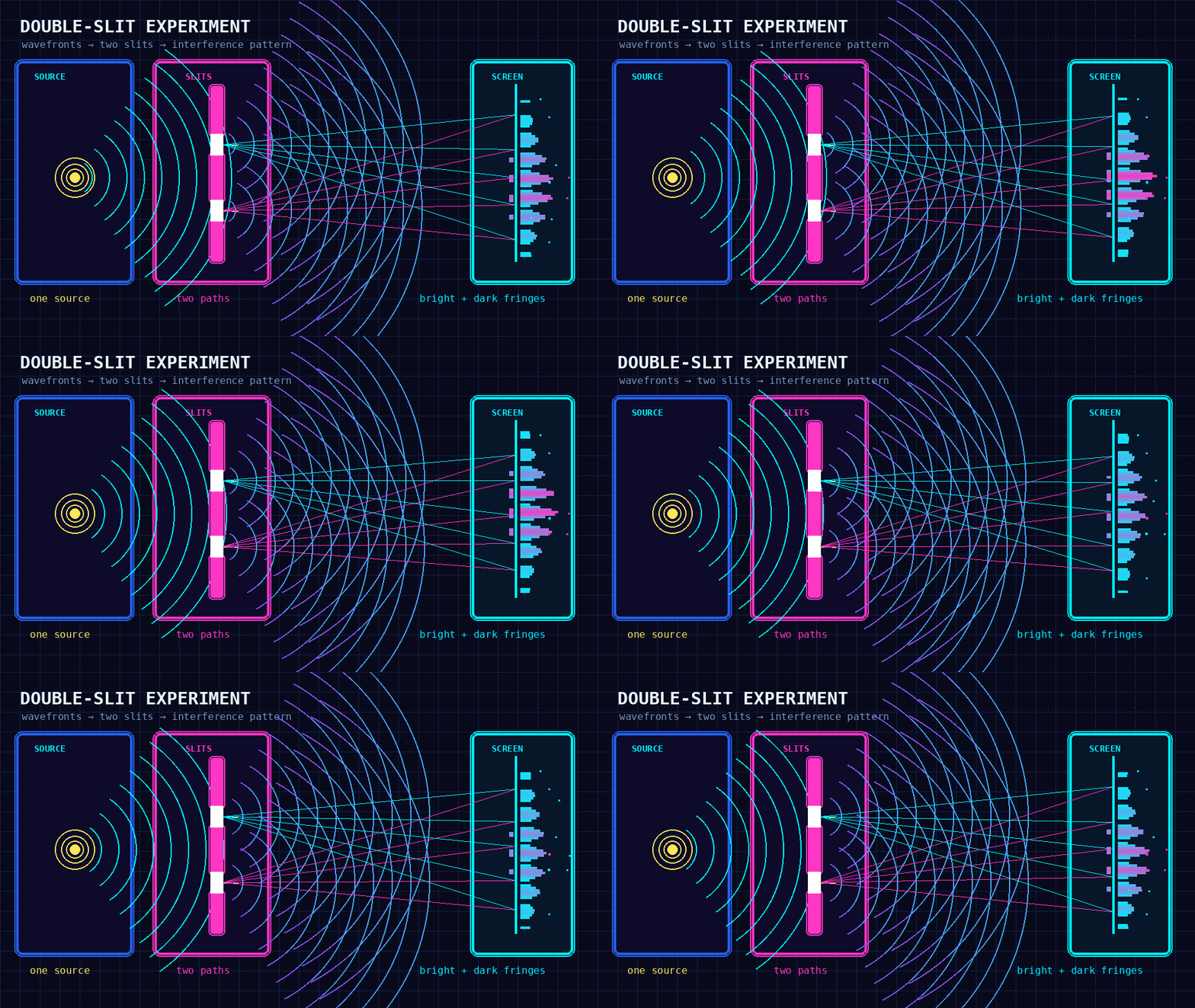
But Einstein’s photon idea said light also behaves like particles — little packets of energy.
So which one is it?
Annoyingly, both, at least until anyone can prove otherwise.
Light behaves like a wave in some experiments and like a particle in others. This is called wave-particle duality.
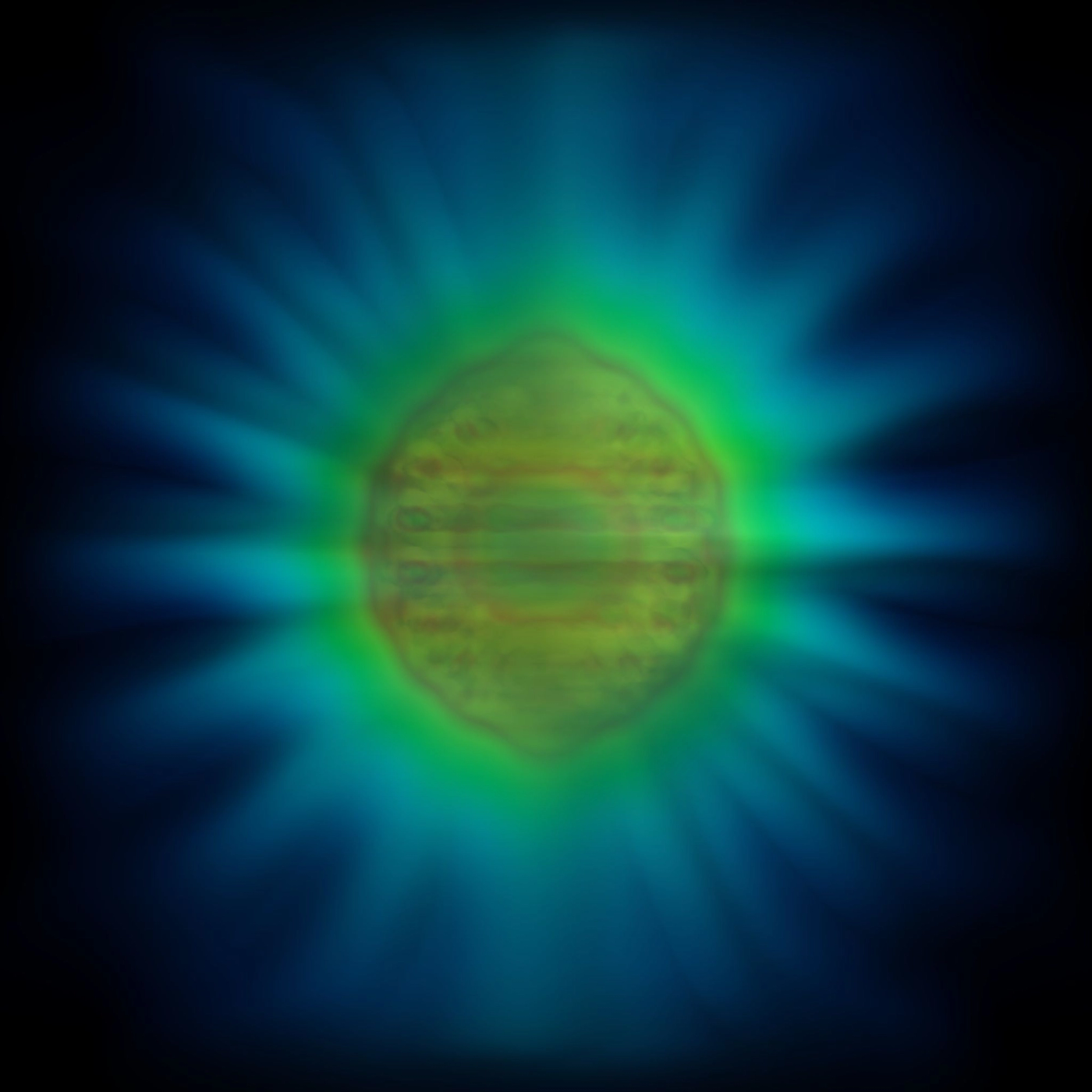
A groundbreaking new technique has revealed the first detailed image of an individual photon, 2024. (Image credit: Ben Yuen and Angela Demetriadou)
At this point, physics had to accept a deeply uncomfortable idea: maybe the tiny world is not made of things that are simply “waves” or simply “particles.” Maybe those categories are just human labels that work well in everyday life but break down at quantum scale.
If Light Can Be Both, Can Electrons Be Both Too?
In 1923, Louis de Broglie asked a bold question:
If light, which we thought was a wave, can behave like a particle, could particles like electrons also behave like waves?
His answer was yes.
He proposed that particles have a wavelength, and he linked that wavelength to momentum:
λ = h / p
Where:
λ = wavelength
h = Planck’s constant
p = momentum
Momentum simply means:
momentum = mass × velocity
So the faster or heavier something is, the smaller its wavelength becomes.
For big objects like a person, a car, or a football, the wavelength is so tiny that we never notice it. But for electrons, the wavelength is large enough to matter. That means electrons can show wave-like behaviour.
This was the moment quantum physics became even more rude. Not only can waves behave like particles, but particles can also behave like waves.
The Electron Double-Slit Experiment
How did they prove the “wave-like” characteristics of particles?
Now imagine firing electrons one by one at a screen with two slits.
If electrons were just tiny balls, each electron should go through either the left slit or the right slit. Over time, you would expect two bands on the screen.
But that is not what happens.
Each electron does hit the screen as one dot, like a particle. But after many electrons are fired, the dots build up into an interference pattern — the same kind of pattern produced by waves.
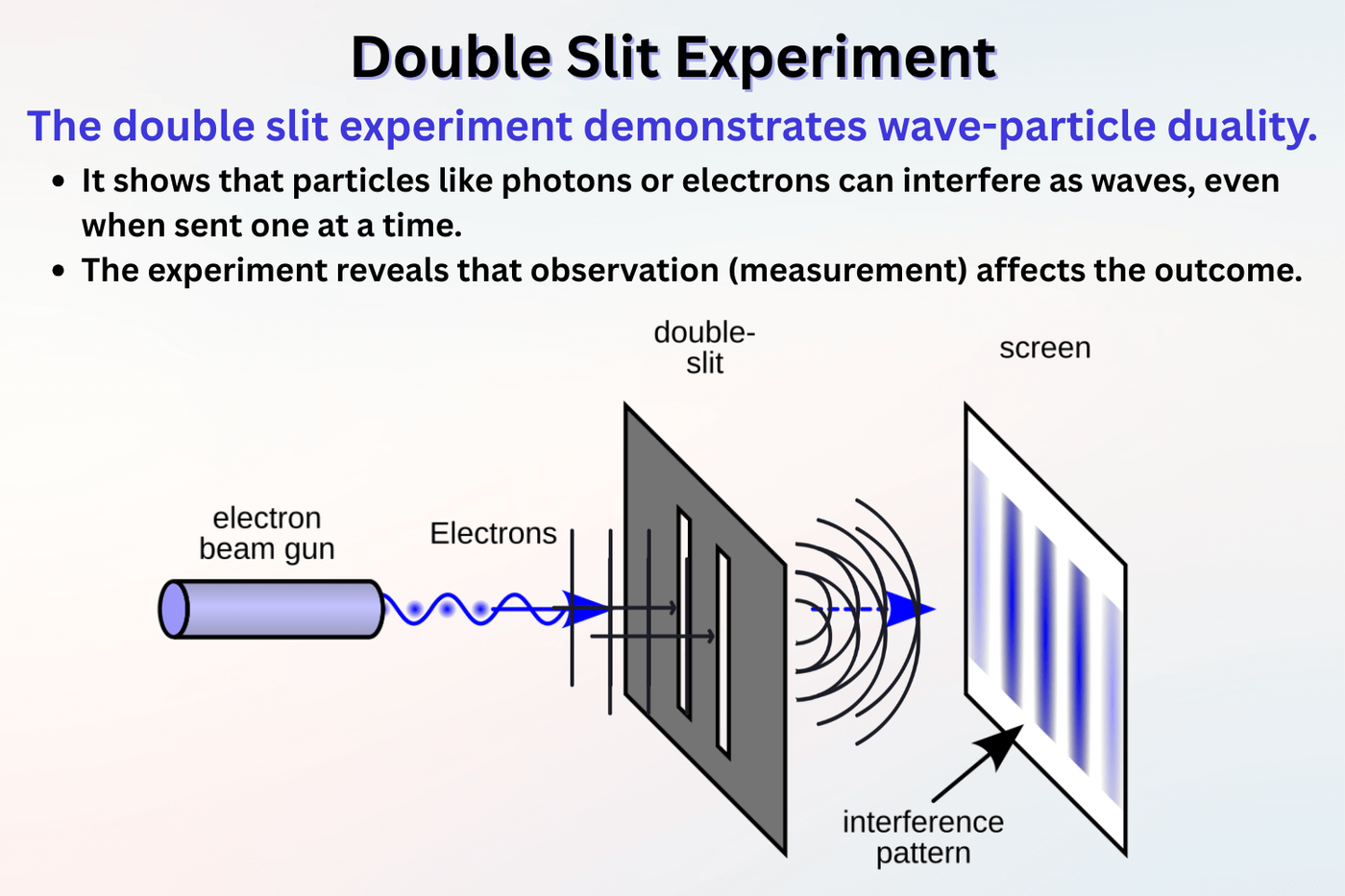
This suggests that each electron has wave-like behaviour before it is measured. The electron is described by something called a wave function, and this wave function passes through both slits and interferes with itself before the electron appears as one dot on the screen.
This does not mean the electron literally becomes a visible water wave. It means the electron’s quantum state behaves mathematically like a wave.
Travelling: wave-like.
Detected: particle-like.
What Is a Wave Function?
A wave function is the mathematical description of a quantum object’s state.
It is usually written as:
ψ
pronounced “psi.”
For an electron, the wave function tells us where the electron may be found and how likely it is to be found there. But the wave function itself is not the probability. To get the probability, we square its size:
Probability density = |ψ|²
This idea came from Max Born, who interpreted the square of the wave function as the probability of finding a particle in a certain place.
So if |ψ|² is large in one region, the electron is more likely to appear there. If |ψ|² is tiny, the electron is unlikely to appear there.
The wave function is not just “where the particle is.” It is more like a map of possible outcomes before measurement.
Is the Particle in Two Places at Once?
This is where people usually start screaming.
When we say an electron “goes through both slits,” we do not mean it is a tiny ball physically splitting into two little electron babies.
A better way to say it is:
Before measurement, the electron is described by a wave function that includes multiple possible paths. Those possibilities can interfere with each other. When the electron is finally measured, we see one definite result.
This is my understanding: when the electron hits the screen, it can be at a particular spot, but that one itself does not define or be one characteristic of the electron. In fact, the electron’s characteristic is that it can hit multiple possible spots on the screen, which is then called “wave function”.
So is the electron in two places at once? No, but the fact that it can be is the core of quantum mechanics.
It is more accurate to say:
The electron has a probability of being found in more than one place before measurement.
The source text explains this carefully: before the electron hits the screen, it has a probability of being found wherever the square of the wave function is bigger than zero; this many-possible-states situation is called quantum superposition.
Quantum Probability Is Not Just “We Don’t Know Yet”
This is one of the most important ideas.
Imagine flipping a coin. We say there is a 50% chance of heads and 50% chance of tails. But in classical physics, we usually believe the result is already determined by physical details: how hard you flipped it, the angle, air resistance, where you catch it, and so on. We just do not know all those details.
In classical probability: uncertainty because of ignorance.
In quantum mechanics: Being possibly either one of those two result is just a characteristic of the object that will always stands true, in what we call “quantum superposition”.
Once a measurement is unveiled, the “quantum superposition” is broken and now the state of the coin can only be either head or tail.