Physics Nobel 2026: How IceCube Catches Neutrinos?
How IceCube turned a cubic kilometre of Antarctic ice into a neutrino telescope, why scientists need neutrinos, what the detector actually measures, and what comes next.
It started with a problem astronomers could not solve:
Where do the highest-energy particles in the Universe come from?
Cosmic rays constantly hit Earth, but because they are electrically charged, magnetic fields bend their paths on the way here. By the time they arrive, they no longer point back to their source.
Neutrinos offered a possible solution. They are produced in many of the same violent cosmic environments, but carry no electric charge and barely interact with matter, so they can cross the Universe almost untouched and still point back toward where they came from. The problem was that this also made them almost impossible to detect.
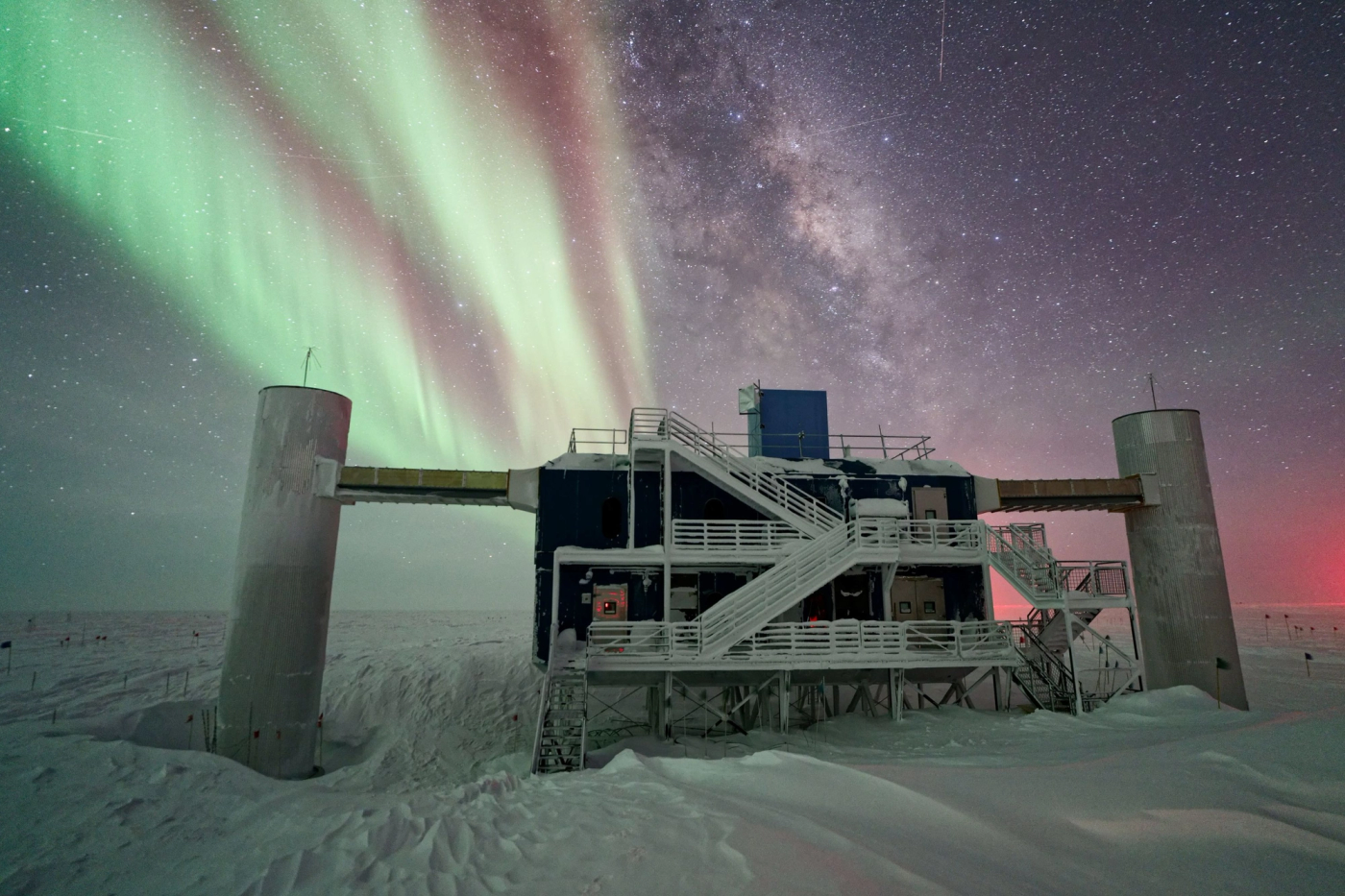
The solution eventually became IceCube: instead of trying to build an enormous detector, physicists turned roughly one cubic kilometre of Antarctic ice into one.
Neutrino
A neutrino is an electrically neutral elementary particle with an extremely small mass. Huge numbers pass through us constantly because they interact with matter only through the weak nuclear force and gravity.
That makes neutrinos hard to detect, but useful for astronomy. They can travel through stars, gas, dust and even planets with little interference. Because they carry no electric charge, magnetic fields do not bend their path.
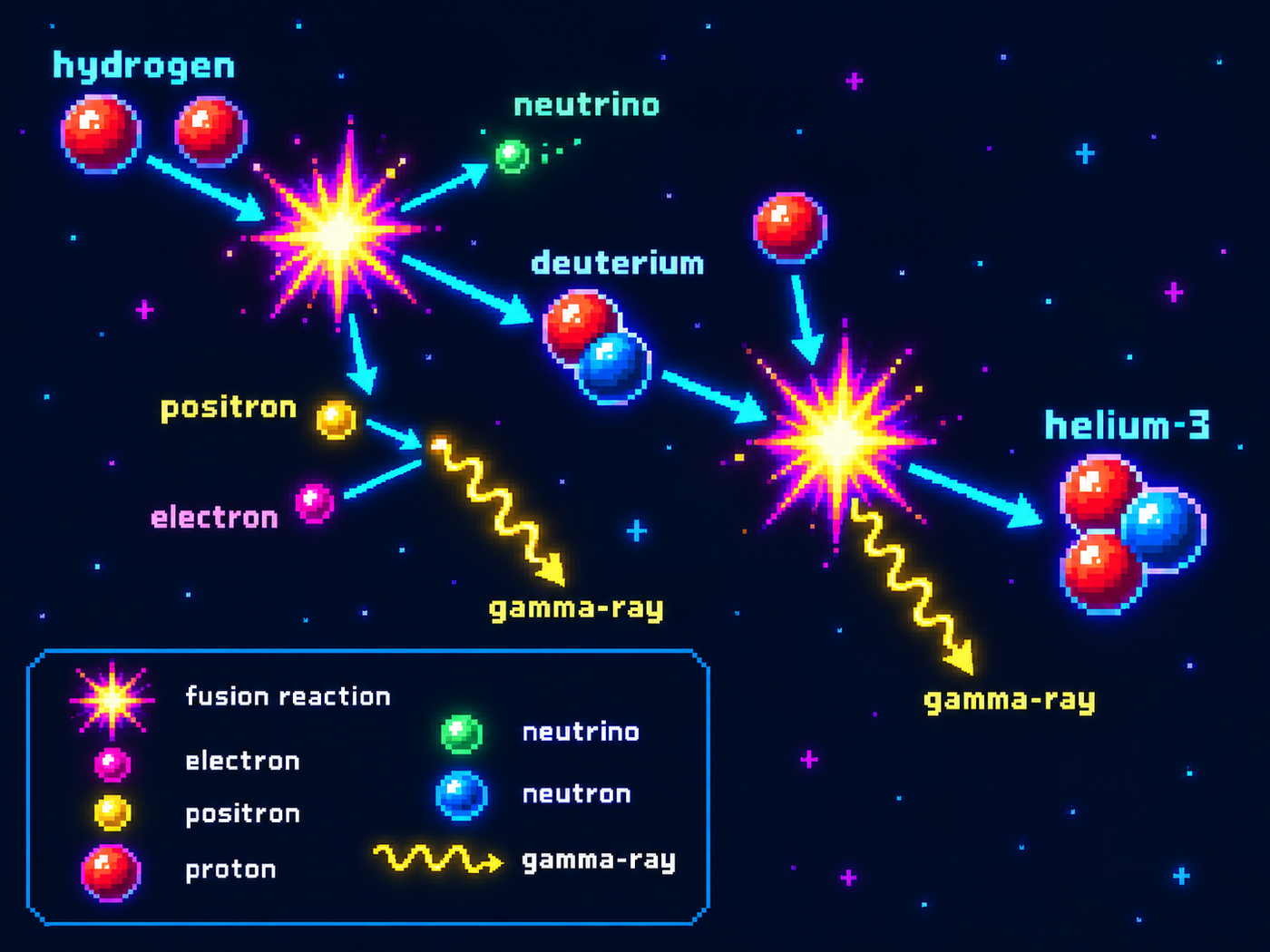
A neutrino arriving at Earth can therefore point back toward where it came from.
How was Neutrino discovered?
A neutrino was first predicted before it was detected. In 1930, Wolfgang Pauli proposed that an invisible neutral particle must be carrying away missing energy in radioactive beta decay. Enrico Fermi later named it the neutrino and built the theory around it.
The first direct detection came in 1956, when Clyde Cowan and Frederick Reines placed a large detector near a nuclear reactor, which produces huge numbers of antineutrinos. Very occasionally, an antineutrino interacted with a proton in the detector:
antineutrino + proton → neutron + positronThe positron quickly annihilated with an electron and produced gamma rays. A short time later, the neutron was captured and produced another gamma-ray signal. Seeing those two signals in the right sequence and timing gave researchers the fingerprint they needed to show that an antineutrino interaction had occurred.
So scientists did not literally “see” a neutrino. They detected the particles and light produced when a neutrino very rarely interacts with matter.
IceCube works on the same basic principle: it does not see the neutrino itself. It detects the Cherenkov light produced by charged particles created after a neutrino collides with matter in the ice.
Why capture neutrinos?
Most astronomy relies on electromagnetic radiation: visible light, radio, infrared, X-rays and gamma rays. These can be absorbed, scattered or blocked inside dense cosmic environments.
Cosmic rays provide another source of information, but their electric charge means magnetic fields scramble their trajectories. Neutrinos avoid both problems. They can escape extreme environments and travel almost in straight lines, making them useful for studying black holes, active galaxies, supernovae and other high-energy cosmic events.
One of the main questions is where the Universe's highest-energy cosmic rays come from. High-energy neutrinos are useful clues because they can be created when energetic particles interact with matter or radiation.
In simple terms: light shows us what an object emits; neutrinos can reveal the particle interactions happening inside it.
The invention that won the Nobel
The 2026 Nobel Prize in Physics recognised Francis Halzen's work on the IceCube Neutrino Observatory, which uses roughly one cubic kilometre of Antarctic ice as a neutrino detector.
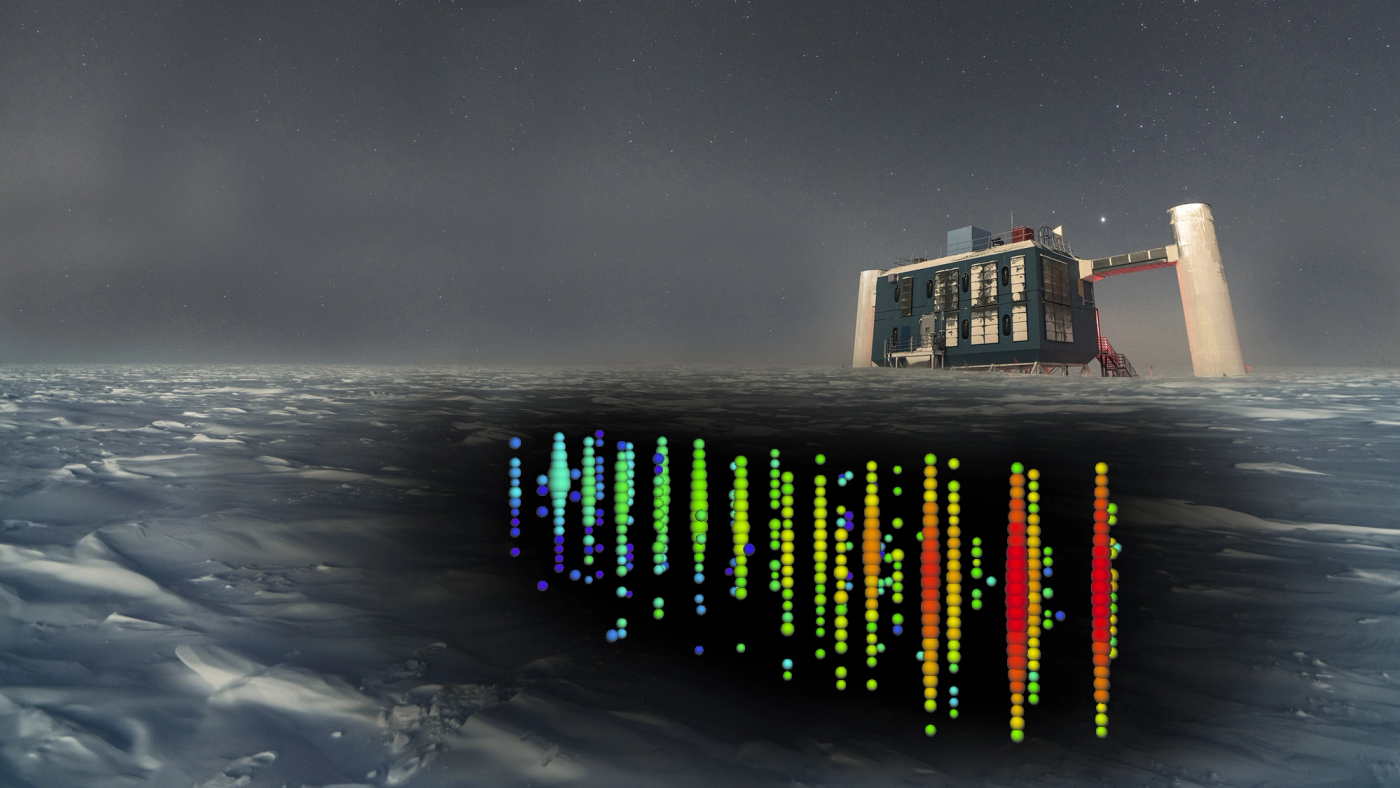
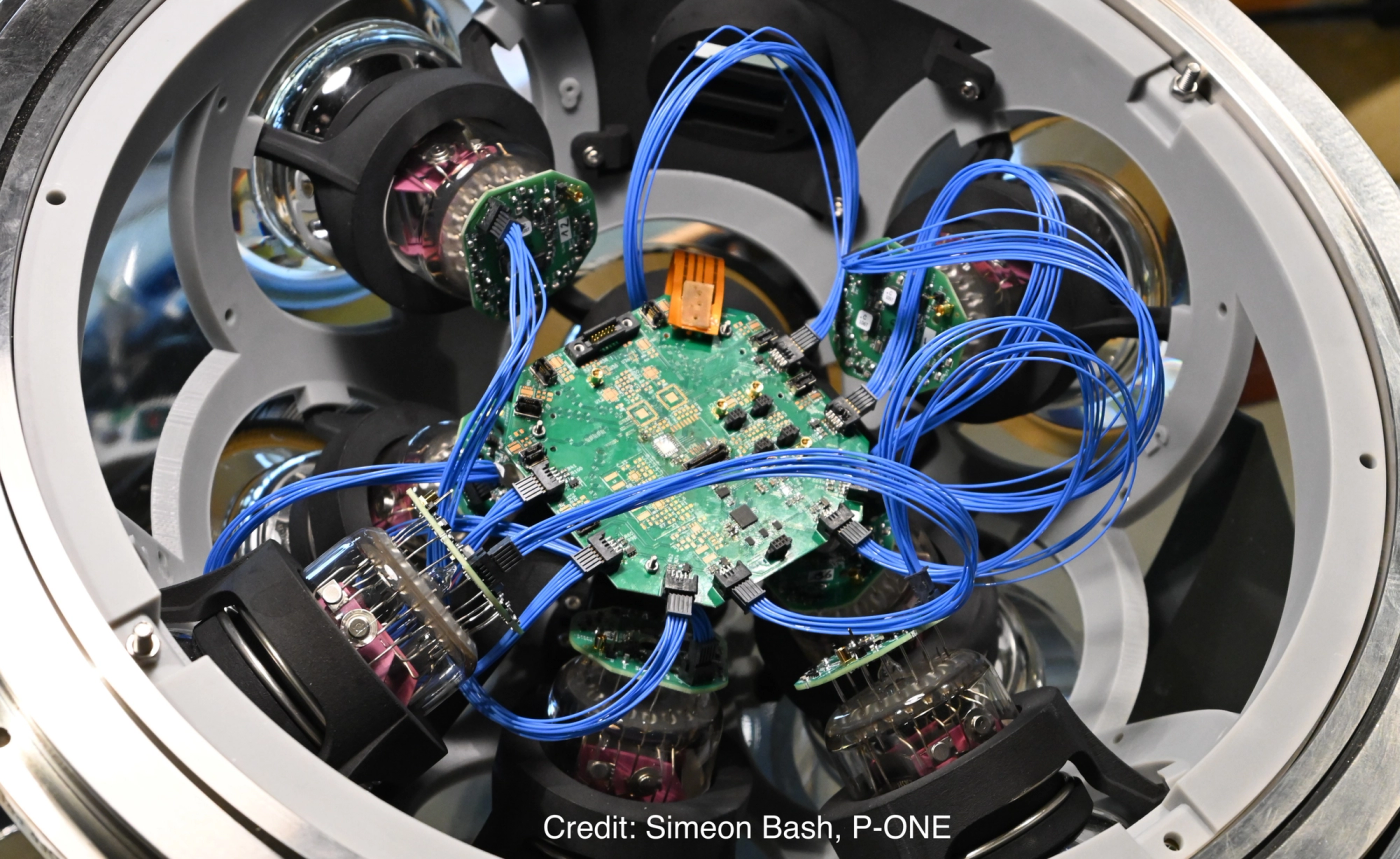
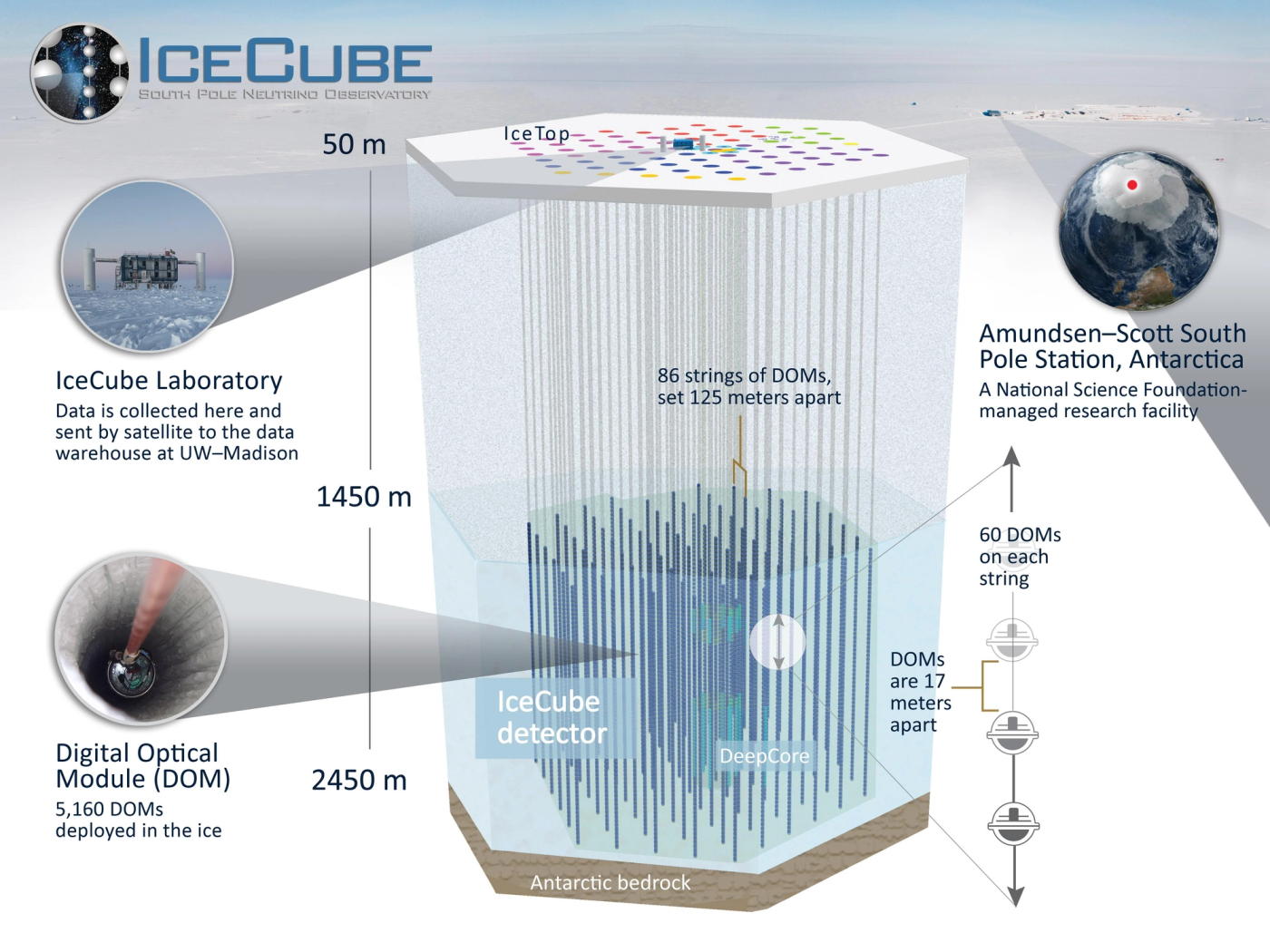
IceCube contains 5,160 Digital Optical Modules attached to 86 vertical cables, buried roughly 1.5 to 2.5 kilometres below the Antarctic surface.
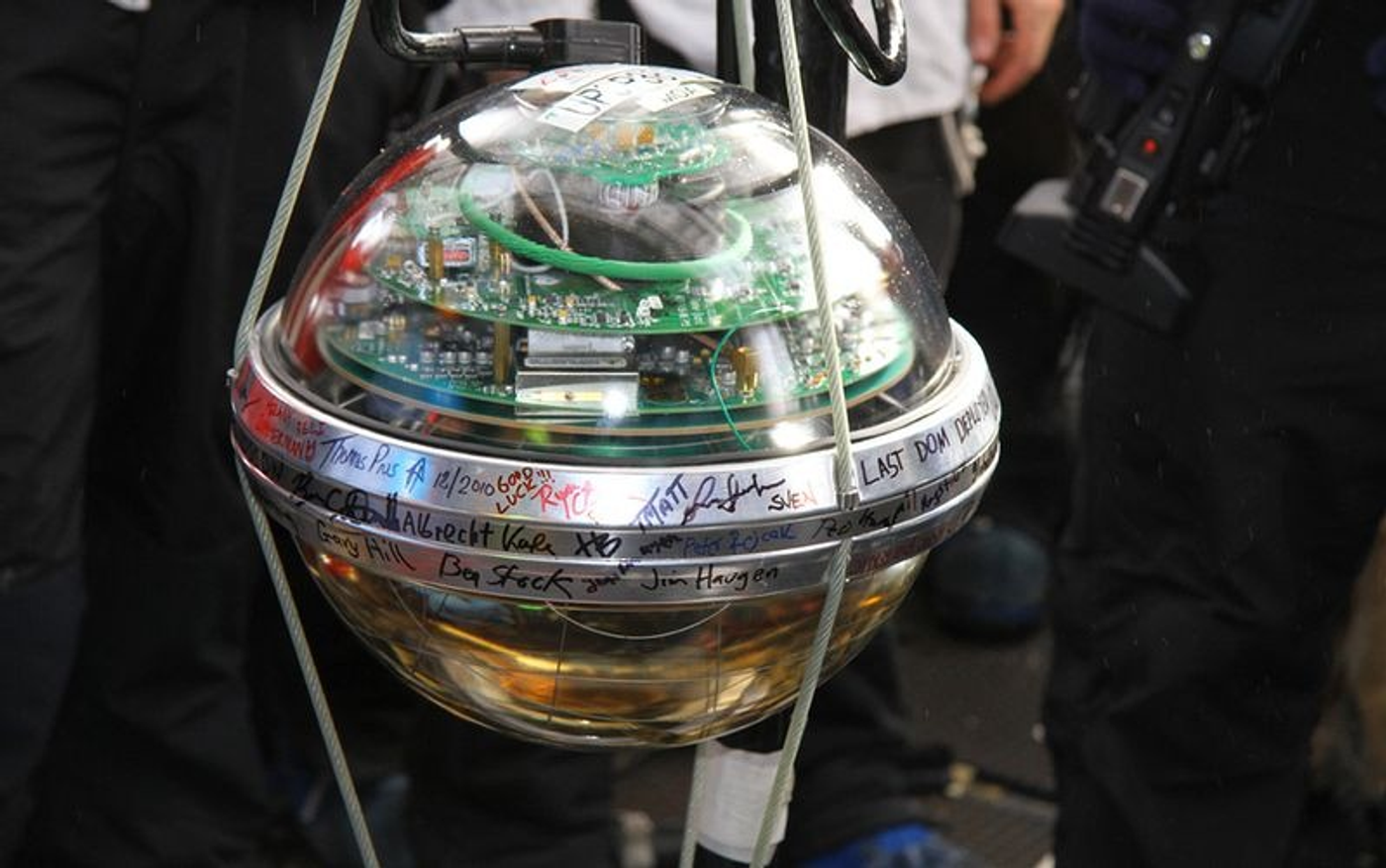
The detector does not see the neutrino directly. Very occasionally, a neutrino collides with an atom in the ice and creates a charged particle, often a muon. That particle can travel faster than light travels through ice, while still remaining slower than light in a vacuum.
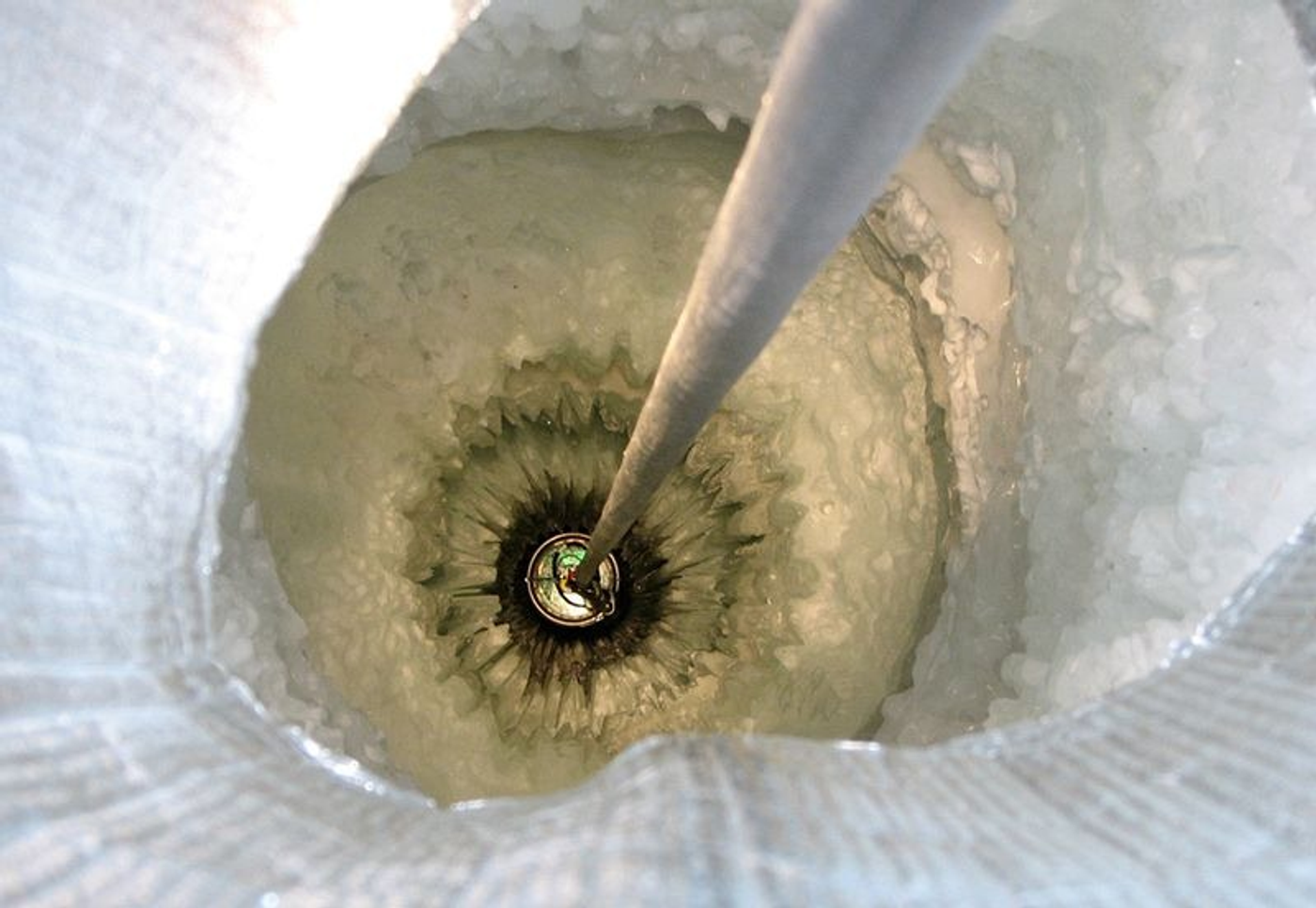
This produces a faint blue flash called Cherenkov radiation.
IceCube's sensors record:
- which sensors detect the light
- when the light arrives
- how bright it is
From this pattern, software reconstructs the approximate direction and energy of the original neutrino.
The process is:
neutrino → collision in ice → charged particle → Cherenkov light → optical sensors → reconstructed direction and energy
Why Antarctica?
Neutrinos interact so rarely that detectors need enormous volumes of material. Instead of building a cubic-kilometre artificial detector, IceCube uses Antarctic ice itself.
Antarctica works particularly well because the deep ice is very clear, extremely dark, stable over long periods, large enough to contain thousands of sensors, and shielded by kilometres of ice from much of the background radiation.
Researchers learned this through the earlier AMANDA experiment in the 1990s. Sensors placed around 800 to 1,000 metres deep found too many trapped air bubbles, which scattered light. At depths below roughly 1,500 metres, pressure had squeezed most of those bubbles out, leaving much clearer ice.
That discovery made IceCube practical.
Between 2004 and 2010, researchers used a 4.8 MW hot-water drill to bore holes more than two kilometres deep. Each cable carried 60 optical sensors. Once the holes refroze, the instruments became permanently embedded in the glacier.
The discoveries
2010: IceCube construction was completed.
2013: IceCube reported 28 very-high-energy neutrino events that could not be explained by neutrinos produced in Earth's atmosphere. This provided strong evidence for a population of high-energy neutrinos coming from outside the Solar System.
2017: IceCube detected a high-energy neutrino and automatically alerted telescopes around the world. Astronomers found a flaring blazar called TXS 0506+056 in the same direction. This became the first strong association between a high-energy neutrino and a specific astrophysical source.
2022: IceCube reported evidence that NGC 1068, a nearby active galaxy containing a supermassive black hole, is another source of high-energy neutrinos.
IceCube has also mapped neutrino emission from the Milky Way, helping turn neutrino detection into a form of astronomy rather than a series of isolated particle events.
That is the key achievement behind the Nobel. Neutrinos had been detected before IceCube. What IceCube helped establish was neutrino astronomy.
What comes next?
IceCube has already been upgraded with more than 600 new sensors and calibration devices, improving reconstruction accuracy and allowing researchers to reanalyse years of existing data.
The larger planned project is IceCube-Gen2. It would expand the instrumented volume to roughly 8 cubic kilometres and use around 18,000 optical and radio sensors.
The goal is to detect more neutrinos, identify more sources, study higher-energy events and combine neutrino observations with gravitational waves, gamma rays, X-rays and conventional telescopes. This is part of a broader shift toward multi-messenger astronomy, where the same cosmic event is studied through several different signals rather than light alone.
Some projects trying to do high-energy neutrino astronomy using huge natural volumes of ice or water:
Major neutrino observatories and detector projects around the world, grouped by whether they primarily focus on cosmic neutrino astronomy or fundamental neutrino physics.
▣ Cosmic Neutrino Telescopes
▣ Fundamental Neutrino Physics
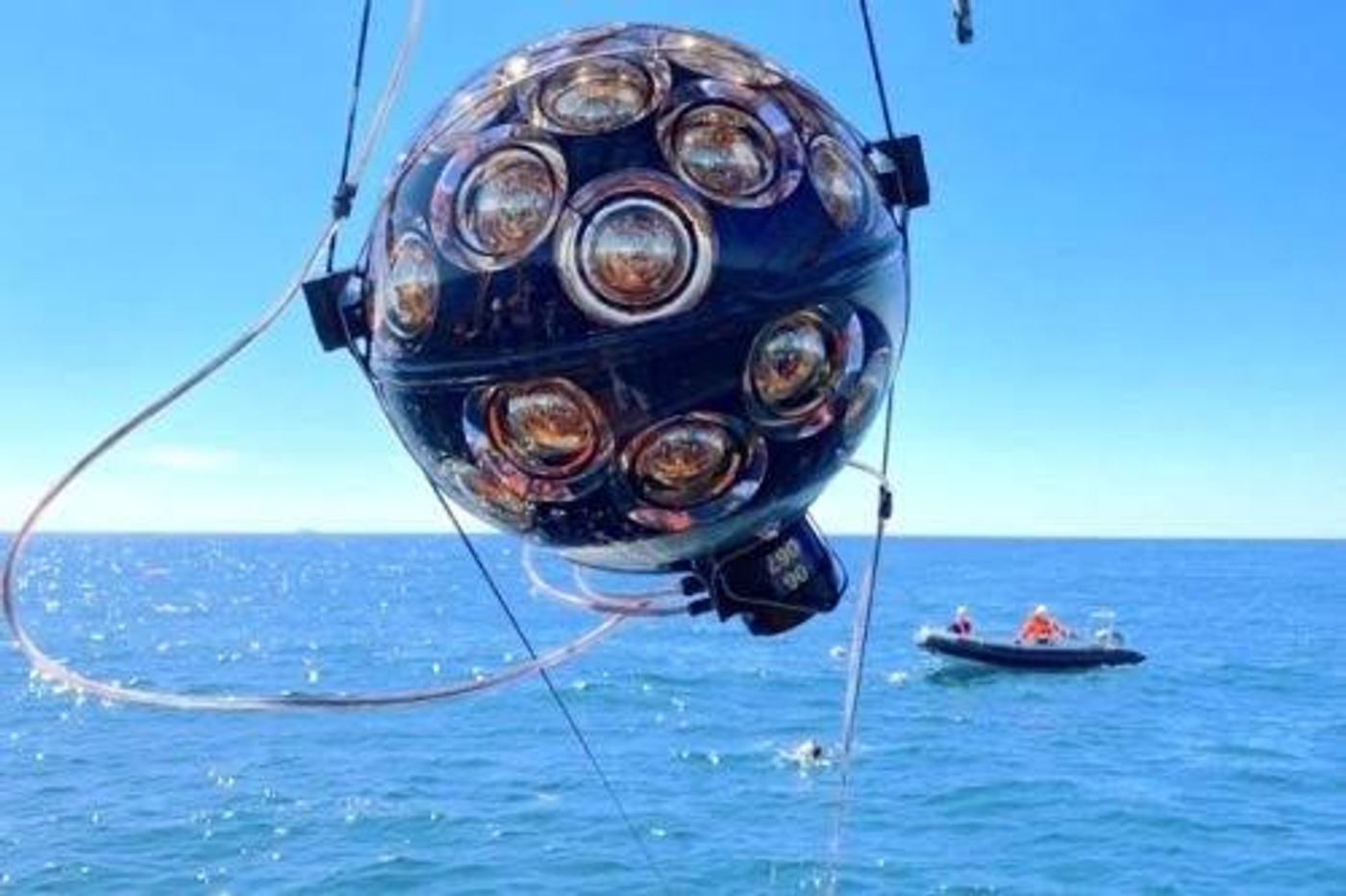
KM3NeT
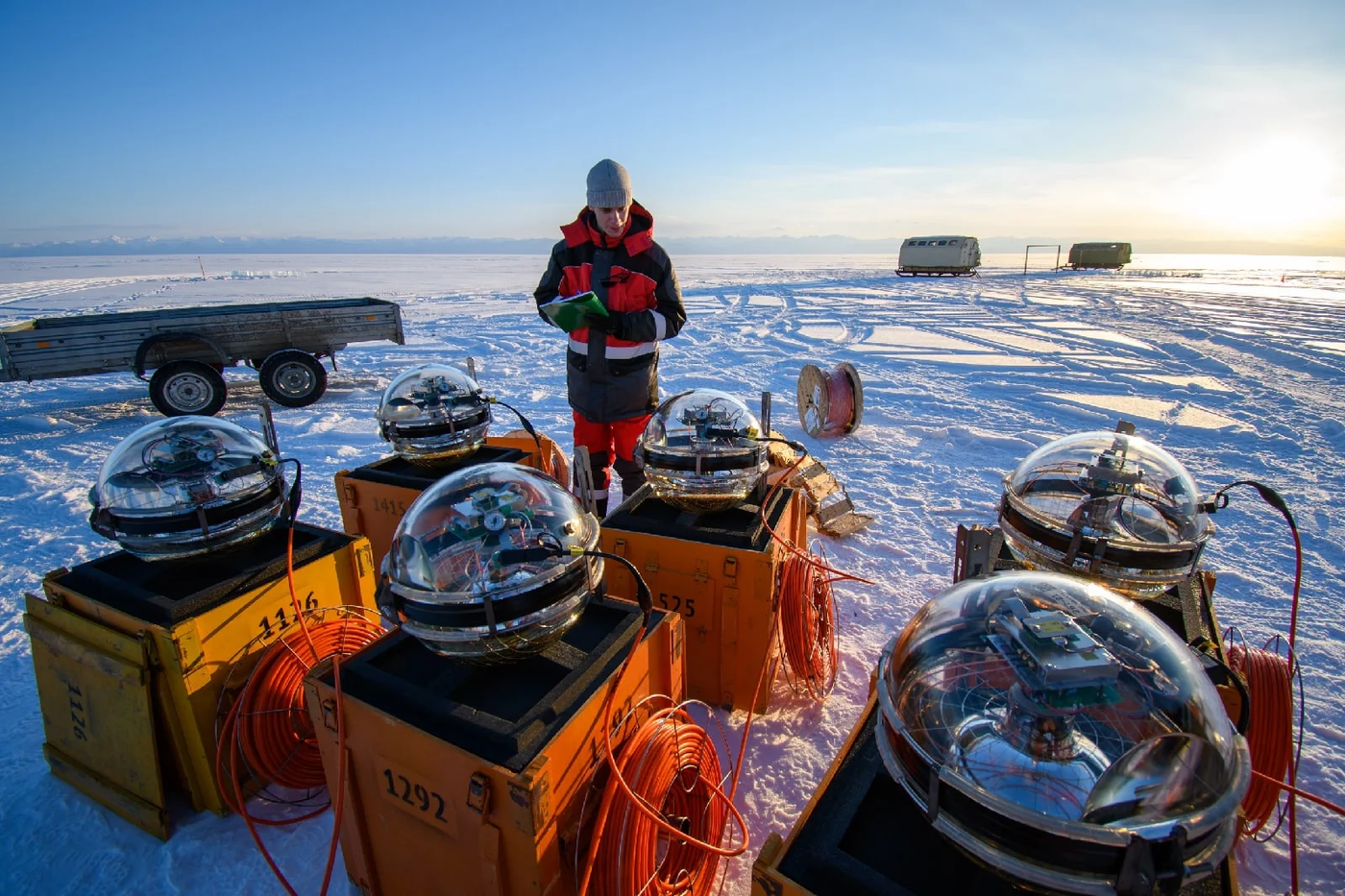
Baikal-GVD
P-ONE