
Drone Delivery Has Been "Five Years Away" for a Decade
The technology finally works. The economics don't — except in very specific places. After a decade of promises, billions deployed, and a long graveyard of failed operators, here's how to read the drone delivery landscape in 2026.
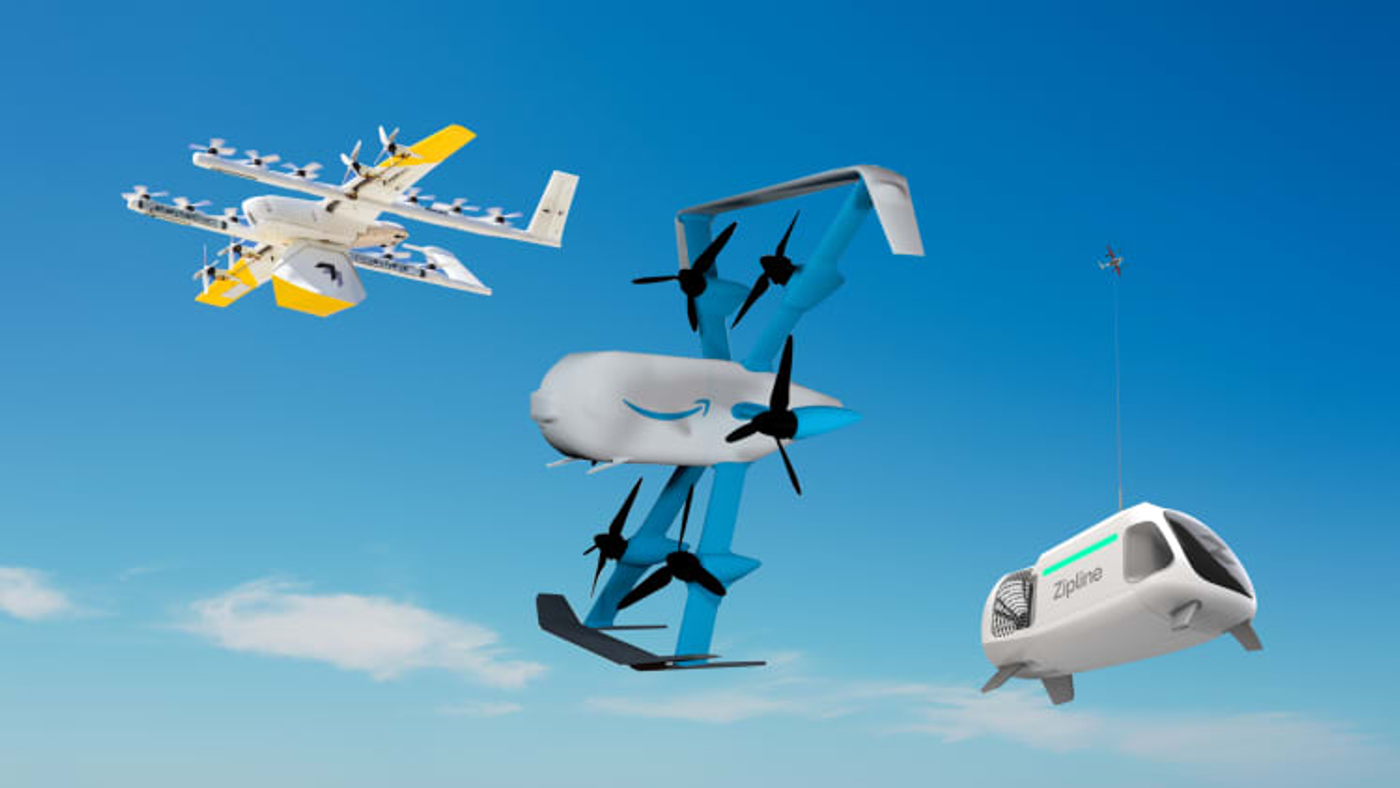
Go back to 2013. Jeff Bezos goes on 60 Minutes and promises drone delivery "within four to five years." The internet loses its mind.
That was thirteen years ago.
Today, Amazon Prime Air has made roughly 16,000 total deliveries across all its US operations. Zipline — the category leader — just crossed 2 million. Those are real numbers, but they exist against a backdrop of companies that burned hundreds of millions and quietly folded, a regulatory framework that still isn't finished, and a question nobody in this industry likes to answer honestly: is anyone actually profitable?
Spoiler: not at the company level.
What it is?
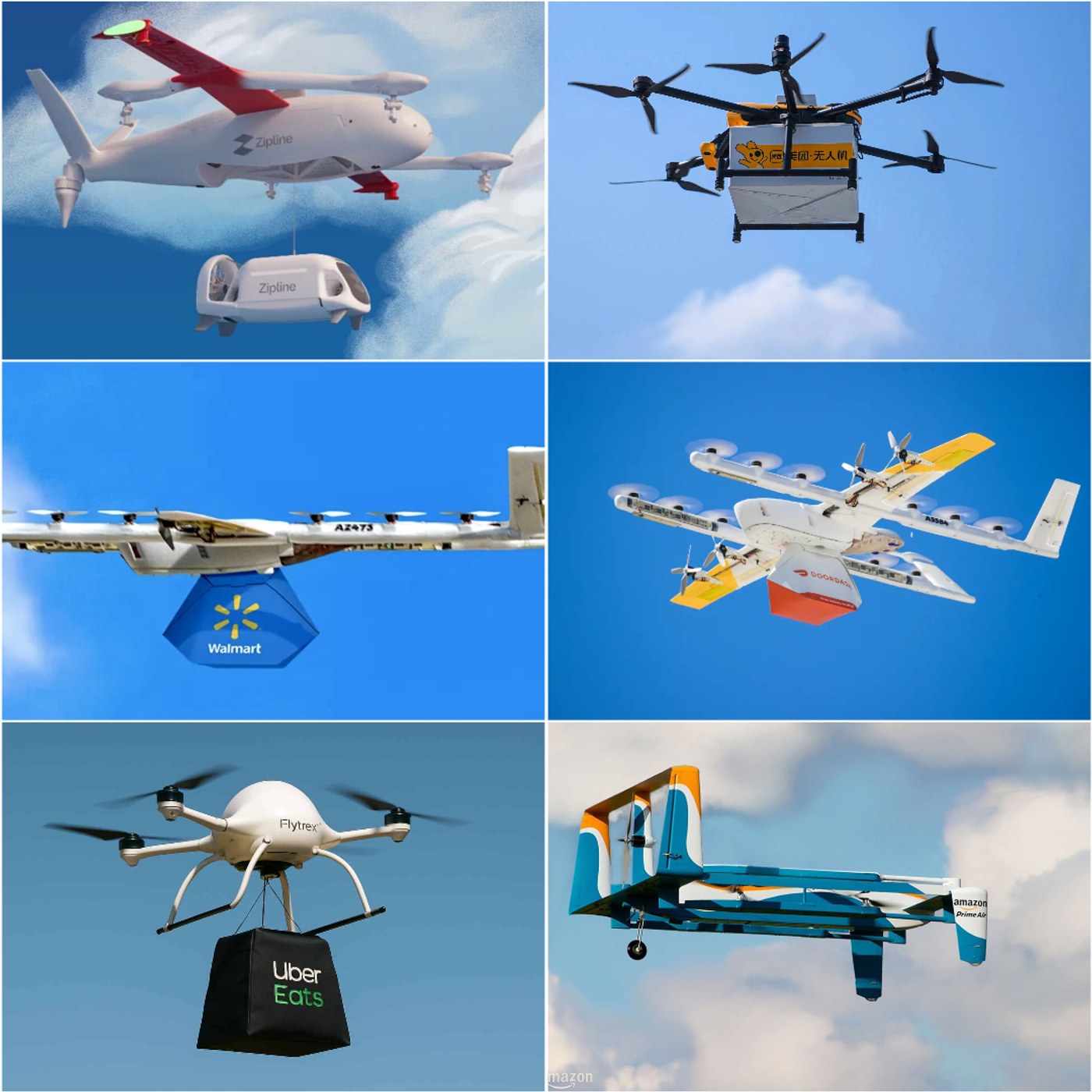
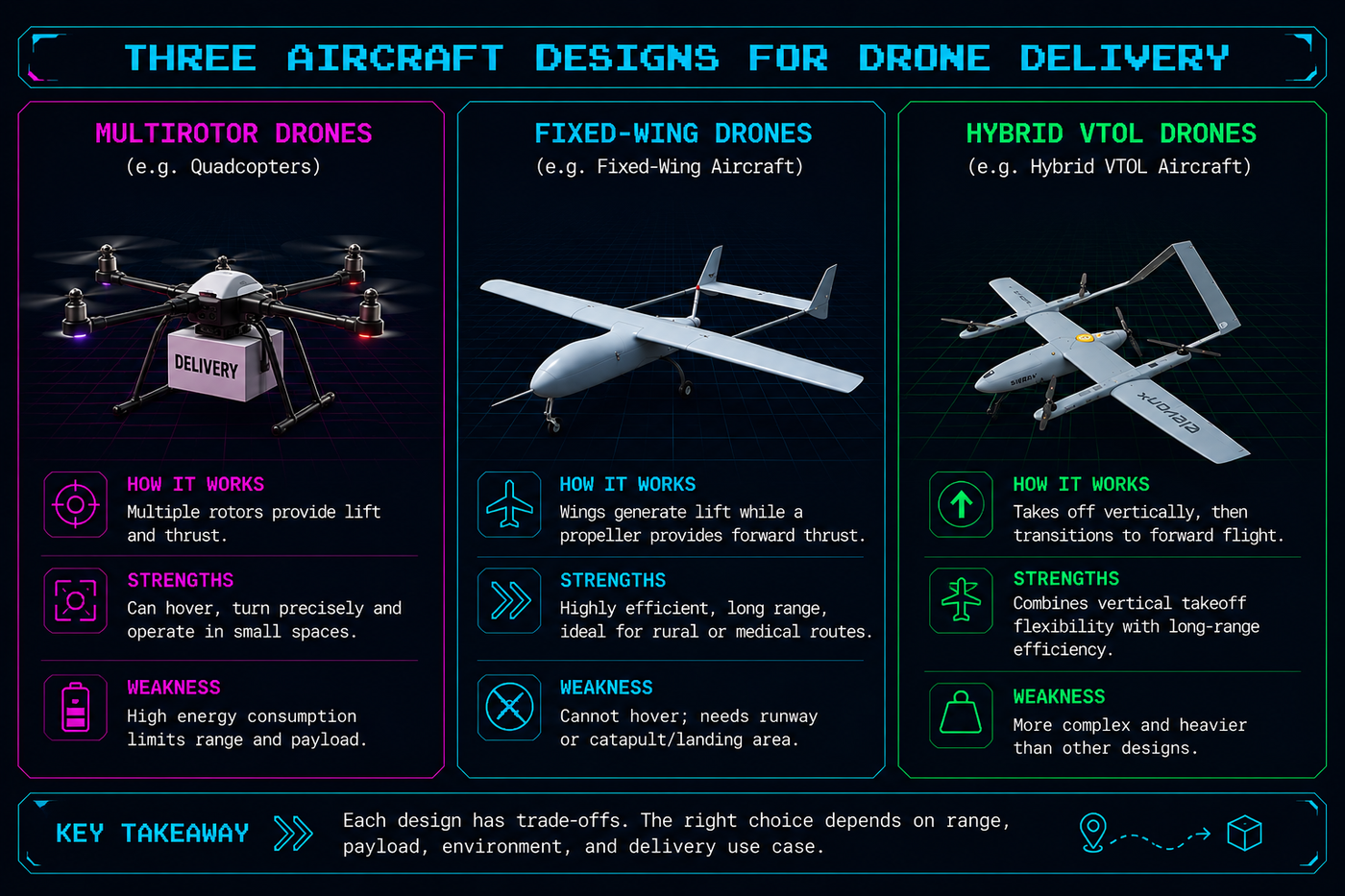
Drone delivery means using small, mostly autonomous aircraft to handle the final leg of a delivery — replacing a van or courier for the last mile. Three airframe designs dominate: multirotor (agile, short-range), fixed-wing (efficient, longer-range), and hybrid VTOL — takes off vertically, transitions to wing-borne flight mid-route. That's the design Wing and Amazon's MK30 use, and the current engineering sweet spot.
Payloads are tiny. Zipline's P2 carries 3.6 kg. Amazon's MK30 carries 2.3 kg. You're not getting your IKEA flatpack by drone.
The vocabulary that matters: VLOS vs BVLOS.
- Visual Line of Sight means a human keeps the drone in view at all times.
- Beyond Visual Line of Sight is what makes scalable delivery possible — and until recently, every BVLOS flight in the US required a slow, case-by-case FAA waiver. That regulatory bottleneck has defined the entire sector for a decade.
Where it actually works
Medical and rural delivery. Zipline built its business on this, starting in Rwanda in 2016. The model is clean: road infrastructure is poor, the cargo (blood, vaccines, emergency drugs) is time-critical, and the alternative is a motorbike on a dirt road in the dark. Zipline's median flight time is 3 minutes. Meituan's blood-sample route at Shanghai's Renji Hospital cut transport time by 50%. The structural case here isn't marginal.
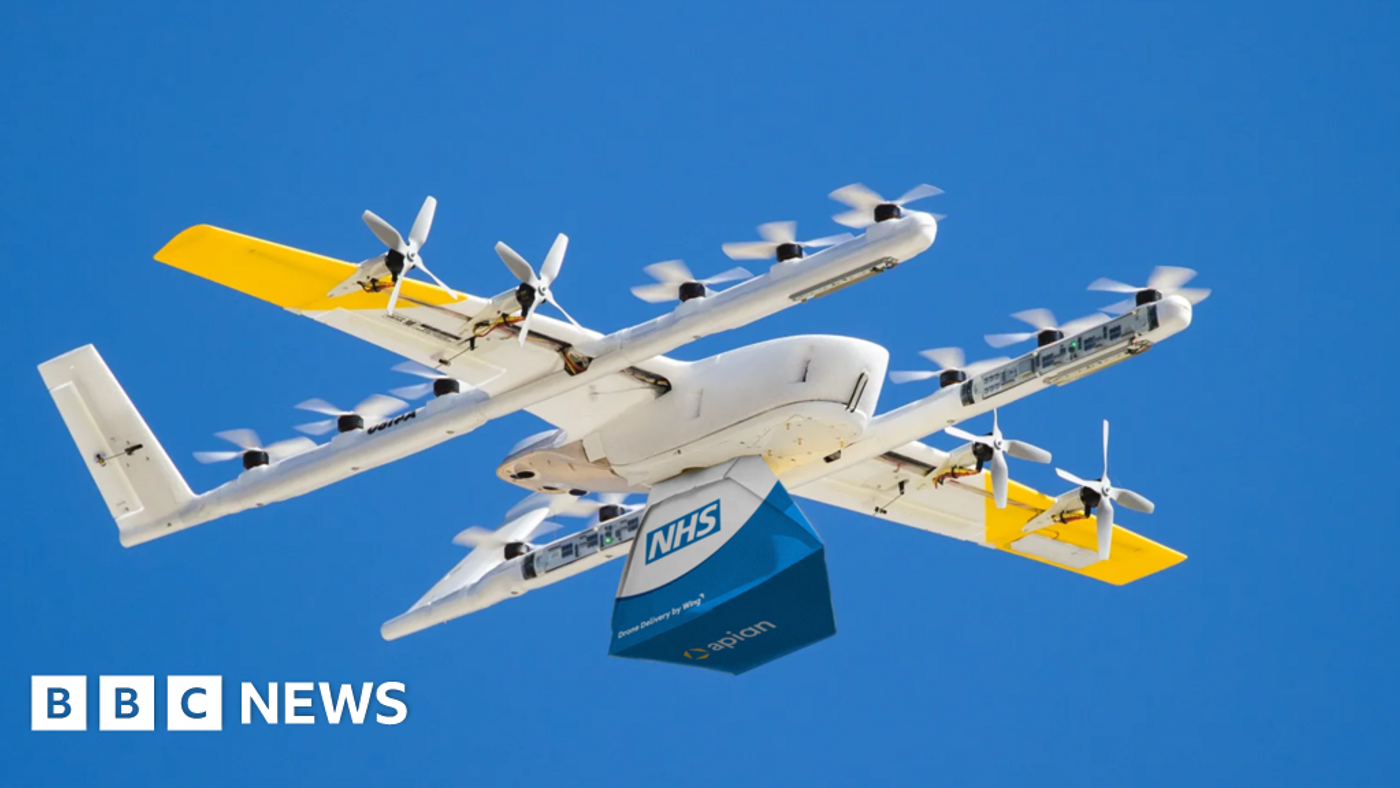
High-margin suburban quick-commerce. Chipotle burritos, over-the-counter medicine, premium grocery. Zipline operates from Walmart stores in Texas and Utah; Wing delivers in Dallas-Fort Worth. The customer gets their order in 10–15 minutes. The items are small, light, and high-margin — exactly the profile that works.
What doesn't work: dense urban parcel delivery. A van carrying 150 parcels beats a one-parcel-per-trip drone on both cost and carbon. The economics are inversely related to density.
The limitations nobody leads with
Physics. Battery energy density is the ceiling everything runs into. Amazon's MK30 is 38 kg of aircraft to carry a 2.3 kg payload. That's not an engineering failure — it's a physics constraint.
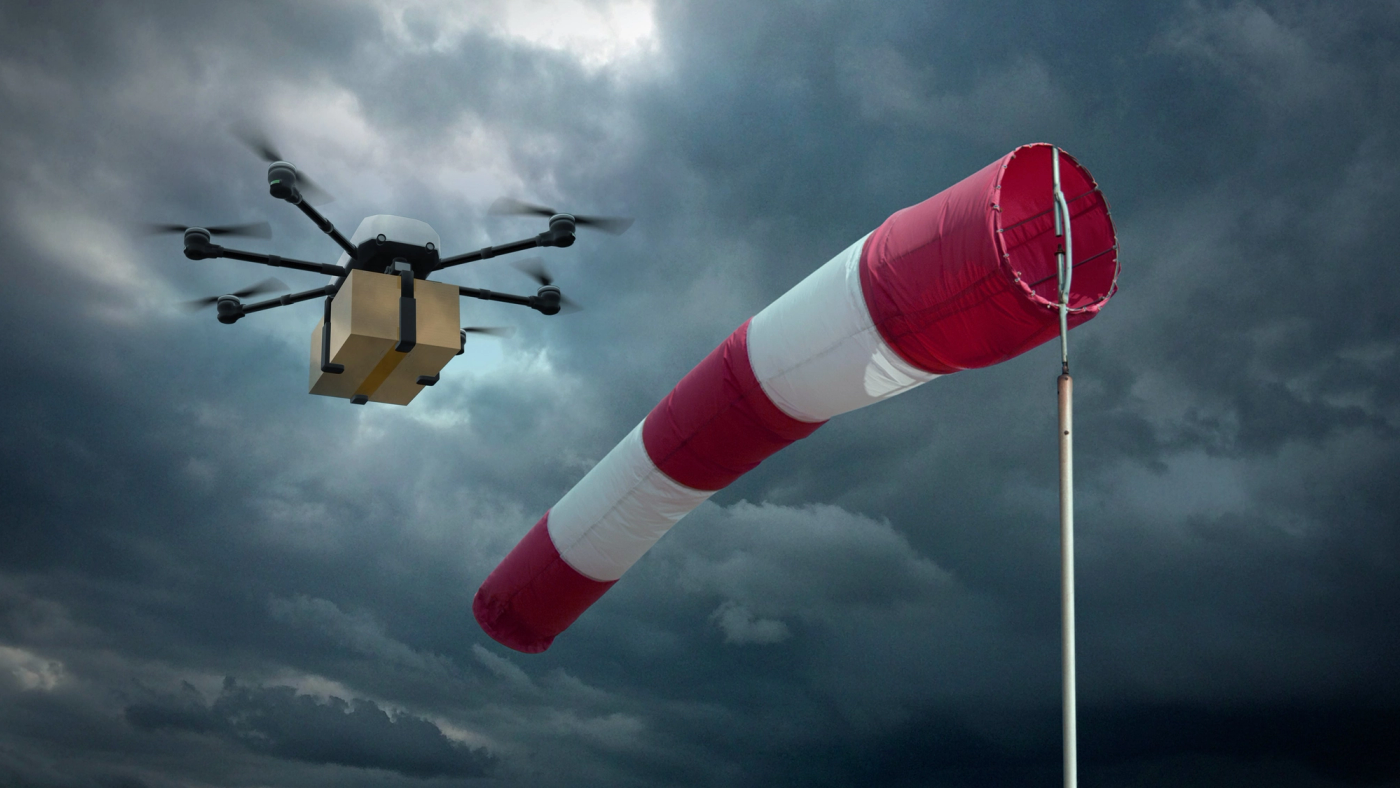
Weather. The most credible independent study (Gao et al., Nature Scientific Reports, 2021) found median global flyability is around 5.7 hours per day for common drones. That number ranges from 95.7% of the time in Johannesburg to 2.3% in Saint Petersburg. Operator claims of 97% availability are unverified marketing.
Regulation. The FAA's BVLOS normalisation — Part 108 — was recommended by a rulemaking committee in 2022. It only became a proposed rule in August 2025. A presidential executive order mandated a final rule within 240 days. That deadline has already slipped. Final rule is expected mid-to-late 2026.
Noise. Wing's Canberra trial exceeded residential noise standards, triggered a formal community campaign, and ended with Wing exiting the market in August 2023. This is a social licence problem, not just an engineering one, and it plays out neighbourhood by neighbourhood.
Safety. Amazon's MK30 had two crashes at its Oregon facility in December 2024 — one caught fire — causing a full operational pause. Two drones hit the same crane in Arizona in October 2025. One hit an apartment building in Texas in February 2026. Amazon has been doing this for over a decade.
The unit economics problem
McKinsey's 2023 bottom-up model puts direct operating cost at $13.50 per delivery, with labour representing up to 95% of total cost. Their model shows this falling to $1.50–$2 at a 20:1 pilot-to-drone ratio — but that ratio depends entirely on a BVLOS regime that doesn't yet exist.
No Western pure-play operator has disclosed company-level profitability. Every "profitable" claim is per-flight unit economics. Amazon's internal projections reportedly showed ~$63 per package against $4.99–$9.99 pricing. DroneUp charges approximately $30 per delivery.
The gap between per-flight claims and company-level reality is where almost every press release lives.
The Landscape
The market is taking shape across five layers: specialist operators flying the routes, large platforms supplying demand, cargo companies moving heavier loads, enabling providers building the underlying infrastructure, and a growing graveyard showing how difficult the model remains.
The market is organised by each company’s role in the value chain. Every entry uses the same two characteristics: Market role and Current signal.
▣ Specialist Delivery Operators
▣ Integrated Commerce & Logistics Networks
▣ Cargo & Middle-Mile Logistics
▣ Enabling Technology & Infrastructure
▣ The Graveyard
The venture take
The 2025 funding record of $3.86B is largely a defence story. Commercial drone delivery raised just $888M.
- Commercial Delivery
- Dual-Use / Defence
Global drone startup funding peaked at $3.67 billion in 2021, collapsed to $879 million in 2024, and hit a nominal record $3.86 billion in 2025 — but $2.97 billion of that went to dual-use defence companies. The purely commercial drone market raised $888 million. That's the real number.
The bear case for pure-play operators is structural: Walmart, Amazon, Alphabet, and Meituan own the demand side and can subsidise delivery indefinitely as a loyalty feature. Walmart+ members get drone delivery free. These companies can outspend and out-wait any venture-backed startup. The consumer doesn't choose Manna — they choose Walmart. The operator is a capability layer an incumbent can replace or acquire when convenient.
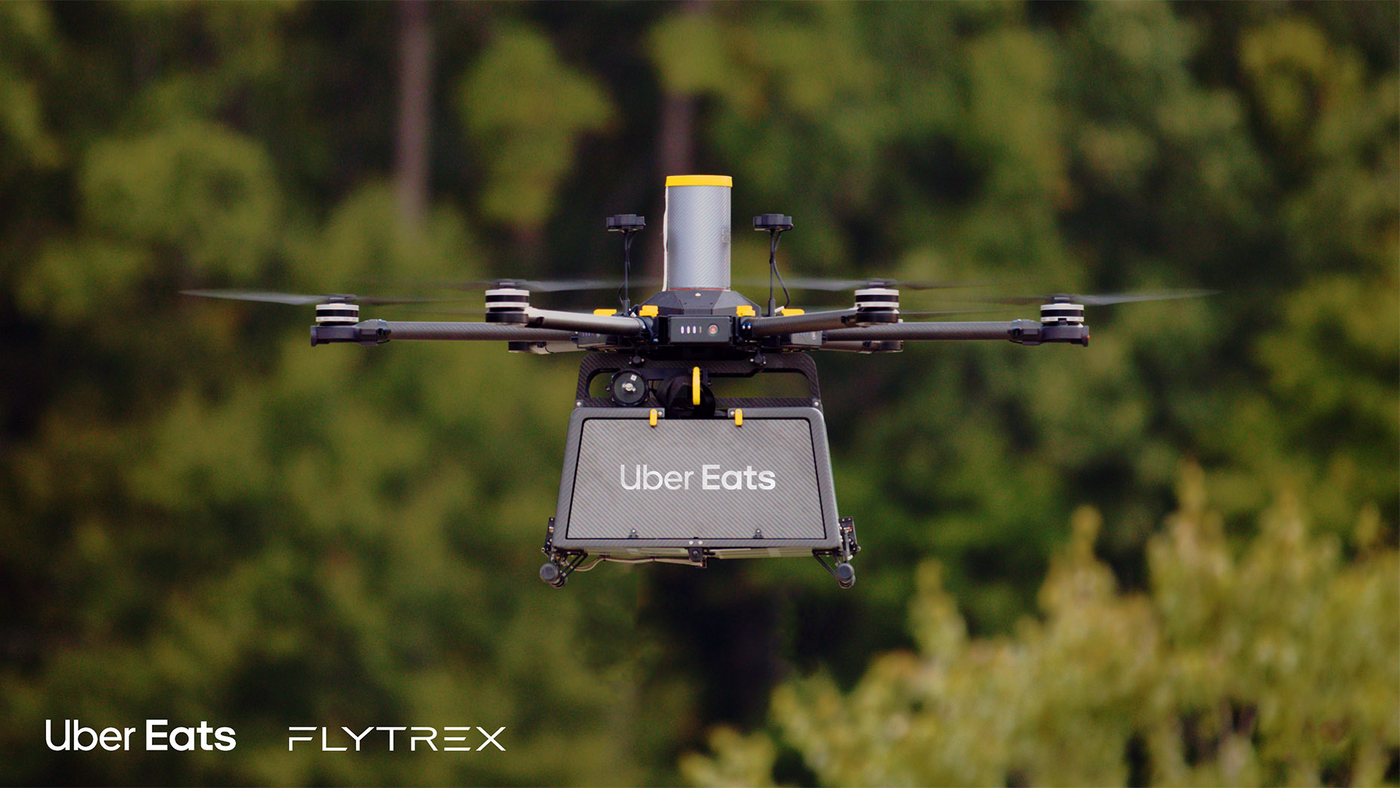
The bull case: incumbents have repeatedly proven willing to outsource rather than build. Walmart uses both Wing and Zipline. DoorDash and Uber use Flytrex and Manna. Operators that accumulate flight hours, Part 135 certificates, and genuine autonomy IP have something incumbents can't shortcut. Regulatory approvals are slow and hard to replicate — a real moat, if you stay solvent long enough to build one.
The picks-and-shovels argument is stronger than the operator argument. UTM software, detect-and-avoid technology, and certification infrastructure don't need to pick the right operator — they just need the category to scale. That looks increasingly likely even as individual operators fail.
What a sceptical investor should demand: company-level profitability (not per-flight), regulatory approvals already in hand, a niche where drones are structurally better than ground logistics, and a retail or healthcare partner that controls the demand side.