General Fusion SPAC IPO: The Deep Tech Funding Trap Explained
General Fusion is going public via SPAC. Read the press release and it sounds like a milestone. Read the SEC filings and a different picture emerges. This is what the deep tech funding trap actually looks like — and what it signals for the fusion sector.
Most fusion headlines are about physics. This one is about money.
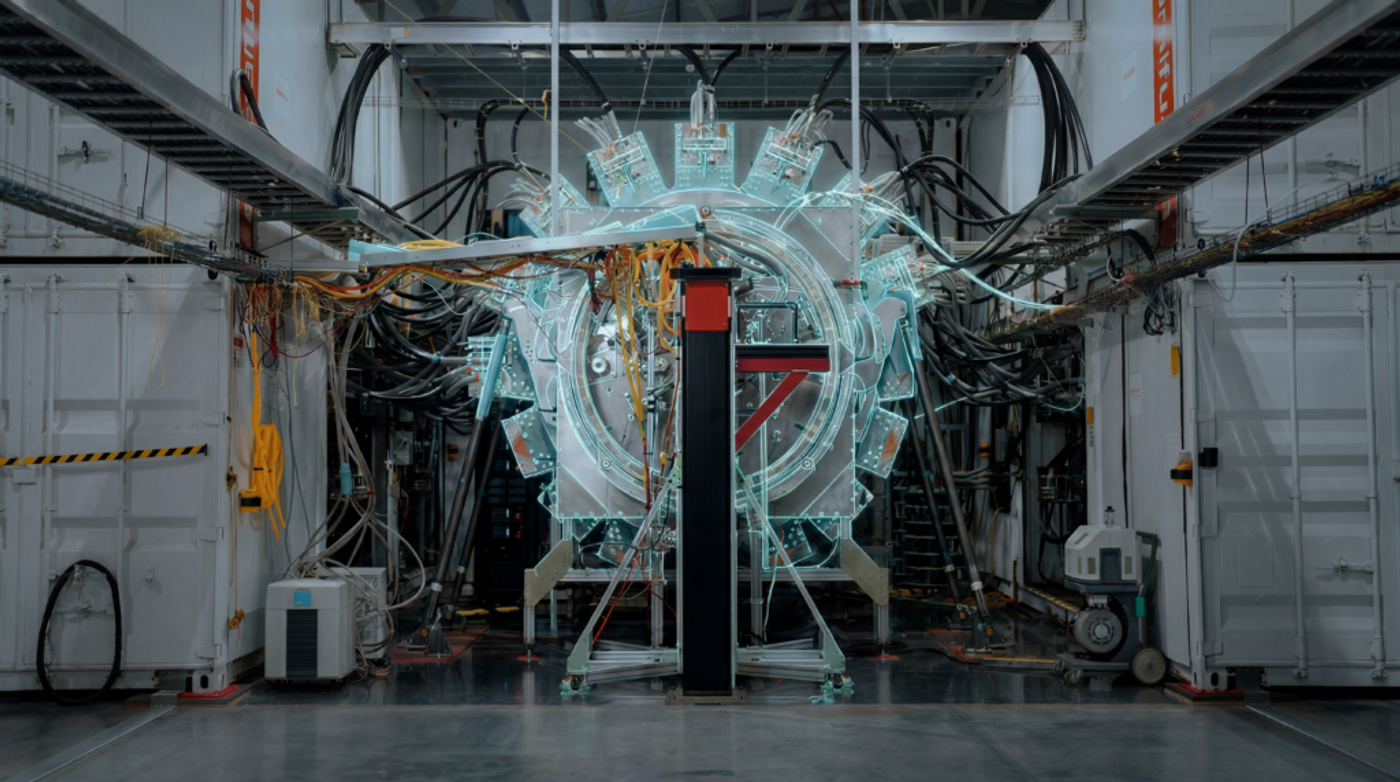
On 21 January 2026, General Fusion announced it would go public via a reverse merger with Spring Valley Acquisition Corp. III — a SPAC — at an enterprise value of approximately $720 million, targeting a Nasdaq listing under the ticker "GFUZ." The deal could hand the company up to $338 million in fresh capital.
Read the press release and it sounds like a milestone. Read the SEC filings and a different picture emerges: as of 31 December 2025, General Fusion carried a shareholders' deficiency of $173.8 million. Its UK demonstration plant at Culham — announced in 2021 as a landmark moment, granted planning permission in 2023 — has been paused indefinitely while the company refocuses on its Canadian machine. Its internal target for scientific breakeven slipped from 2026 to 2028. And before revealing those financial problems, it had already struggled to raise money from private investors.
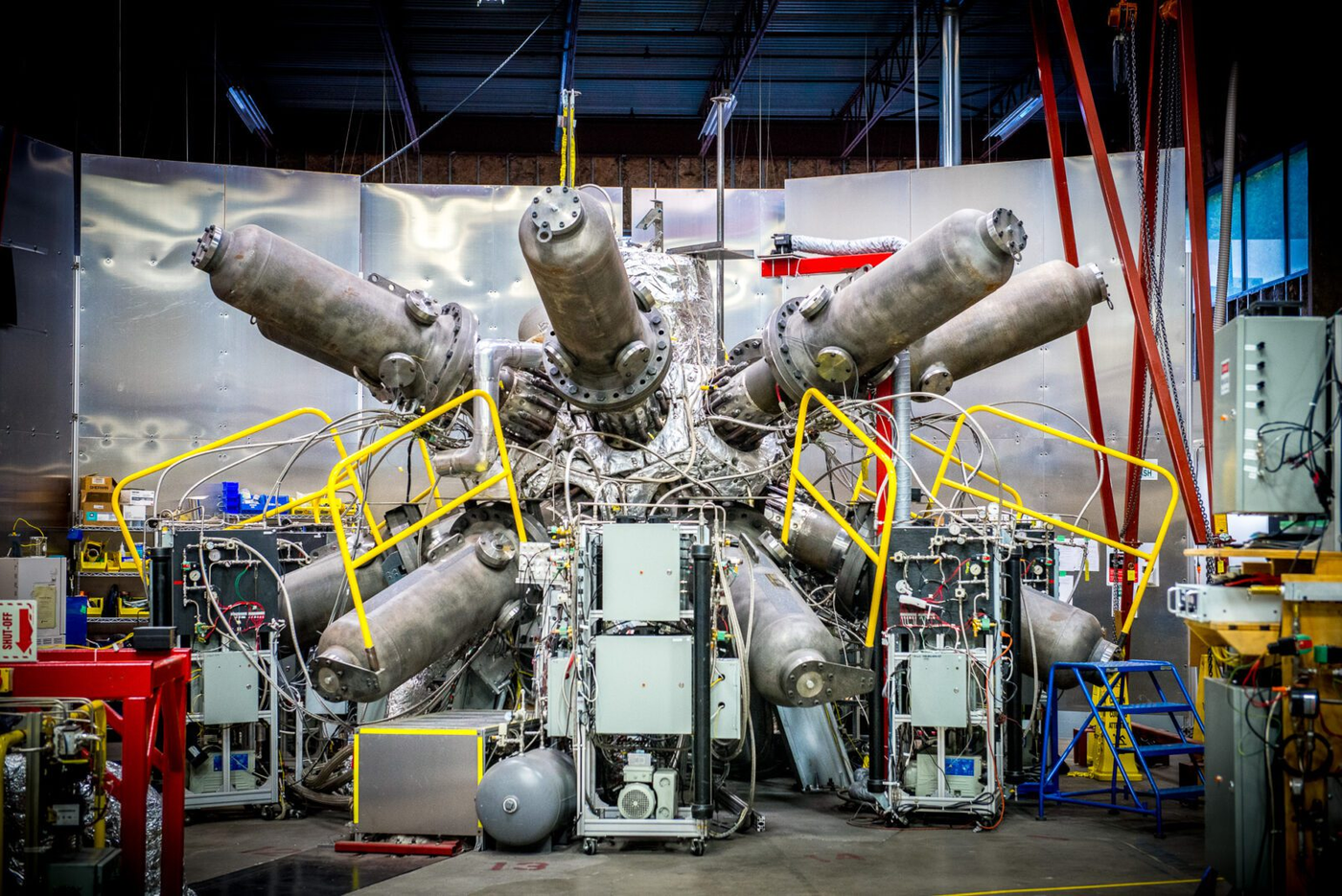
General Fusion isn't going public because it's ready. It's going public because the private markets said no.
That distinction matters — for investors, for the sector, and for anyone trying to separate genuine progress from financing necessity.
What a SPAC actually is
A Special Purpose Acquisition Company is a shell company that raises money through a conventional IPO, parks it in a trust, and then goes looking for a private company to merge with. The private company gets listed without going through the full traditional IPO process — no Goldman Sachs roadshow, no bulge-bracket underwriting, no sustained institutional scrutiny.
For a pre-revenue deep tech company, the appeal is obvious. The traditional IPO route requires a track record, credible near-term revenue, and banks willing to stake their reputation on the deal. The SPAC route requires a willing acquisition vehicle and shareholder approval.
The tradeoff is that the scrutiny you avoid on the way in tends to arrive anyway — just after you're already public and quarterly reporting has begun.
The SPAC track record in deep tech is not encouraging
Spring Valley, the vehicle General Fusion is merging with, has done this before. Its previous deal took NuScale Power — a small modular nuclear reactor company — public. NuScale's stock has since fallen more than 50% from its peak.
That's not an isolated case. The 2020-2021 SPAC boom produced a graveyard of pre-commercial deep tech and clean energy companies that went public before they were ready:
- Lordstown Motors — electric trucks, went public via SPAC, filed for bankruptcy in 2023
- Arrival — electric vehicles, SPAC listing, filed for bankruptcy in 2023
- Faraday Future — EVs, SPAC listing, teetering on delisting
- Proterra — electric buses, SPAC listing, filed for bankruptcy in 2023
The pattern is consistent: long development timelines, capital-intensive technology, optimistic projections made at listing, and a public market that runs out of patience before the product arrives. Deep tech companies that go public via SPAC before reaching commercial revenue tend to struggle once the quarterly reporting cadence forces real numbers into the conversation.
The common burden: why deep tech companies end up here
General Fusion is not unusual. It's an archetype.
The structural problem with deep tech is that the gap between "promising physics" and "commercial product" is measured in decades and billions. Private investors — venture funds, family offices, strategics — have fund cycles and return expectations. When a company burns capital for 15+ years without a commercial product, private capital eventually fatigues regardless of how promising the technology is.
The result is a predictable sequence:
Year 1–5: Seed and early-stage venture. Investors buy the vision.
Year 5–10: Series B/C/D. Investors buy the milestones. Timelines slip but remain plausible.
Year 10–15: Growth rounds become harder. Each milestone slip costs credibility. The founding investors are tired and want an exit path. New investors demand lower entry valuations.
Year 15+: Private markets thin out. The options narrow to: find a strategic acquirer, raise a down round, or go public and access retail capital.
General Fusion was founded in 2002. It is now 24 years old, has raised $612 million, and is heading to public markets with a negative net asset position. That's not a failure of the technology — it may well work. It's a failure of timeline: the commercial horizon kept receding faster than the capital runway could follow.
The Culham story captures this precisely. In 2021, the UK demonstration plant was announced with fanfare — a public-private partnership, planning permission granted, construction expected in 2023, commissioning in 2026. By August 2023, it was paused. The company quietly refocused on a smaller Canadian machine first, pushing the larger demonstration further out. Each recalibration is rational in isolation. Accumulated, they represent years of slippage that private investors eventually stop funding.
Who actually buys this at IPO
Three types — and one notable absence.
Specialist deep tech funds do the real diligence. They model out fusion timelines, assess the MTF technology against alternatives, and size positions accordingly. They're the most sophisticated buyers and understand they're making a long-duration binary bet.
Retail speculators buy the narrative. General Fusion will be the first pure-play publicly traded fusion company. For retail investors excited about fusion as a category, that's a compelling pitch that doesn't require understanding the shareholders' deficiency. This is also the group most exposed to downside if the timeline slips again.
SPAC arbitrageurs trade the mechanics, not the company. They buy before the merger closes and sell shortly after. They don't care about fusion.
The notable absence: the bulge-bracket banks and the institutional investors they bring. When a company chooses a SPAC over a Goldman-led IPO, it's usually because the Goldman-led IPO wasn't on offer. The biggest pension funds, sovereign wealth funds, and endowments follow the banks. Their absence from the General Fusion listing is a signal worth reading.
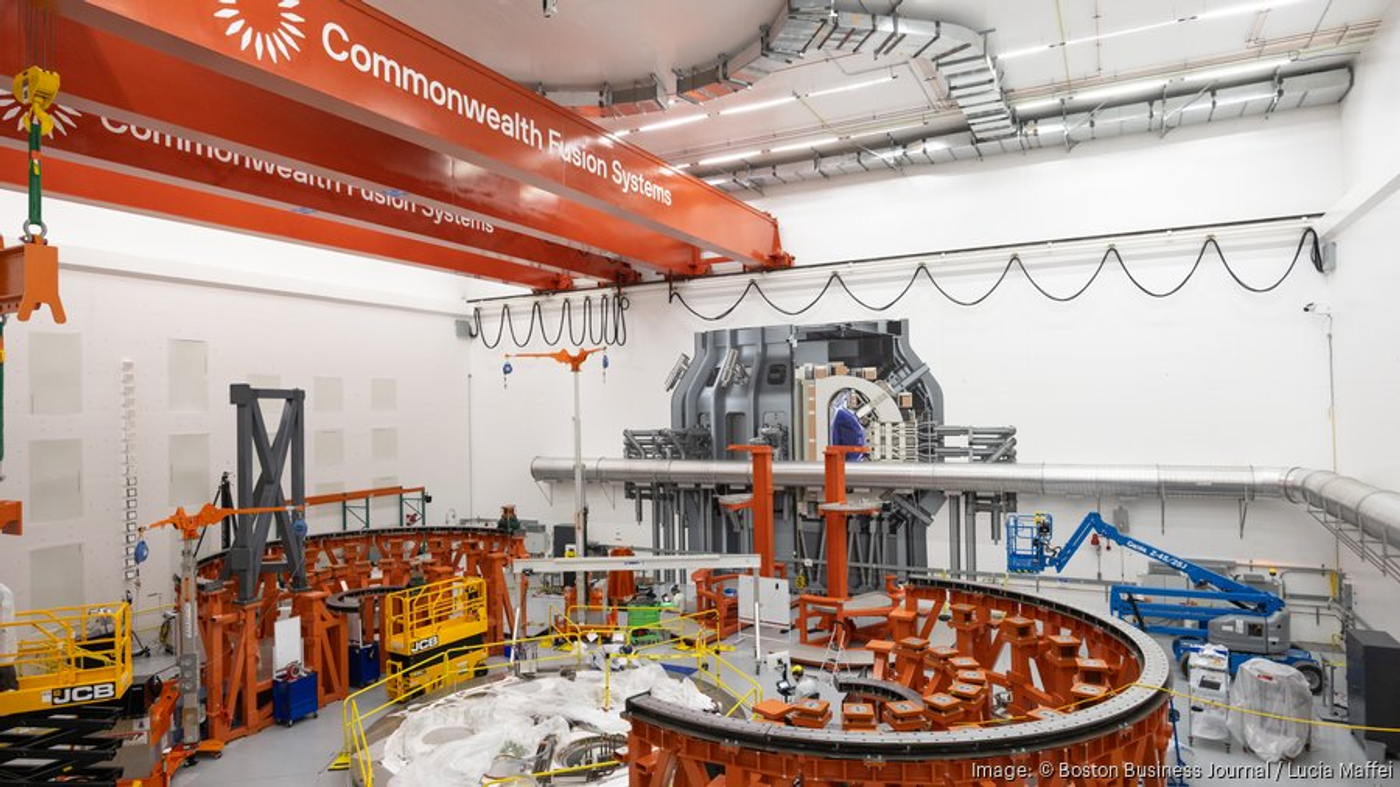
For contrast: when Commonwealth Fusion Systems' SPARC machine demonstrates net energy gain, analysts predict the company will go public via a traditional Goldman/JP Morgan-led IPO, potentially the largest energy listing since Saudi Aramco.
- Goldman doesn't underwrite companies that can't survive institutional scrutiny.
- General Fusion couldn't raise private money and needed a SPAC.
That gap is the credibility hierarchy.
The side quest economy: fusion companies actually making money
While most fusion companies wait for the main event, a handful have found adjacent revenue streams that generate real income today. These are worth knowing — not just as business models, but as a template for how deep tech survives long development cycles.
SHINE Technologies — the blueprint
SHINE is the most commercially mature fusion company in the world, and it has never sold a single electron of fusion electricity. Its founder Greg Piefer's insight was deliberately contrarian: commercialise fusion technology incrementally, using early revenue-generating applications to finance the eventual development of fusion power. Start small with a market where you can make money right away. Reinvest. Access bigger markets over time.
SHINE's current revenue comes from selling neutrons. Its fusion systems produce neutron beams used for industrial imaging, semiconductor radiation-hardness testing (chips for aerospace and defence need to survive cosmic rays), and materials research. Piefer estimates this generated around $50 million in revenue in 2025.
The next step is medical isotopes. SHINE's Chrysalis facility — being built in Janesville, Wisconsin — will be the world's largest medical isotope production facility when complete, using fusion neutrons to produce molybdenum-99 (Mo-99), the isotope used in over 40,000 diagnostic procedures every day. In January 2026, SHINE also acquired Lantheus' SPECT business, adding an immediate revenue-generating radiopharmaceutical portfolio. In April 2026, the US Department of Energy conditionally committed $263 million in loan financing to support Chrysalis completion.
Fusion power is SHINE's long-term destination. But it's funding that journey with a diagnostics business, not investor patience.
First Light Fusion — IP and partnership revenue
First Light licenses its target technology and pulsed-power intellectual property to other organisations rather than operating its own plant commercially. Revenue is modest but real, and the model means First Light doesn't have to build everything itself before generating income.
Tokamak Energy and CFS — government contracts
Both receive significant government R&D contracts — from UKAEA, the US DoE, and ARPA-E — for specific research programmes. These aren't commercial revenue in the traditional sense, but they're real cash flows that extend runway without further equity dilution.
Kyoto Fusioneering — the supply chain play
Kyoto Fusioneering isn't trying to build a reactor. It's building components for everyone else's reactor — blanket systems, tritium handling, heating technology. Its customers are fusion developers. It generates engineering services revenue today, before any fusion plant exists commercially. This is arguably the purest expression of the picks-and-shovels model.
The honest read
General Fusion's SPAC listing is a financing transaction dressed up as a milestone. The $338 million it could raise buys meaningful runway — possibly enough to reach the 2028 breakeven target on its Canadian machine. If the physics works, the public listing gives it a currency to raise further capital and potentially attract the strategic partners a private company can't access.
But investors going in should understand the base case clearly: pre-revenue, negative net assets, 24-year-old company, second major timeline slip, using a financing vehicle with a poor track record in deep tech, in a sector where the gap between physics milestone and commercial electricity remains wide and unproven.
The upside is real. Magnetised target fusion is a credible architecture. If General Fusion's LM26 machine demonstrates scientific breakeven in 2028, the narrative changes materially.
The question is whether the public markets will stay patient long enough to find out — and whether the NuScale precedent, sitting 50% below its SPAC listing peak, will be on investors' minds when they decide.