
Tokenmaxxing is a flawed idea
I think tokenmaxxing is one of the dumbest ways to think about AI adoption.

I think tokenmaxxing is one of the dumbest ways to think about AI adoption.
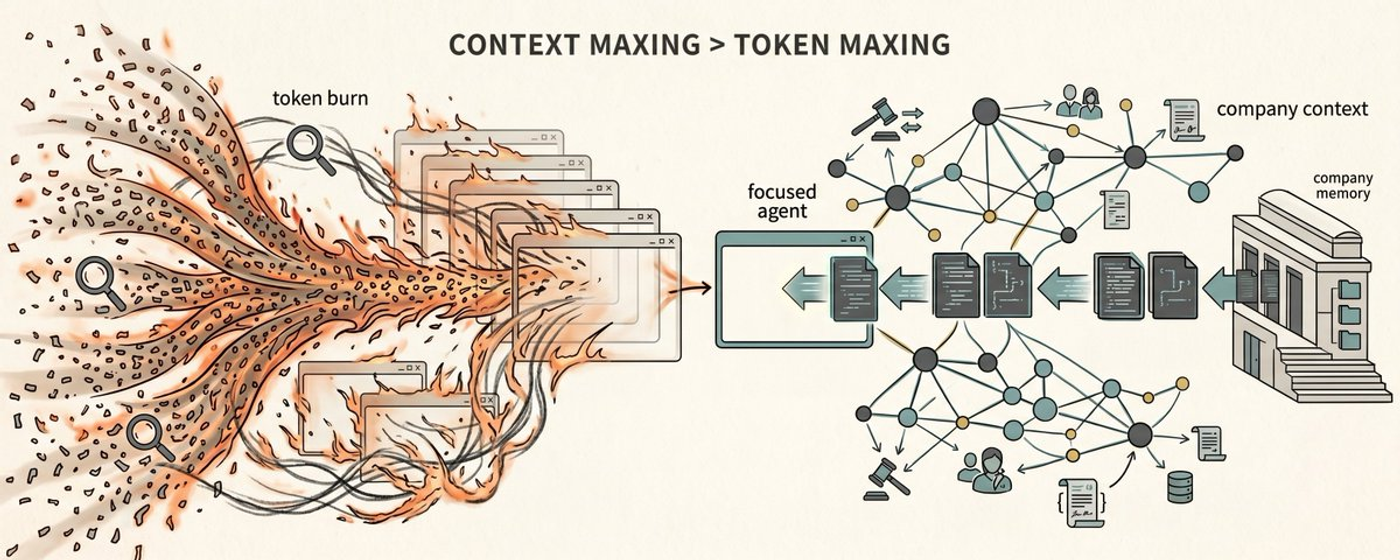
Not because usage data is totally useless. It can help with budgeting, monitoring, and understanding whether tools are even being touched. But the moment companies start treating token input as a proxy for productivity output, they are setting themselves up for bad incentives, bad measurement, and expensive disappointment. Even BNP Paribas CIB’s chief AI officer called tokenmaxxing a “vanity metric” and said AI should be judged by productivity and revenue impact, not by how many tokens employees burn through.
That is basically Goodhart’s Law in corporate cosplay:
when a metric becomes the target, it stops being a good metric.
If management rewards people for “using more AI,” then of course people will find ways to use more AI. Longer prompts. More parallel agents. More unnecessary calls. More bloated workflows. More noise mistaken for progress. That does not mean the company is becoming more productive. It may just mean the bill is getting uglier. Critics of tokenmaxxing have already pointed out exactly this dynamic: once workers are pushed to maximize token usage, the metric can be gamed and costs can rise without corresponding gains in quality or output.
The real problem is input obsession
What bothers me most is that tokenmaxxing reflects a much bigger management mistake: measuring effort instead of value.
A company should not care how many prompts were sent. It should care whether:
- work gets done faster,
- decisions get better,
- errors go down,
- revenue improves,
- customer experience improves,
- or new capabilities become possible.
That is also where the evidence is getting awkward. A 2025 paper on developer productivity with GenAI found only limited overall productivity change, and highlighted a productivity paradox where developers may become faster without necessarily producing better software or feeling more satisfied. Another late-2025 empirical study of GenAI in software engineering found reported benefits, but also noted that objective measurement of productivity and quality remains limited, while training and governance lag behind tool access.
So yes, companies can absolutely get value from AI. But no, it is not smart to confuse activity with outcome.
Forcing adoption without understanding the tool is also misguided
Another thing I find irrational is the way some companies are forcing AI adoption from the top down without actually understanding what the tool is good at, where it breaks, or how teams should work with it.
That is not transformation. That is panic buying.
Research on AI use in professional coaching found adoption works best when AI is used as an augmentation tool, not as a blind replacement, and that AI literacy, ethical awareness, and human oversight are key to effective use. A separate systematic review on organizational adaptation to GenAI in cybersecurity found successful adoption depends heavily on security maturity, governance, human capital, and hybrid operating processes rather than tool access alone.
This is what a lot of corporate AI strategy still gets wrong. You cannot just hand people a shiny model, tell them to “use AI more,” and expect magic. If teams do not know:
- when to trust it,
- when to verify it,
- how to prompt it,
- where it fits into workflows,
- what should still stay human,
- and what new risks it introduces,
then you are not scaling intelligence. You are scaling confusion.
Real adoption means restructuring the system, not just buying a tool
The harder truth is that AI adoption is not mainly a software procurement problem. It is an organizational redesign problem.
A recent paper on job redesign with LLMs argues that the value of AI comes less from pure automation than from task optimization, reallocation, and redesign, with humans shifting toward areas where they hold comparative advantage such as leadership, complex judgment, and stakeholder management. Another 2025 paper on agentic AI evaluation warned that many productivity claims are built on imbalanced measurement, where benchmark and technical metrics dominate while human, safety, and economic outcomes are neglected.
That is why the “just deploy AI everywhere” mindset is so unserious.
If you really want AI to work inside a company, you need to rethink:
- roles,
- approvals,
- data access,
- quality control,
- handoffs,
- incentives,
- and training.
That is slow. That is operationally annoying. That is expensive. But that is the real work.
And yes, adoption takes time
This part feels obvious, but somehow the market forgot it.
Major technologies usually do not create immediate productivity miracles the moment they arrive. Economists have been talking about the productivity paradox for decades: powerful new technology often appears everywhere long before it shows up clearly in measured productivity.
AI may very well end up being transformative. I think it will. But that does not mean every company that bought copilots, agents, or automation tools over the last 6–12 months was suddenly becoming more efficient in a meaningful way.
Some were experimenting. Some were signaling to investors. Some were responding to board pressure. Some were just scared of being left behind.
That is not the same as real adoption.
The price paid for rushed adoption has been brutal
And the market is finally starting to admit that.
Reuters reported in 2025 that over 40% of agentic AI projects are expected to be scrapped by 2027 because of escalating costs and unclear business value. Gartner also warned about “agent washing,” where vendors exaggerate what their products can actually do.
At the same time, there are mounting signs that companies are reassessing AI spend versus value. Business Insider reported today that some executives now see tokenmaxxing as wasteful, not strategic, and that a number of firms have started reevaluating whether heavy AI usage is actually cost-effective. Another BI piece reported that even Sam Altman recently acknowledged deployment costs had become a “huge issue” for some customers.
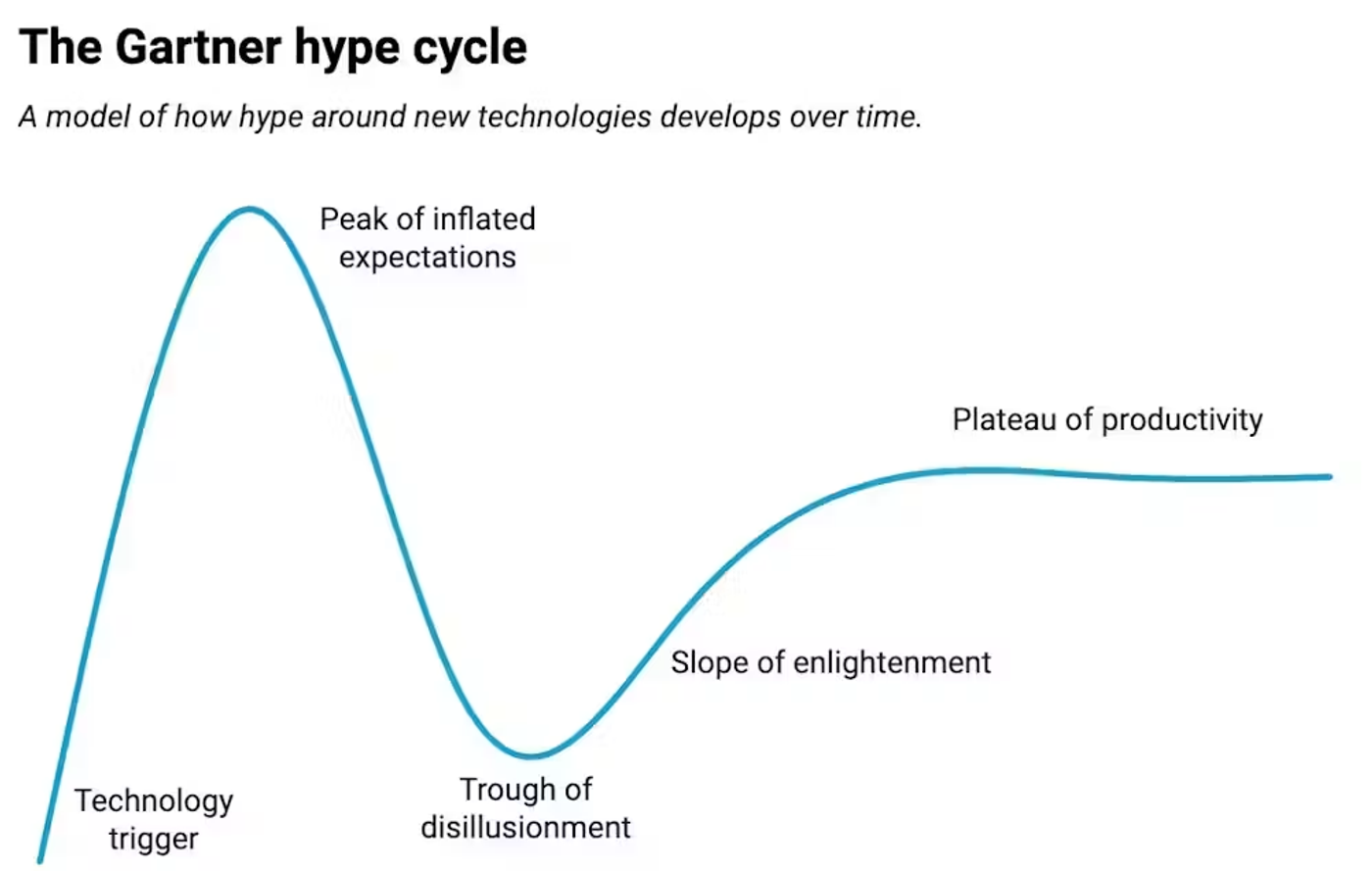
That does not mean AI is fake. It means the pricing of the hype got way ahead of the productivity proof.
That is why the last 6–12 months often felt like pure hype
This is the part people get sensitive about, but I think it is true.
For a lot of companies, the last 6–12 months of “AI automation” was not a real operating shift. It was a hype cycle dressed up as strategy.
That does not mean nothing useful happened. Some firms absolutely found value. A field experiment in online retail found measurable gains in some GenAI-enhanced workflows, especially where AI reduced friction and improved conversion. But even that study found the impact varied a lot depending on the workflow and the marginal contribution of AI relative to what the firm already did well.
That nuance matters. AI is not one giant universal productivity button. It helps more in some workflows than others. It needs context. It needs redesign. It needs governance. It needs patience.
Without that, “AI automation” just becomes a boardroom slogan, a press release, or a burn rate.
My takeaway
I do not think the problem is AI itself.
I think the problem is how lazily some people are trying to evaluate and force it.
Tokenmaxxing is stupid because it mistakes consumption for value.
Forced adoption is stupid because it mistakes tool access for transformation.
And rushing AI into companies without restructuring workflows, retraining teams, and changing how work is measured is stupid because it mistakes hype for execution.
Real AI adoption will happen. But it will not happen through leaderboards, vanity metrics, or panic spending.
It will happen when companies stop asking:
“How much AI are we using?”
and start asking:
“What output is actually better now, and what had to change in the system to make that happen?”