Kimi K3 Controversy: Fable 5, Distillation and the Open-Weight War
The Kimi K3 controversy has turned open-weight AI into a fight over business models, intellectual property, export controls and technological sovereignty.
Hope I have not been too behind this headline. Everyone currently arguing about open-weight AI has a balance-sheet reason for their position.
What happened
In mid-July, Chinese lab Moonshot AI released Kimi K3: a 2.8-trillion-parameter model and the largest open-weight model ever built. “Open-weight” means the trained model itself—not just access through an API—is published for anyone to download, run and modify on their own servers, for free.
K3 keeps its running costs down with a mixture-of-experts design. It has 896 specialised sub-networks, but only 16 switch on for any given task. So despite the 2.8-trillion headline figure, it runs more like a 50-billion-parameter model. It benchmarked close to the frontier and beat some rivals outright on coding tasks, although it still trailed Claude Fable 5 and GPT-5.6 Sol overall.
Then it escalated. On 22 July, the White House accused Moonshot of secretly “distilling” Anthropic’s Fable 5—training K3 partly on Fable’s outputs without permission through a hidden system designed to dodge detection. The Treasury followed with a sanctions threat.
At the same time, a related fight broke out over open weights more broadly. On 24 July, a coalition that grew to more than 50 companies—including Nvidia, Microsoft, Meta, Google and eventually OpenAI—published a letter urging Washington not to place broad restrictions on open-weight models.
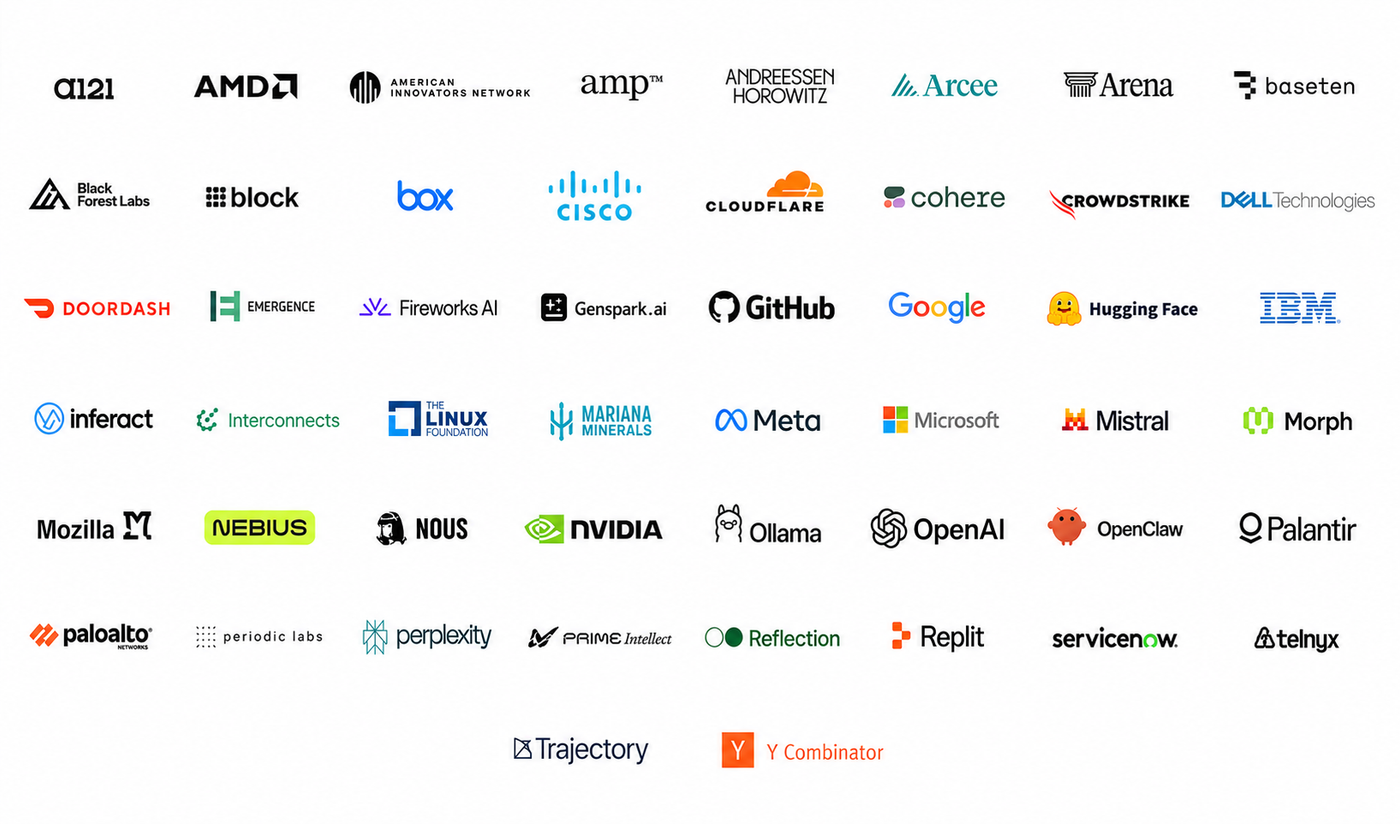
Two names were conspicuously missing: Amazon and Anthropic.
Days later, Anthropic’s CEO clarified that the company had never called for a blanket ban. Instead, he proposed three narrower measures: tighter enforcement against chip smuggling, action specifically against industrial-scale distillation, and mandatory safety testing before any sufficiently capable model is released, whether open or closed.
Nothing here is resolved. There are no sanctions and no published evidence. But the reaction has already reshaped how the industry talks about open weights.
Why it happened this way
Start with the accusation. Washington could have proposed banning Chinese open-weight models outright, but “ban all open models” is a much harder sell than “punish intellectual-property theft.” Distillation gives officials a targeted-sounding justification that avoids attacking openness itself while still slowing whoever is closing the gap fastest. That is probably why it has become the go-to argument, whether or not the specific Fable claim holds up.
The signatory split explains the rest better than any stated principle. OpenAI, Anthropic and, initially, Google all sell frontier intelligence through metered APIs, so they benefit if Washington restricts cheaper open competitors. Their value partly depends on advanced models remaining scarce and expensive.
Most of the signatories make money from wider AI adoption regardless of whose model wins. Nvidia sells chips to anyone building or running models. Microsoft offers both open and closed models through Azure. Meta’s strategy is built around Llama being open.
Mistral was always likely to sign. It is French, and its pitch to Europe is that running your own model on your own terms matters more than topping every benchmark.
OpenAI’s move is the most revealing. It stayed off the original letter, faced criticism given its founding story around openness, then signed within about 48 hours once people noticed. That is not strategy. That is a company caught out by its own branding.
Anthropic held its line and never signed, which also tracks: unlike the infrastructure companies, it sells the thing open weights compete with most directly. Amazon’s absence looks more like solidarity with its biggest investment than an independent position of its own.What this signals
On the business side
I see the letter’s signatory list as a live map of who is exposed.
Labs whose value depends on being clearly better than a free alternative are now watching open models arrive within months of the closed frontier. That squeezes the exact thing that made proprietary models valuable: scarcity.
Expect closed labs to keep pushing value further up the stack into agentic tooling, enterprise integration, compliance and safety certification. Meanwhile, routine and high-volume tasks are likely to migrate first to cheaper open models.
Anthropic’s safety-testing proposal can be read in two ways. Read generously, it is principled because it would apply to Anthropic’s own future models too. Read skeptically, a testing mandate is also exactly the kind of compliance cost a large incumbent can absorb easily while a fast-moving challenger cannot. Both readings are circulating, and neither is settled.
“Open” is not one playbook either.
Some companies give models away because it feeds a bigger business. Nvidia sells chips. Alibaba sells cloud services. Some labs have backers that do not need the model itself to make money directly, such as DeepSeek’s hedge-fund parent.
Others, like Moonshot, are taking a real risk: giving the weights away now and betting that the resulting adoption will create enough enterprise business later to fund the next model.
That is not guaranteed. Frontier models are expensive to build, and a large user base does not automatically pay for the next training run.
Alibaba’s latest move is telling. It released its strongest new model, Qwen 3.7, as a closed, paid product while leaving its older open weights untouched. Even a lab near the frontier does not seem to believe that “give everything away” survives contact with an actual lead.
Markets reacted quickly and messily. Pre-IPO trackers wiped roughly $300 billion from the combined implied valuations of OpenAI and Anthropic within days of K3’s launch. Chip stocks sold off too, suggesting investors were repricing the wider AI infrastructure-spending thesis, not just judging one model.
Pre-IPO tracker estimates at each company’s 2026 peak, immediately before K3’s release, and after K3. Values are shown in USD trillions.
- Anthropic
- OpenAI
But Anthropic’s revenue kept growing faster than OpenAI’s over the same stretch, while Moonshot was raising money at a higher valuation of its own. The simple story that “China wins and the US loses” does not survive contact with the numbers.
On the political side
K3 is also a live test of whether chip export controls actually bottleneck AI capability.
Its efficient design suggests Chinese labs are engineering around hardware limits rather than being stopped by them. That is probably why Washington’s focus is shifting toward a second lever: distillation enforcement and proposals to extend export controls to cloud-based access, not just physical chip sales.
Washington does not look unified on any of this. One member of Congress has publicly asked why the administration is threatening sanctions over alleged IP theft while still clearing high-end chip sales to the same country.
Before the industry rallied around openness, one OpenAI executive had also floated manufacturing regulatory fear around open models specifically, before quietly retracting it.
China’s response—doubling down rather than backing off, continuing to raise money and continuing to ship—looks confident, not rattled.
There is also a third player in this story: Europe.
Europe is trying to make sovereignty a genuine third axis, separate from who has the smartest model. The argument is about whether governments and companies can control their own data, infrastructure and deployment, with Mistral as the clearest European bet.
The honest caveat, raised by European analysts themselves, is that using Chinese open weights “for sovereignty” may simply replace one dependency with another. And Mistral still trails the frontier by months.
Real bet. Unproven, so far.
Bonus: Some super impressive demo cases of what Kimi K3 Swarm agent can build
- Interactive illustration of Gargantua black hole;
- Interactive illustration of Open Sea;
- Real-time Satellite tracking ~19,000 orbiting objects around the Earth.