Quantum 101: How Quantum Computer Can Choreograph Possibilities
"If you think you understand quantum mechanics, you don't understand quantum mechanics" - Richard Feynman
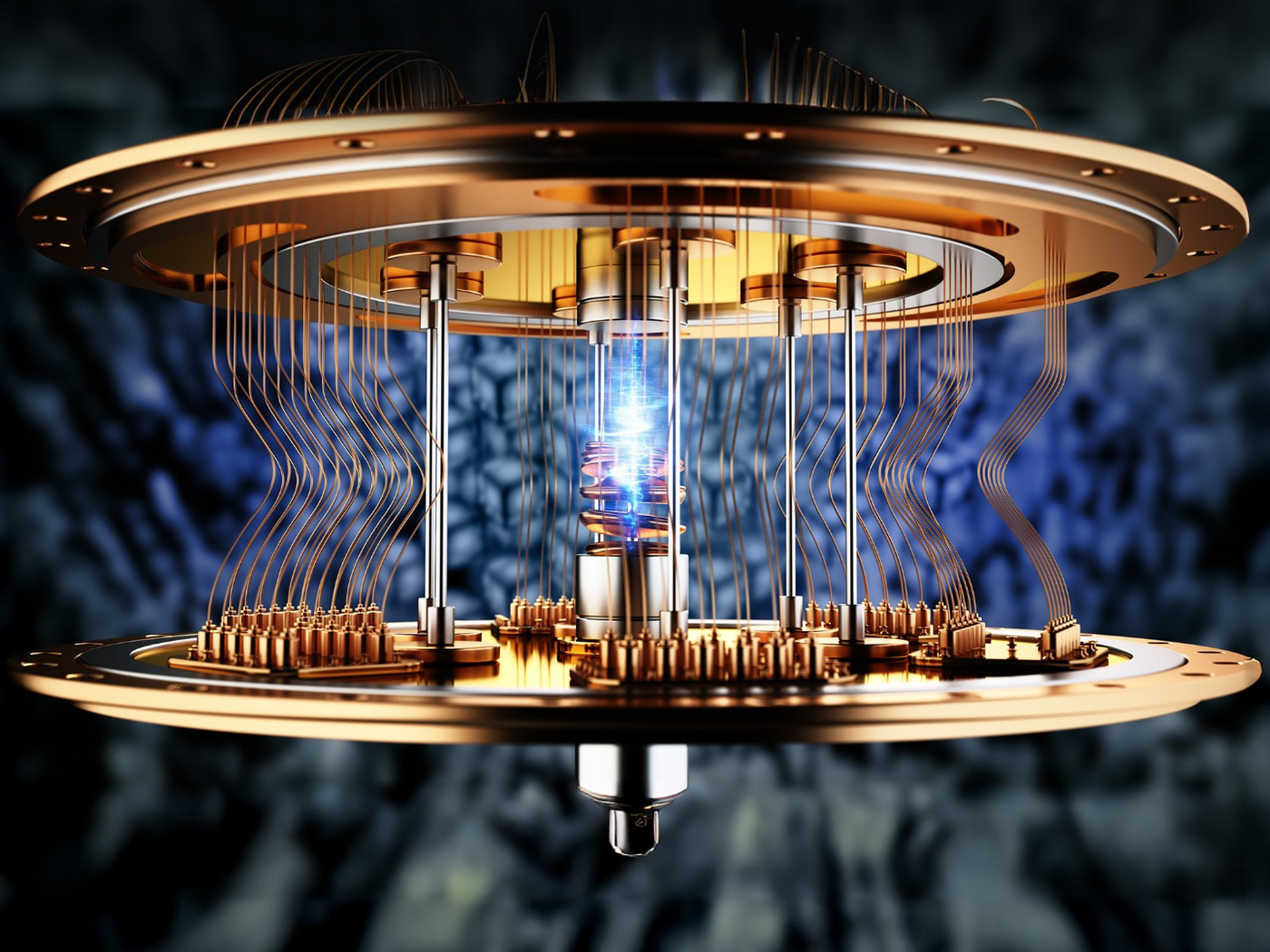
The best way I use to think about quantum computer is:
A quantum computer is a physical machine that uses quantum physics to manipulate probability before measurement.
Normal computers process information using bits, which are either 0 or 1. Quantum computers use qubits, which can exist in a quantum state described by amplitudes. These amplitudes can be adjusted, combined, and cancelled through interference. That is where the power comes from.
But quantum computers are not magic answer machines. They do not instantly know the correct answer. They use carefully designed physical operations to make useful outcomes more likely to appear when measured.
1. What is a quantum computer?
A quantum computer is a computer that uses the rules of quantum mechanics — the physics of atoms, electrons, photons, and other tiny systems — to process information.
The core scientific ideas behind it are:
Quantum superposition: a quantum system can hold multiple possible outcomes before measurement.
Wave function: the mathematical description of a quantum system’s state.
Amplitude: the wave-like “weight” attached to each possible outcome.
Interference: amplitudes can add together or cancel out.
Entanglement: multiple qubits can become linked so deeply that they must be described as one combined system.
Physically, quantum computers do not look like the double-slit experiment diagram. Inside, you usually do not see little waves passing through slits. Instead, depending on the hardware, a quantum computer may involve superconducting chips, lasers, vacuum chambers, trapped atoms, photonic circuits, or huge cooling systems.
The “wave” part is mostly mathematical: the quantum state behaves according to wave-like rules.
2. What is a qubit?
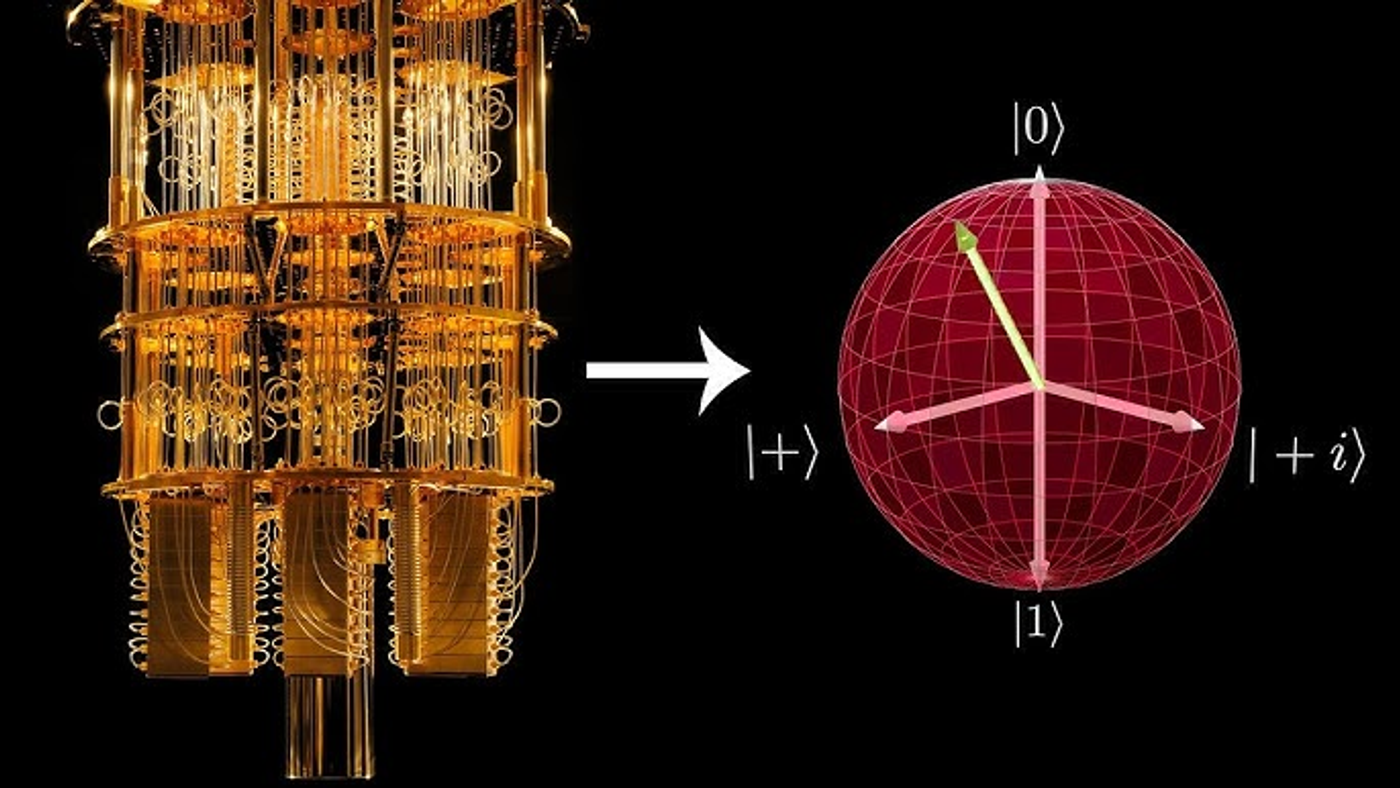
A qubit is the quantum version of a bit.
A classical bit can be:
0 or 1
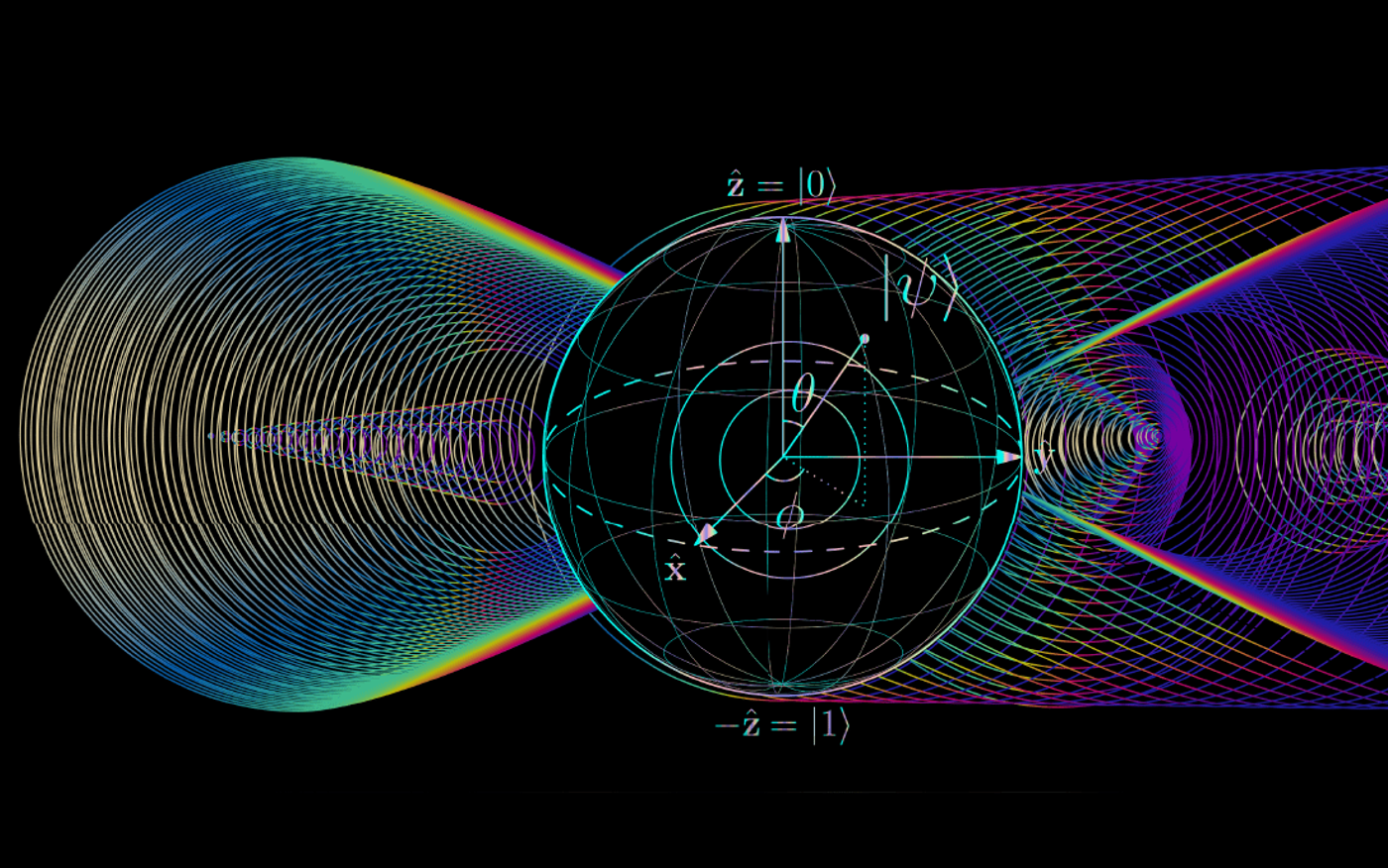
A qubit can be described as:
|ψ⟩ = α|0⟩ + β|1⟩
This means:
α = amplitude for outcome 0
β = amplitude for outcome 1
When measured:
Probability of 0 = |α|²
Probability of 1 = |β|²
A qubit does not have to be 50/50. It can be 90/10, 30/70, or even 100/0. It is still a quantum state as long as it is described by amplitudes.
A qubit is also not just digital software. It is a physical object or system used to store quantum information.
Examples include:
Superconducting circuit
Trapped ion
Photon
Electron spin
Neutral atom
Quantum dot
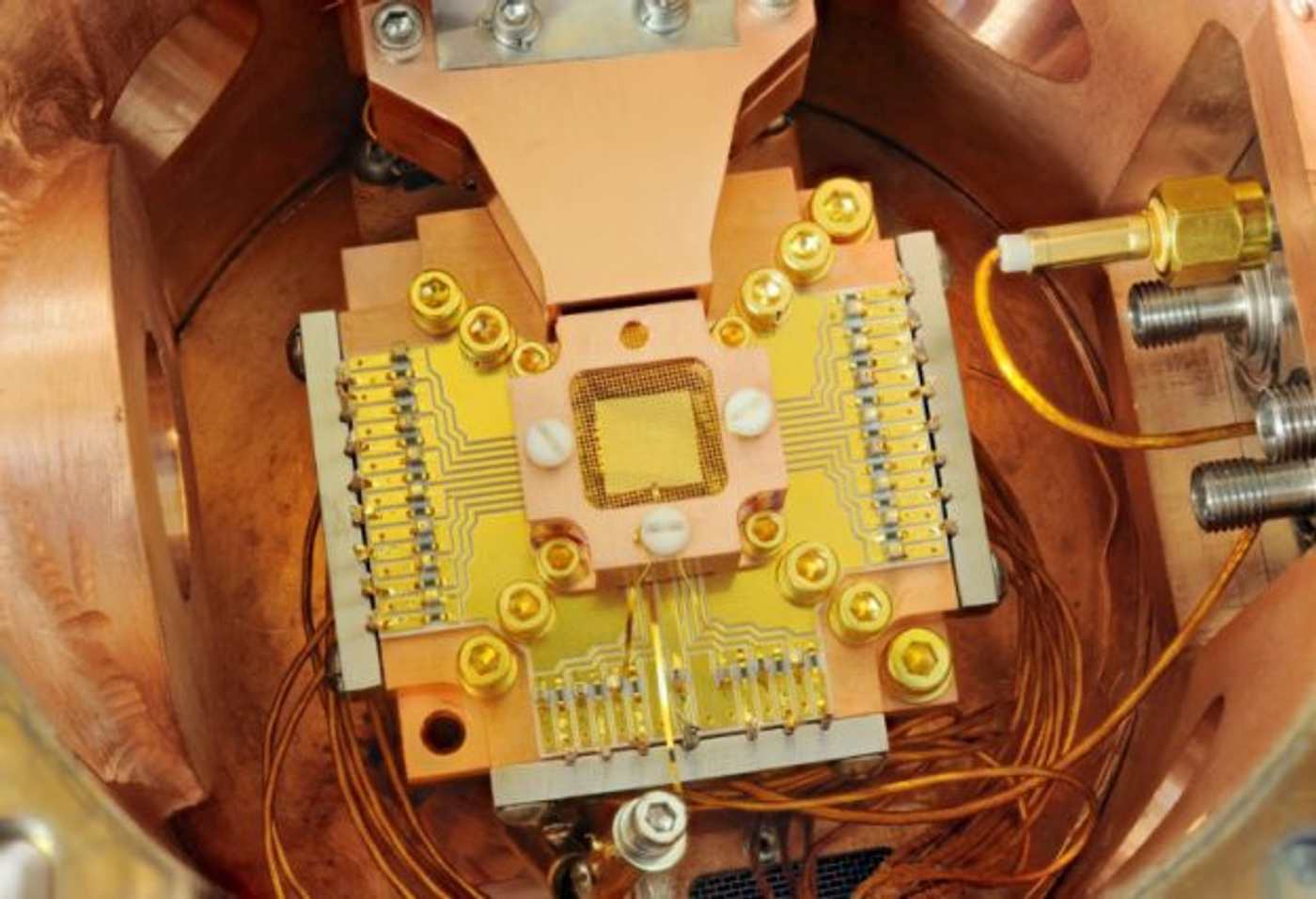
These work because they are small, isolated, controllable quantum systems. They have two stable states we can label as |0⟩ and |1⟩, and they can preserve quantum behaviour long enough to be useful.
Your phone, table, or laptop is also made of quantum particles, but it is too large and noisy. It constantly interacts with the environment, so its delicate quantum behaviour disappears almost instantly. This is called decoherence.
In simple terms:
Small + isolated + controllable = useful qubit
Big + noisy + constantly interacting = not useful as a qubit
3. Why amplitude is the whole game
Amplitude is one of the most important ideas in quantum computing.
An amplitude is not a probability. It is the thing that becomes probability when squared:
Probability = |amplitude|²
The reason amplitudes matter is that they behave like waves. They have size and phase, so they can add or cancel.
Example:
+0.5 + +0.5 = +1
This strengthens an outcome.
But:
+0.5 + -0.5 = 0
This cancels an outcome.
Classical probabilities cannot do this. If something has 30% probability and another path has 30%, you just add them. But quantum amplitudes can cancel before they become probabilities.
This is why quantum computing is powerful: it is not just storing many possibilities. It is manipulating the amplitudes of those possibilities.
The goal is:
Useful outcomes → amplitudes reinforce
Wrong outcomes → amplitudes cancel
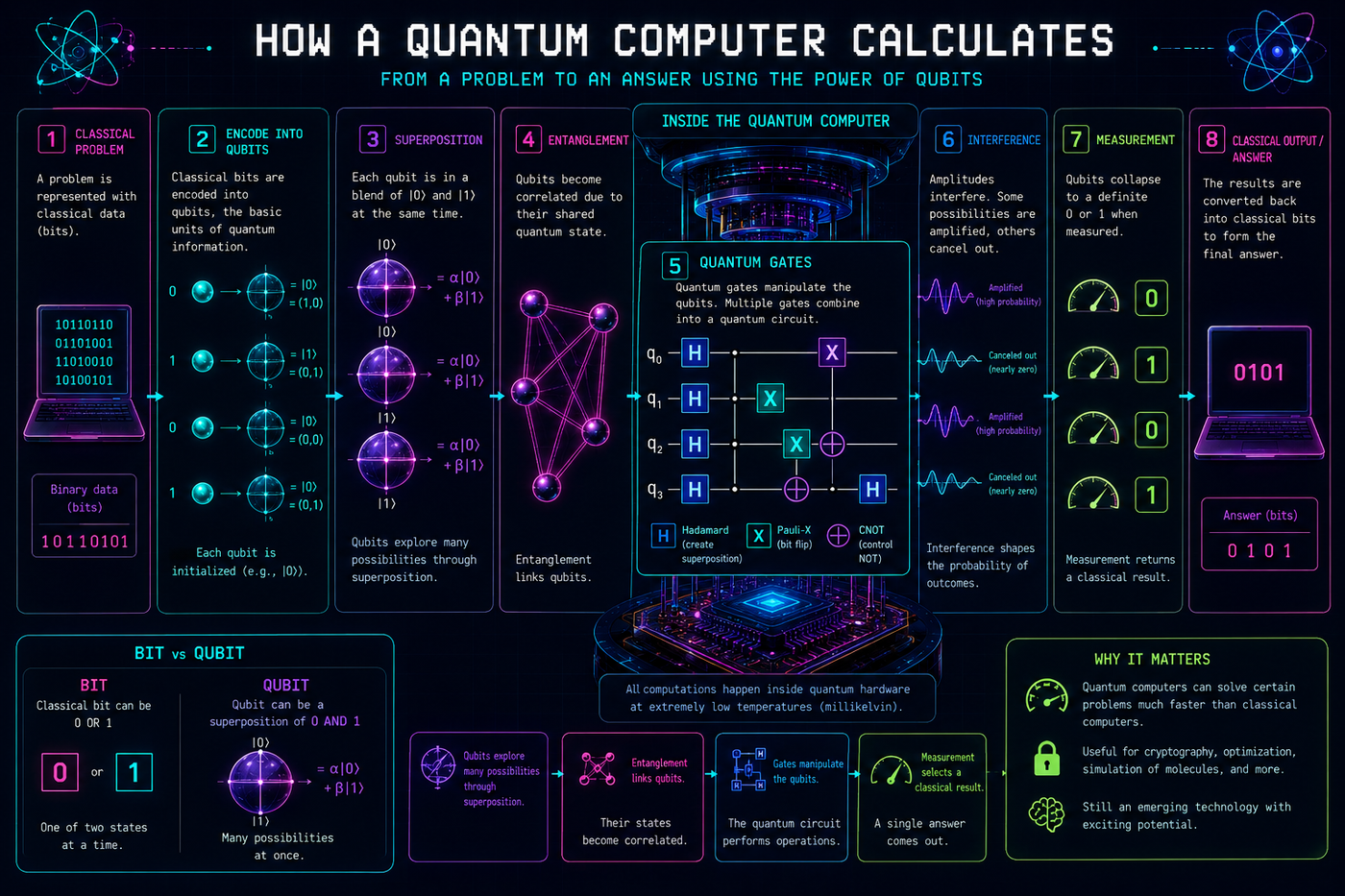
4. How does a quantum computer actually work?
Let’s use a simple example.
Suppose we have a problem with 16 possible outcomes, and we do not know which one is correct.
Since:
2⁴ = 16
we need 4 qubits to represent 16 possible outcomes:
0000, 0001, 0010, ... 1111
Step 1: Define the size of the problem
Before running a quantum computation, we usually need to know how many possible candidates we want to represent.
If we have:
16 outcomes → 4 qubits
1 trillion outcomes → around 40 qubits
This does not mean we know the answer. It only means we know the size of the search space.
Step 2: Put qubits into superposition
The quantum computer prepares the qubits so all possible outcomes have amplitudes.
For 16 outcomes, each outcome may start equally likely:
Each outcome amplitude = 1/4
Each probability = (1/4)² = 1/16 = 6.25%
At this point, the computer has not solved anything. It has only created a state containing all possible candidates.
Step 3: Human defines the rule
This is the most misunderstood part.
Humans do not tell the quantum computer:
The answer is 7.
Humans define a rule:
Good answer = any x that satisfies this condition.
For example:
Find x where x² = 49
We do not need to know the answer first. We only need a rule that can test whether a candidate is valid.
Step 4: Build the oracle
The oracle is the rule-checking part of the algorithm.
It is not a crystal ball. It is a quantum circuit that applies the rule to the whole quantum state.
If the rule is:
x² = 49
the oracle does:
If x² = 49 → phase flip
If x² ≠ 49 → do nothing
If 7 satisfies the rule, the oracle changes its amplitude like this:
7: +0.25 → -0.25
But the probability is still the same:
(+0.25)² = 6.25%
(-0.25)² = 6.25%
So the oracle does not reveal the answer. It only puts a hidden phase mark on the satisfying outcome.
Step 5: Amplitude amplification
This is the part that makes the marked answer more visible.
The oracle gives the correct answer an invisible phase tag. Amplitude amplification turns that phase difference into an actual probability difference.
After amplification:
Marked outcome → larger amplitude → higher probability
Unmarked outcomes → smaller amplitudes → lower probability
Then the algorithm repeats:
Oracle → amplification → oracle → amplification
until the correct answer becomes likely enough to measure.
Step 6: Measurement
Finally, we measure the qubits.
Measurement gives us one result, not all possible results.
That is why quantum computing is not simply “calculate everything at once.” The hard part is not representing many possibilities. The hard part is making the useful one survive measurement so we human can acknowledge.
5. Is quantum computing instant?
No.
Quantum computing can be much faster for some problems, but it is not “blink of an eye” magic.
For search-type problems, a classical computer may need:
N checks
A quantum algorithm like Grover’s can need roughly:
√N rounds
So:
16 possible answers → around 4 rounds
1,000,000 possible answers → around 1,000 rounds
1 trillion possible answers → around 1,000,000 rounds
This is still much faster than checking 1 trillion possibilities one by one, but not instant.
The most time-consuming part is usually the repeated cycle:
oracle + amplitude amplification
If the rule is simple, the oracle may be relatively cheap. If the rule is complex, the oracle can be expensive because it has to encode the actual logic of the problem as a quantum circuit.
So the bottleneck is often:
How hard is it to build and run the oracle?
How many oracle/amplification rounds are needed?
How much error correction is required?
How long can qubits stay coherent?
Quantum computers also suffer from decoherence. Because qubits are physical systems, the environment can disturb them. Heat, vibration, radiation, electrical noise, or unwanted measurement can ruin the delicate phase relationships needed for interference.
That is why quantum computers often need extreme conditions, such as ultra-low temperatures, vacuum systems, shielding, lasers, and precise control signals.
6. How is this different from a classical computer?
A classical computer usually works more directly:
Try option 1
Try option 2
Try option 3...
A quantum computer works differently:
Represent many options as amplitudes
Use a rule to mark useful outcomes
Use interference to amplify useful outcomes
Measure one final result
But this only helps when the problem has the right structure. Quantum computers are not faster at everything.
They are useful when the problem allows quantum interference to amplify good answers and cancel bad ones.
7. What kind of problems fit quantum computing?
The best-fit problems usually have these characteristics:
Many variables
Many possible combinations
Interactions between variables
Classical simulation becomes too expensive
The system itself is quantum or highly probabilistic
A better answer could create huge economic/scientific value
That is why quantum computing is not just “a faster laptop.” It is more like a specialised machine for problems where classical computers hit a wall.
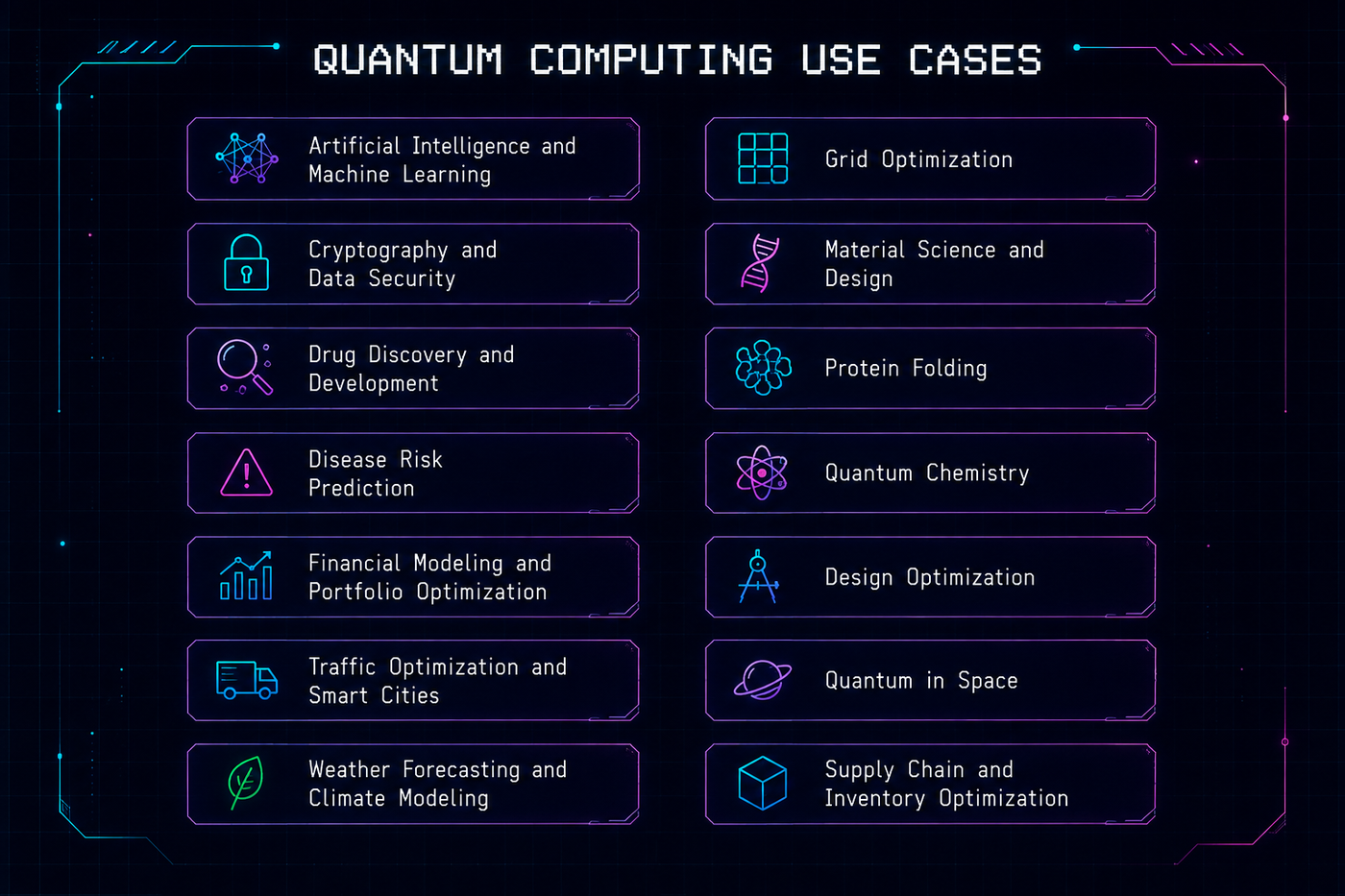
Key use cases of quantum machine include drug discovery, chemistry, materials science, semiconductors, energy, finance, logistics, cryptography, etc. Please read more about its application here (IBM: What is quantum computing? by Josh Schneider and Ian Smalley).
I have never felt smarter than today after this one.