
Nvidia RTX Spark: Ambitious Bet, Expensive Question
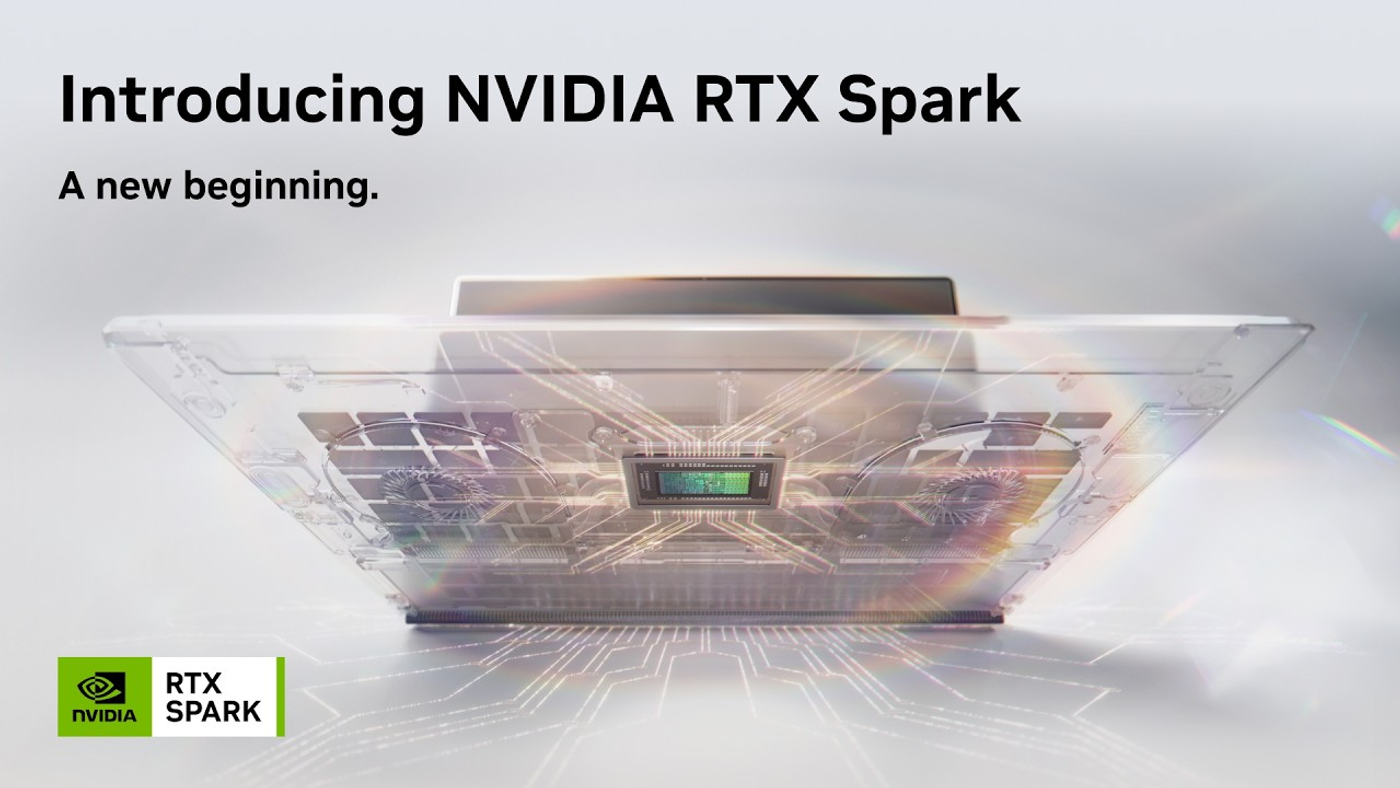
RTX Spark is Nvidia’s attempt to create a new kind of premium laptop platform: one that combines Arm-style efficiency, much stronger graphics, and serious local AI capability in a thin device.
1. What Nvidia is actually trying to build
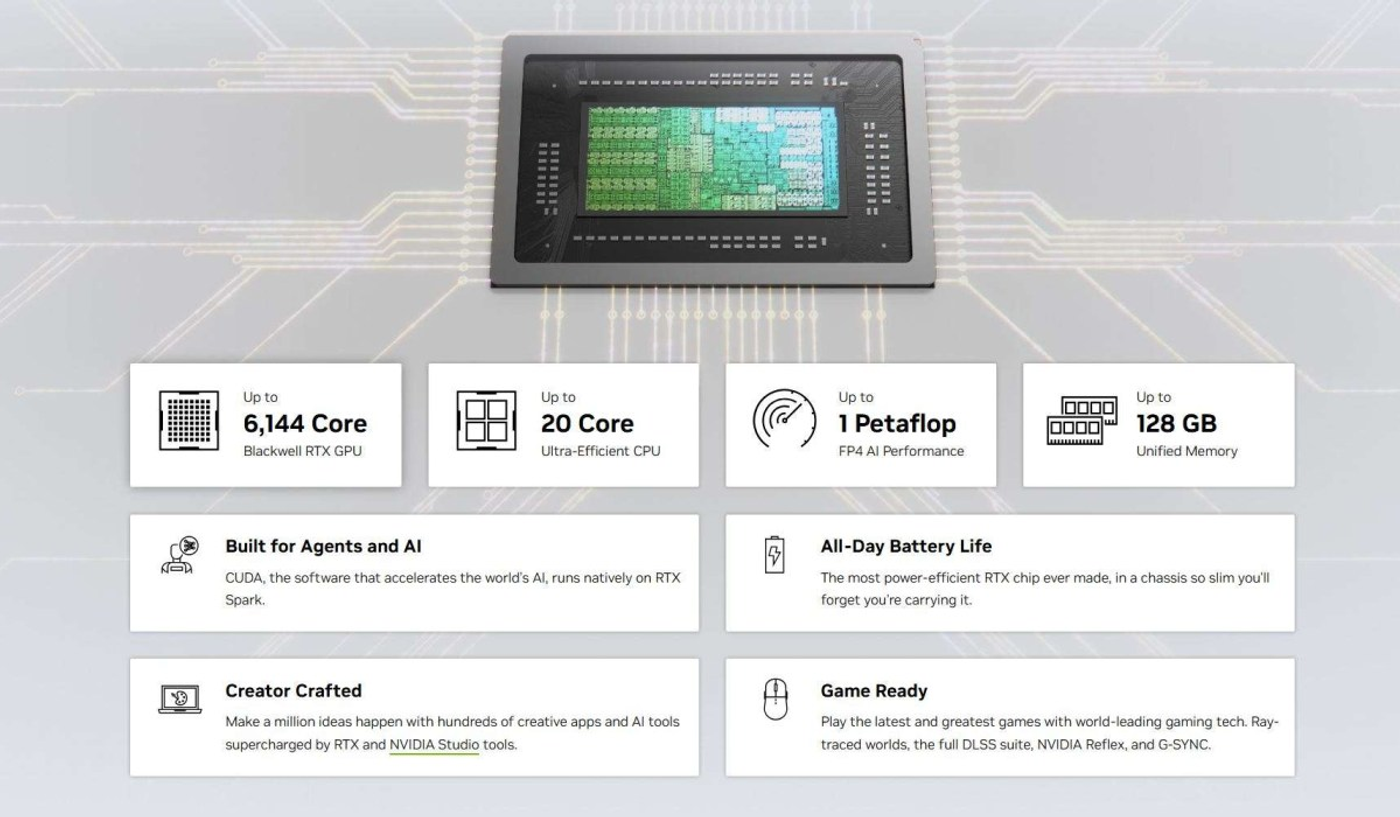
RTX Spark is Nvidia’s attempt to create a new kind of premium laptop platform: one that combines Arm-style efficiency, much stronger graphics, and serious local AI capability in a thin device. Nvidia says the Spark family is designed for laptops and small PCs, with top configurations reaching 20 CPU cores, 6,144 GPU cores, and up to 128GB of unified LPDDR5X memory. Partners already announced include ASUS, Dell, Lenovo, Acer, and MSI, while Microsoft is also building around the platform.
That is why Spark matters. It is not just another Windows laptop chip. Nvidia is trying to build the first Windows-on-Arm machine that feels genuinely attractive to AI developers, creators, and maybe even gamers.
2. Why people are excited
The excitement comes from the promise, not from proven results yet.
The core pitch is simple: what if you could get something closer to MacBook-style battery efficiency, but with much stronger GPU horsepower and a more serious local AI story? Nvidia is openly claiming all-day battery life for standard workloads, and says Spark laptops should deliver performance comparable to devices with RTX 5070-class laptop GPUs while keeping the efficiency gains of a single-chip design.
The other reason people care is memory. Spark is being positioned with up to 128GB unified memory, which is a very big deal for local AI workloads, model experimentation, and heavier creator use cases. That immediately makes it more ambitious than a normal AI PC.
3. The selling point: this is more ambitious than Snapdragon
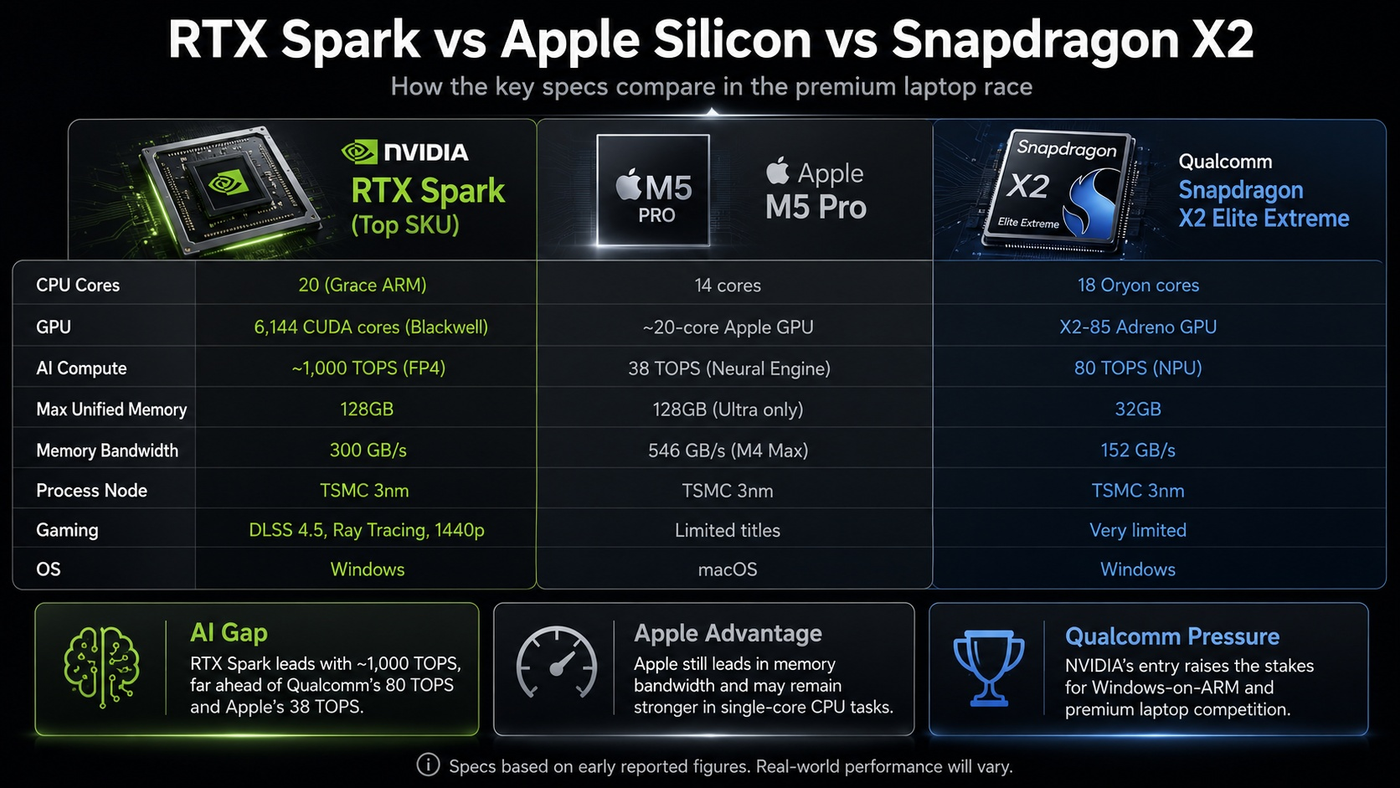
Compared with Snapdragon X Elite, Spark looks much more ambitious on graphics and AI-heavy workloads.
Snapdragon X Elite officially supports 12 CPU cores, 45 TOPS on the NPU, up to 64GB memory, and about 4.6 TFLOPS GPU performance. That is strong for mainstream Copilot+ laptops, but Spark is clearly aiming higher on the GPU and memory side.
So the real selling point of Spark is this:
It could become the first Windows-on-Arm laptop that feels serious enough for creators, AI developers, and power users — not just light office work.
That is a much bigger ambition than what most people currently associate with Snapdragon laptops.
4. The obvious comparison: can it challenge the MacBook?
This is where the story gets interesting.
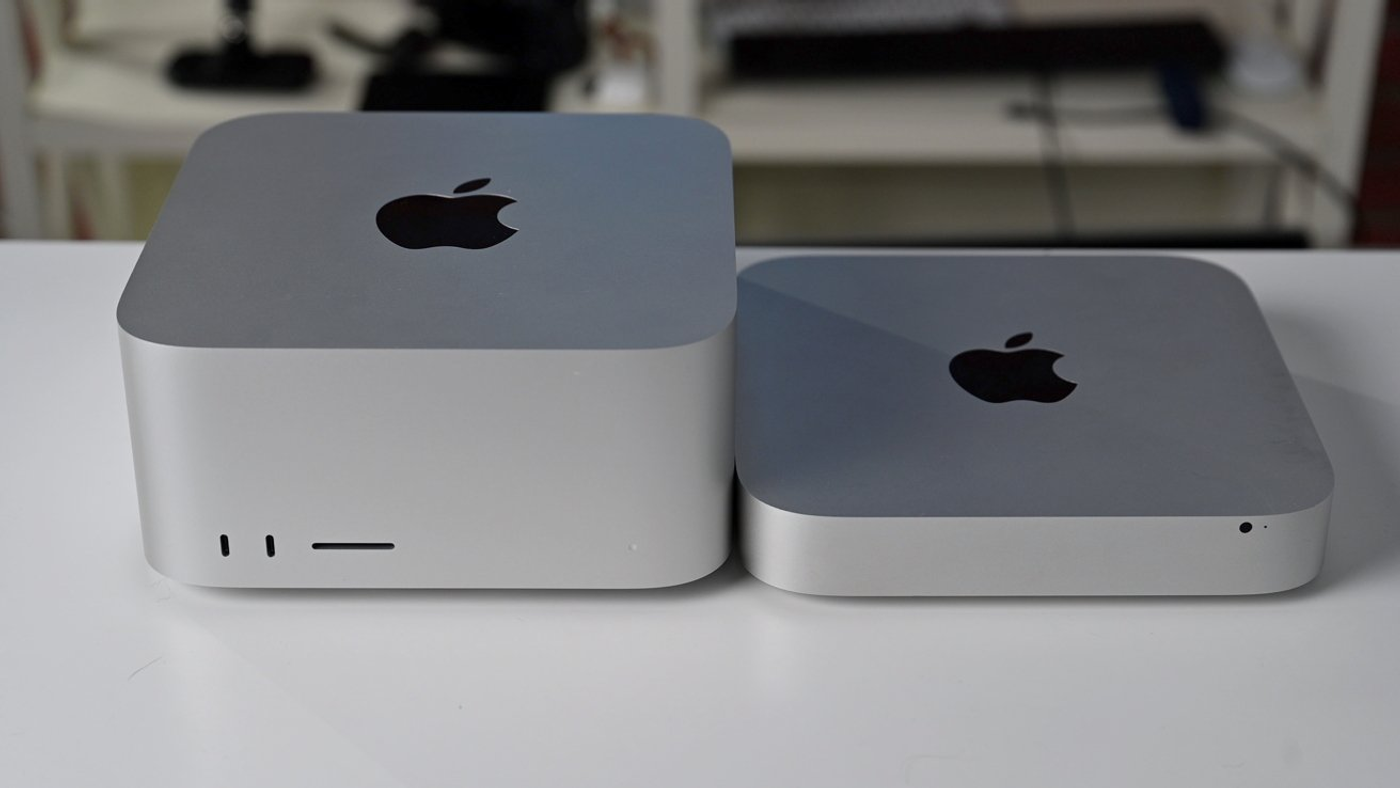
Spark is clearly being framed as a platform that could finally challenge the MacBook Pro idea from the Windows side: premium design, unified memory, strong battery life, and a chip architecture optimized around AI and media workloads. Apple’s current high-end MacBook Pro family offers up to 128GB unified memory, with the M4 Max reaching more than 546 GB/s memory bandwidth.
So Nvidia is not competing with cheap laptops here. It is trying to enter the same mental category as the MacBook Pro.
The difference is that Apple already has the trust. MacBooks are proven on battery life, software stability, and ecosystem maturity. Spark, by contrast, is still a promise.
That means Spark is more exciting, but MacBook is still safer.
5. Where the doubts are
This is also why the reaction is mixed.
The biggest weakness is that Spark is still unproven. There are no broad, independent long-term reviews yet. Most of the excitement is based on Nvidia’s own announcements and early partner demos.
The second weakness is Windows-on-Arm compatibility. Even if the hardware is strong, Spark still depends on the broader Windows-on-Arm ecosystem, and that ecosystem has historically been the weak point. Nvidia is trying to fix that, especially around graphics-heavy software and gaming, but that confidence still has to be earned in real-world use.
The third concern is pricing. Even AMD’s public reaction to Spark suggested that these machines will likely be high-priced, niche developer or creator products, at least in the first wave.
6. What people seem to hope it becomes
Even without a giant body of user reviews yet, the mood around Spark is pretty clear: hope is high, certainty is not.
People want this product to become:
- a real Windows answer to the MacBook Pro
- a better platform for local AI
- a much stronger GPU story than Snapdragon
- and maybe the first Arm laptop that does not force users to compromise too much.
That is a very attractive vision.
But right now, Spark is still trading more on potential than on proof.
7. My thoughts
It makes complete sense that computers keep evolving toward more power and compatibility in smaller devices. That has always been the direction of technology, from massive room-sized machines decades ago to thin laptops today. So Nvidia’s vision is logical.
But Apple has already been doing this for years, and MacBook still leads the market in that premium category. Unless Nvidia can create a truly strong edge — in graphics, local AI, or creator performance — Spark will still risk being seen as interesting, but overpriced.