Intrinsic Power: The Capacity Hiding in Plain Sight
Intrinsic Power is building an AI-controlled power platform for EV charging, commercial buildings, defence sites and AI data centres.
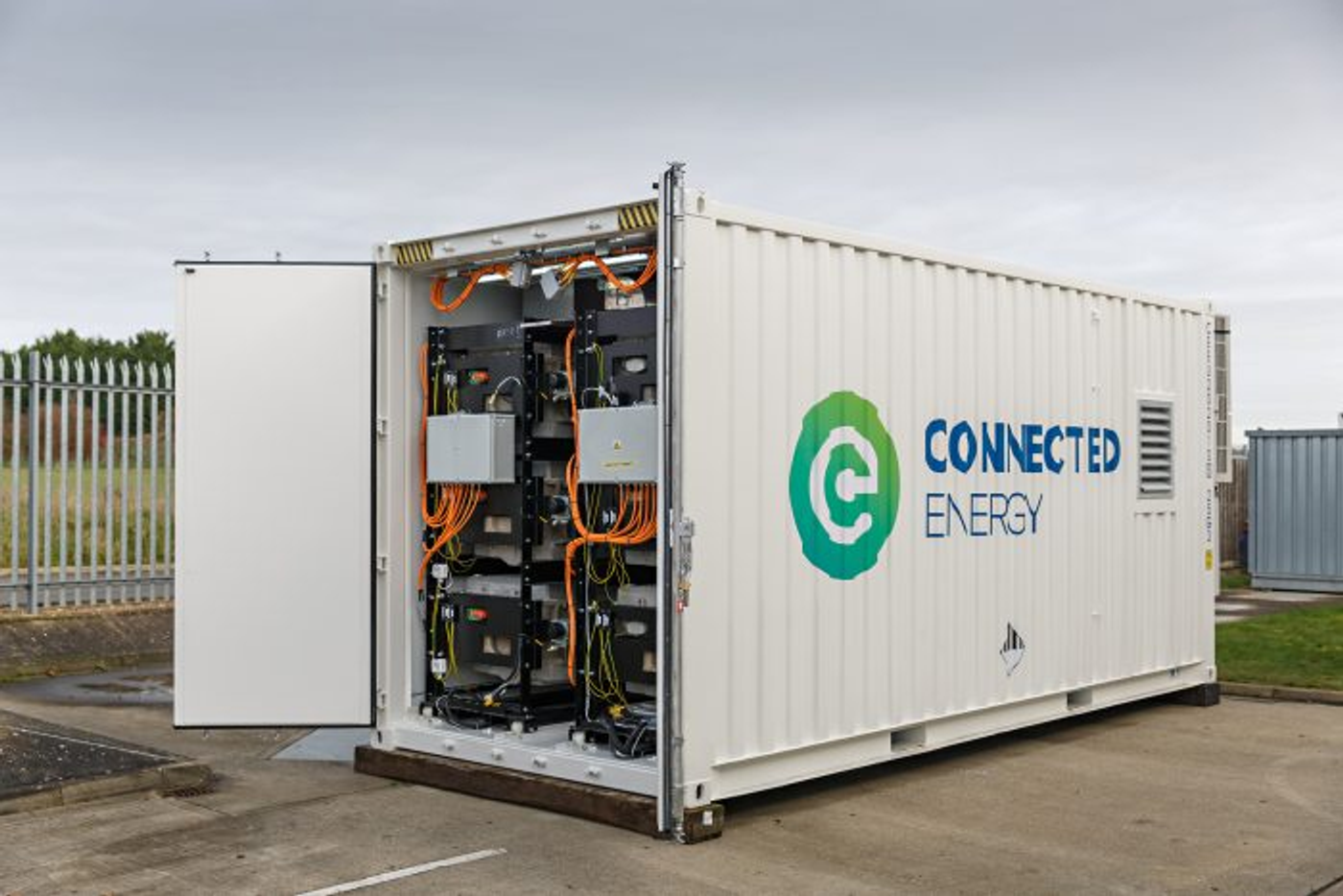
A data centre may have thousands of GPUs ready to run and still be unable to expand because the local grid cannot provide enough power. New substations, transmission lines and utility connections can take years to build.
Intrinsic Power believes part of the answer is not simply producing more electricity. It is using existing electrical capacity more intelligently.
Today, a building’s grid connection, batteries, solar panels, generators, chargers and electrical loads are often managed by separate systems. Each piece reacts independently, leaving operators with limited control over how power moves across the site.
Intrinsic wants to connect them into one intelligent system that can sense demand, predict problems and redirect electricity in real time.
Its ambition is to build an operating layer for physical power: software and hardware that make electricity inside a building or campus programmable.
What Intrinsic Power Is Building
Intrinsic Power develops an AI power-orchestration platform.
The platform continuously monitors the electrical condition of a site and coordinates its available power sources and loads. Instead of treating a battery, generator, solar installation and grid connection as separate assets, Intrinsic attempts to make them operate as one system.
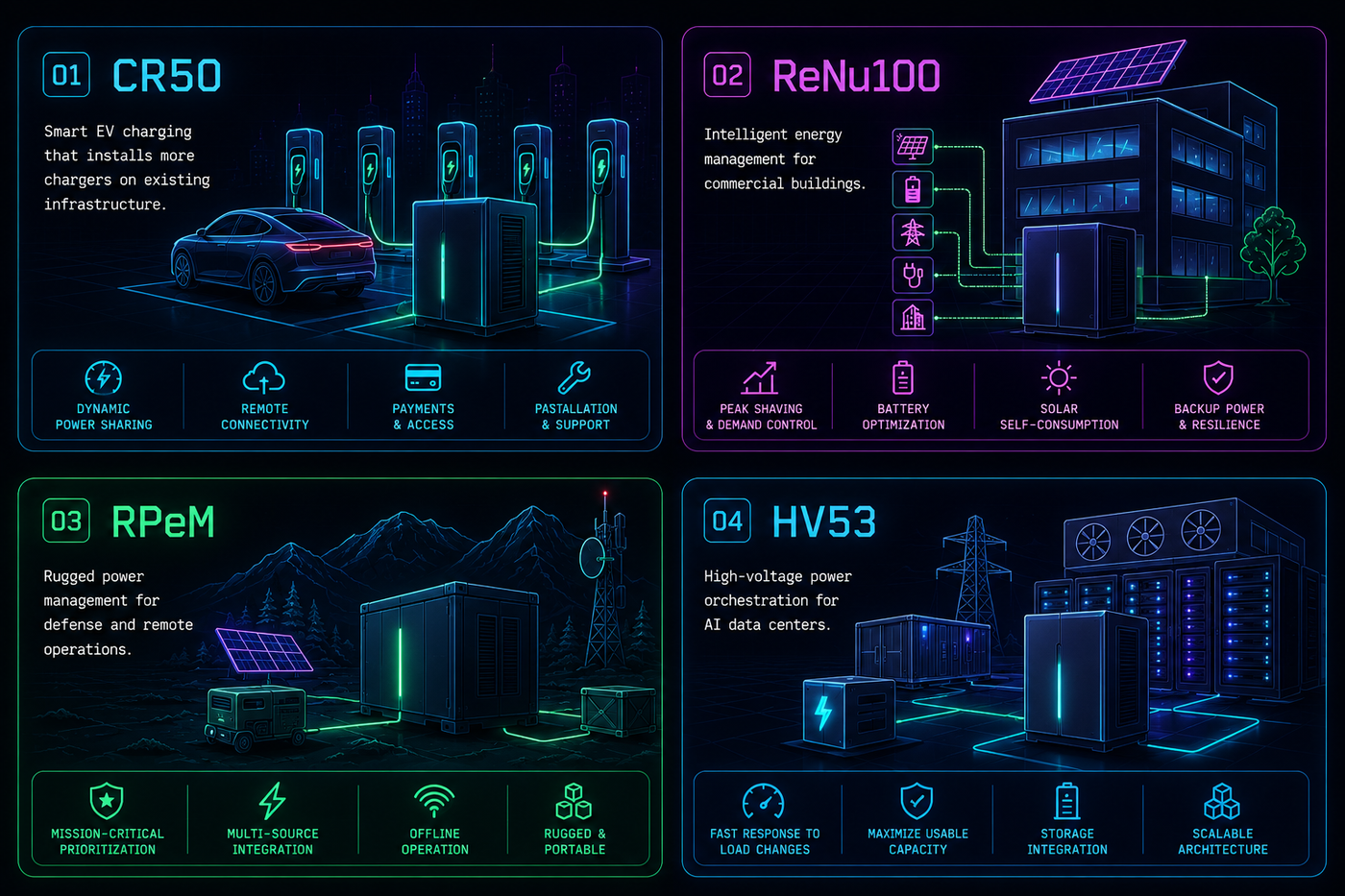
The company applies this technology through four main products:
These products serve very different customers, but they share the same basic idea:
Measure the entire electrical system, understand its constraints and actively control how power is distributed.
CR50, ReNu100 and RPeM: Earlier Applications of the Same Platform
Before moving into AI data centres, Intrinsic applied its power-orchestration technology across three smaller markets.
CR50 manages EV chargers that share limited electrical capacity, allocating power between vehicles instead of requiring every charger to run at full output at once.
ReNu100 expands that approach to commercial buildings, coordinating grid electricity, batteries, solar generation, EV charging and other loads to reduce peaks, shift consumption and provide backup power.
RPeM adapts the same architecture for defence and remote sites, where generators, batteries, solar and critical equipment must operate together even without a reliable grid or continuous internet connection.
Together, these products show the progression behind Intrinsic’s platform:
EV charging → commercial buildings → remote power systems → AI data centres
They also give the company experience in connected hardware, energy storage, power conversion and real-time control before scaling the technology into HV53.
HV53: Scaling the Platform for AI Data Centres
HV53 is Intrinsic’s high-voltage system for AI data centres.
It coordinates server demand, cooling equipment, grid imports, storage, solar and available onsite power units.
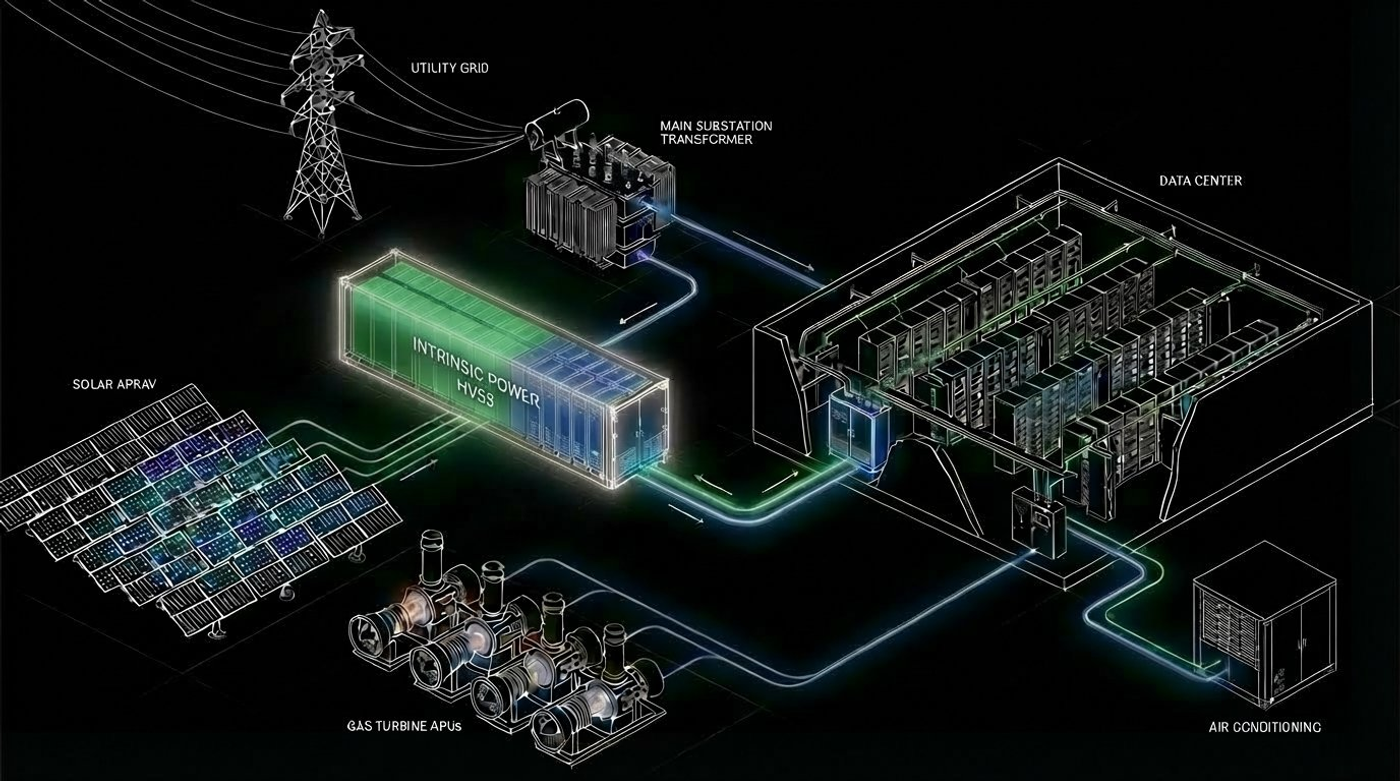
Unlike CR50 or ReNu100, HV53 must operate at much larger scale and respond to extremely fast changes in power consumption.
AI computing loads can rise and fall quickly as GPU clusters begin jobs or move through different stages of a workload. Data-centre operators therefore maintain spare electrical headroom to prevent sudden demand from exceeding equipment or grid limits.
Intrinsic argues that HV53 can reduce the amount of capacity that must remain unused.
Suppose a data centre is drawing 85 MW through a 100 MW grid connection. A GPU workload suddenly adds another 20 MW of demand.
Without active control, the site could exceed its connection limit.
HV53 is designed to detect the rising demand and immediately supply part of it from integrated storage. The servers receive the power they need, but the amount drawn through the grid connection remains below 100 MW.
Once the spike has passed, the storage can recharge.
The system is installed in parallel with existing electrical infrastructure, meaning operators would not necessarily need to replace their entire power architecture. Multiple units can also be added as a site expands.
How the Technology Works
Intrinsic’s technology operates as a closed loop:
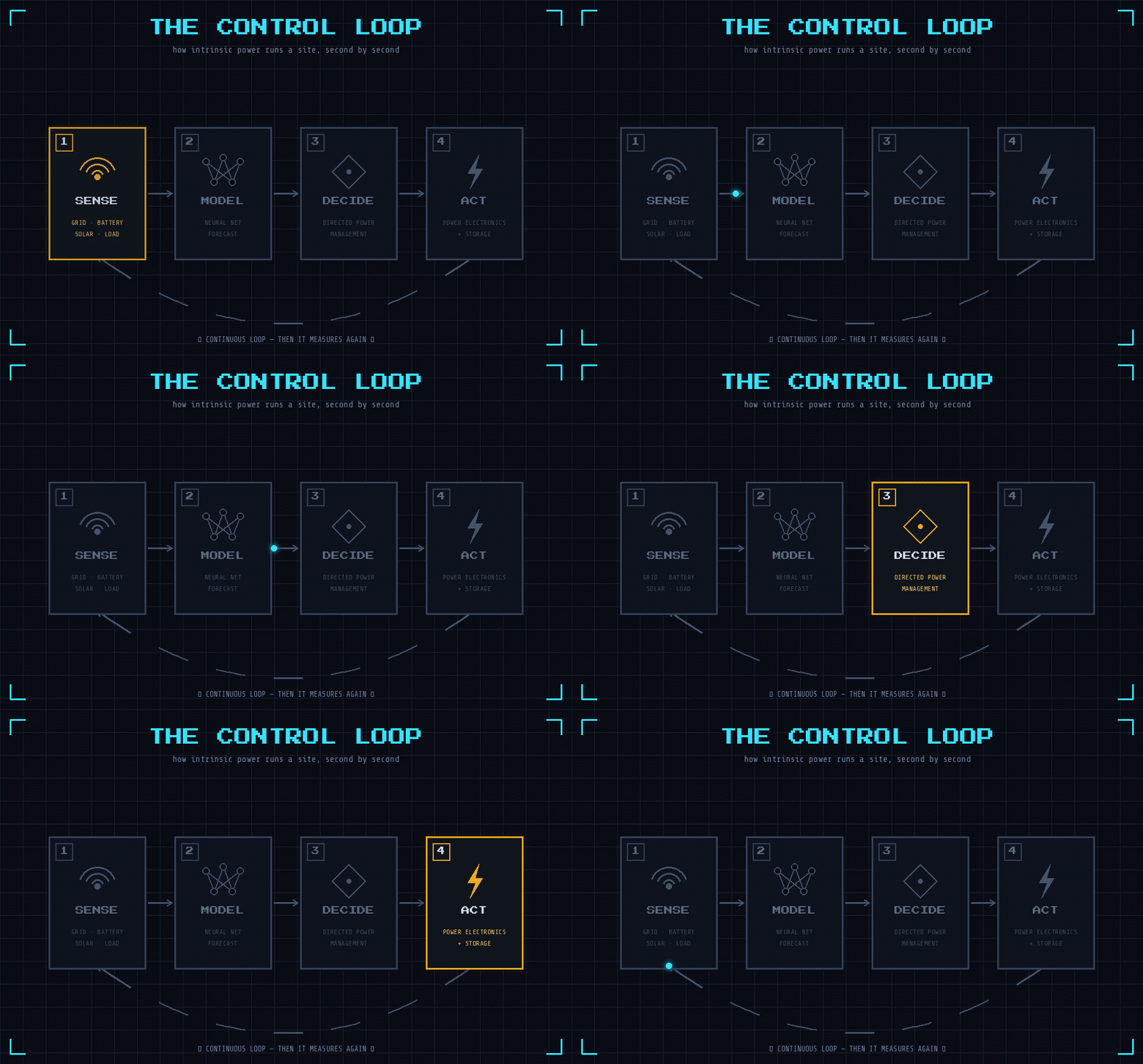
1. Sense the Site
Sensors continuously measure conditions across the electrical system, including:
- Grid imports
- Equipment demand
- Battery charge
- Generator output
- Solar production
- Voltage and frequency
- Remaining electrical headroom
This creates a live view of how much power is available, where it is coming from and where it is being consumed.
2. Model the Electrical System
Intrinsic says its data-centre platform uses a recurrent neural network to analyse electrical behaviour over time.
The model attempts to understand the current state of all connected sources and loads and recognise patterns that may indicate an approaching demand spike, generator failure or capacity constraint.
This is not a chatbot or language model. It is closer to a forecasting and control model trained on sequences of electrical measurements.
The company has not publicly disclosed the model architecture, training data, accuracy or detailed independent benchmarks, so the technical advantage of the AI itself remains difficult to assess externally.
3. Decide How to Allocate Power
The software evaluates the site’s constraints.
It considers:
- The maximum grid import
- Which loads are critical
- How much battery capacity must remain for emergencies
- Which loads can be delayed
- Whether onsite generation is available
- Current electricity prices
- Whether a change in demand is temporary or sustained
It then determines how power should be distributed across the site.
Intrinsic calls this approach Directed Power Management. Rather than treating electrical limits as problems discovered after an overload, the controller treats those limits as inputs to every decision.
4. Act Through Power Electronics
This is the most important part of Intrinsic’s technology.
Software can predict that a battery should discharge, but physical equipment must actually move the electricity.
Intrinsic combines its software with bidirectional power electronics and energy storage. These components convert electricity between different formats and control whether it flows into or out of a battery, load, generator or grid connection.
The result is a tightly connected hardware-and-software system.
Traditional energy-management software may recommend an action to another piece of equipment. Intrinsic wants its platform to detect the problem, make the decision and physically execute the response with minimal delay.
What Problem Does It Solve?
Grid Connections Take Too Long
New data centres and electrified buildings may wait years for new grid capacity.
Using more of an existing connection could allow customers to deploy equipment before a major grid upgrade is completed.
Existing Capacity Is Often Used Conservatively
A customer does not necessarily consume its maximum connection capacity continuously.
Part of the difference reflects normal changes in demand. Another part may be retained as protection against equipment failures or sudden load spikes.
Intrinsic’s proposition is that faster sensing, storage and control can reduce the amount of headroom required for some events.
The company claims HV53 can unlock up to 40% more usable capacity. This is a company-stated target rather than a result supported by publicly available independent data-centre trials.
Electrical Assets Are Fragmented
A site may have separate systems for batteries, solar, generators, cooling, chargers and building management.
When each system operates independently, the facility cannot fully optimise the available power.
Intrinsic attempts to place one control layer across these assets so they respond as a coordinated network.
AI Loads Change Quickly
AI data centres are not simply large electricity consumers. Their demand can also change rapidly.
Conventional generators and control systems may not react quickly enough to every short spike. Batteries and power electronics can respond much faster, provided they are closely integrated with the software detecting the change.
This is where Intrinsic believes its combination of prediction and physical control becomes valuable.
Intrinsic Power vs Emerald AI vs GridCARE
Intrinsic Power, Emerald AI and GridCARE all address the shortage of power available to AI infrastructure, but they operate at different layers.
| Company | Where it operates | What it does |
|---|---|---|
| Intrinsic Power | Inside the data centre’s electrical infrastructure | Combines control software, batteries and bidirectional power electronics to redirect electricity rapidly and increase usable site capacity. |
| Emerald AI | Inside the data centre’s computing layer | Slows, pauses or relocates flexible GPU workloads to reduce the amount of electricity the data centre needs. |
| GridCARE | At the utility-grid and interconnection layer | Identifies available grid capacity and helps structure flexible connections so data centres can receive power sooner. |
Emerald AI Changes How Much Electricity Computing Needs
Emerald AI’s Conductor platform controls AI workloads.
When the grid is constrained, it can briefly slow or pause flexible jobs, move workloads to another region and coordinate those actions with onsite batteries.
Emerald therefore changes the demand itself.
GridCARE Changes How the Data Centre Connects to the Grid
GridCARE operates further upstream, at the utility-grid and interconnection layer.
Its Energize platform analyses transmission infrastructure, substations, generation, existing demand and future grid conditions to identify locations where a large data centre may be able to connect sooner.
It then helps developers and utilities design flexible interconnection arrangements.
Instead of requiring the grid to guarantee a facility’s full maximum demand under every possible condition, a connection may allow part of the load to be reduced during a small number of constrained hours.
GridCARE therefore does not mainly optimise batteries or power electronics inside the data centre.
It determines:
- Where capacity exists
- What grid conditions could limit it
- How much flexibility is required
- What the data centre must do during constrained periods
Intrinsic Changes the Physical Movement of Power
Intrinsic works inside the facility.
Its platform combines control software, storage and bidirectional power electronics to physically redirect electricity between the grid, batteries, generators and loads.
GridCARE and Intrinsic could therefore be complementary.
GridCARE might secure a flexible connection that requires the data centre to reduce grid imports during certain events. Intrinsic could provide the onsite hardware and control response needed to meet that requirement.
A future data centre could theoretically use all three:
- GridCARE to find and structure the grid connection
- Intrinsic to control rapid physical power flows inside the site
- Emerald to make the GPU workloads flexible
The competitive question is whether these remain separate layers or whether one platform eventually expands across the full stack.
Intrinsic Power’s Ambition
Data centres are the wedge, not the whole plan. Intrinsic's own site already lists defence and commercial buildings as target markets alongside data centres, and TenHouten has described the company's mission as building "the AI operating layer for modern, distributed electrical systems" — the intelligence layer for any building's power system, not just AI infrastructure.
That's a familiar shape in this race. GridCARE calls itself the creator of a new category, "Power Acceleration for AI." Emerald AI wants its Conductor platform to become "a global standard for grid-friendly AI data centers." Nobody here is positioning as a vendor solving one customer's problem — everyone is trying to become the default layer that other companies build around.
My takeaway
Power has become a genuine sub-category of AI infrastructure investment, and it's already stratifying by layer: grid-side capacity discovery (GridCARE), workload-side demand flexibility (Emerald AI), site-side hardware orchestration (Intrinsic Power). That's not necessarily three competitors fighting for the same dollar — a single data centre could plausibly use all three at once, which is a more interesting market structure than a straight fight.
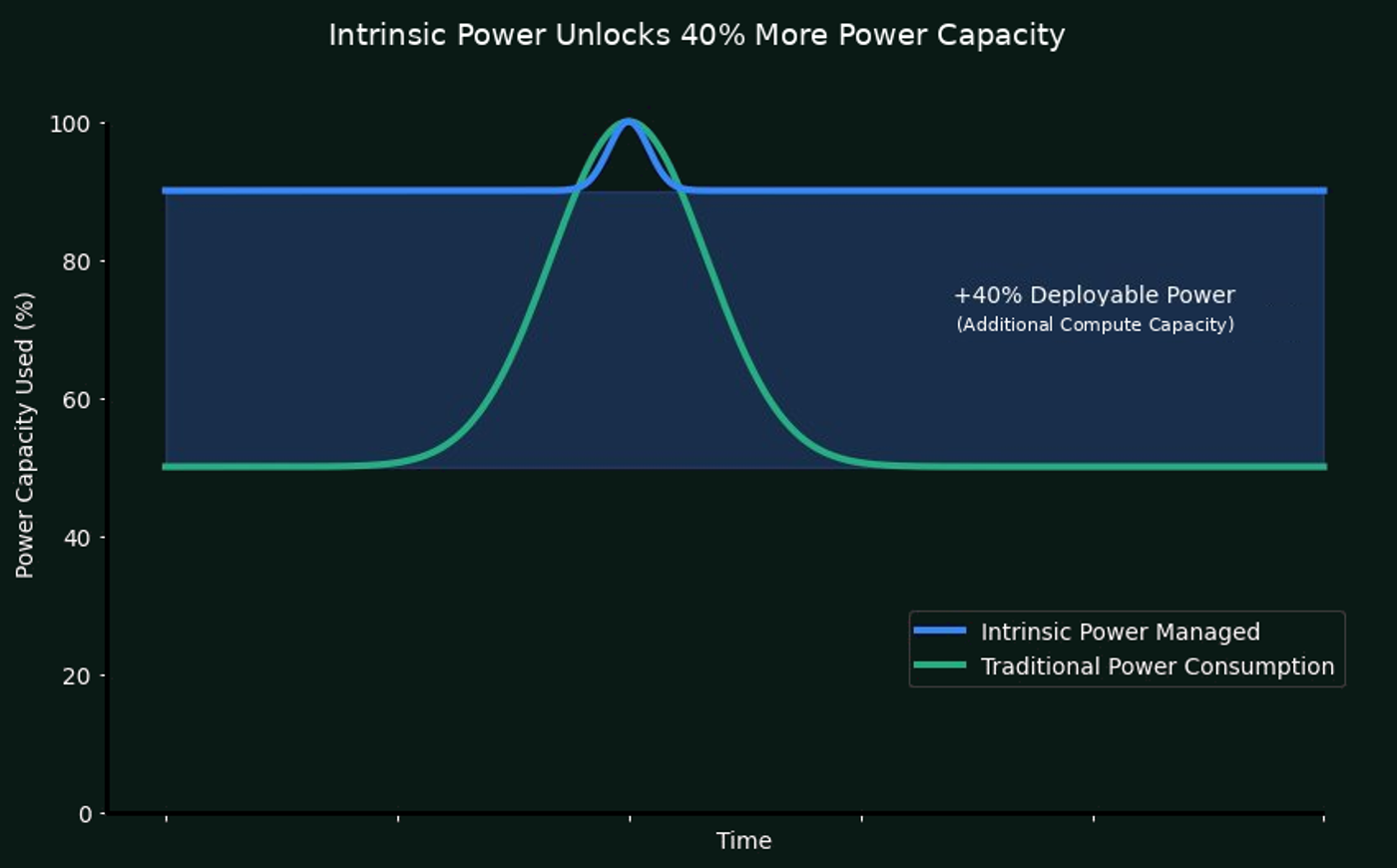
The thing to watch is proof, not positioning. GridCARE and Emerald AI are a funding round ahead, with named, public case studies behind their numbers. Intrinsic Power is a first seed close, an undisclosed cheque size, and headline figures — the 40% capacity claim, the 100MW-in-10-milliseconds spike — that are the company's own and not yet independently confirmed. None of that makes the thesis wrong; it's a genuinely hard, well-understood engineering problem, attacked by a technical founder with relevant scars from two adjacent industries. But right now it's a bet on execution, not a proven result. Worth watching the next raise to see if customer logos catch up to the pitch.