
Fusion 101: From Atomic Nuclei to Power Plants
Fusion already works. Fusion power does not — yet. This piece maps the engineering stack, funding landscape, reactor architectures and 68-company ecosystem being built around the gap.
Part I explained the physics: why fusion releases energy, why it requires extreme conditions, and why those conditions are so hard to hold. If you haven't read it, start there.
This piece picks up where the physics ends.
Here's the thing —
Fusion already works. Fusion power does not — yet. The gap between those two statements is where an entire deeptech industry is being built.
We can create plasma hotter than the centre of the Sun. We can compress fuel with giant lasers. We can measure nuclei fusing and count the energy they release. In December 2022, NIF produced more energy from a fusion reaction than the lasers delivered to the fuel pellet.
And yet no fusion power plant has delivered a single electron to any grid, anywhere.
That distinction matters because a successful fusion reaction is only one component inside a much larger system. A commercial plant also has to heat and confine the fuel, survive intense neutron bombardment, breed its own tritium, maintain irradiated components, extract useful heat, convert that heat into electricity, and do all of this reliably enough to compete with solar at $20/MWh.
This is why fusion is no longer just a physics story.
It's an engineering and industrial story — and one of the most capital-intensive bets in deeptech right now.
What's actually being built: the technology stack
Think of fusion as a vertical stack. The plasma physics at the top gets all the headlines. But everything below it has to work too — and several of those layers are just as hard.
▣ THE FUSION TECHNOLOGY STACK — CLICK ANY LAYER TO EXPAND
What problem does fusion actually solve?
Before mapping the technology, it's worth being precise about the problem it's trying to solve — because the answer is more specific than "clean energy."
Firm, dispatchable, baseload power
Solar and wind are cheap and getting cheaper. But they're weather-dependent. The grid also needs power that can be dialled up on demand — firm power — to cover the hours, days, or weeks when the sun isn't shining and the wind isn't blowing. Today that role is filled by natural gas, coal, hydro, and nuclear fission. Fusion, if it works, slots into the same category: always-on, geography-independent, carbon-free baseload.
Fusion doesn't compete with solar. It competes with gas peakers and next-generation fission — and aims to beat both on emissions.
Exploding electricity demand
Global electricity demand is being pulled simultaneously by electrification of transport and heating, the expansion of AI data centres, and industrial decarbonisation. Data centres alone are expected to consume as much electricity by the early 2030s as some mid-sized countries do today. The grid is under structural pressure that renewables plus storage alone may struggle to fully address at speed.
This is why hyperscalers are already signing fusion offtake agreements — Google has committed to buy power from both CFS and Proxima; Microsoft signed with Helion. They're not doing it out of sentiment. They're trying to lock in firm, carbon-free power for infrastructure that will still be running in 2040.
Energy security and fuel independence
Fusion's fuel inputs — deuterium from seawater and lithium for tritium breeding — are geographically distributed and not controlled by any single state or cartel. A fusion plant in Germany doesn't depend on LNG imports. A fusion plant in Japan doesn't depend on uranium supply chains. That's a fundamentally different geopolitical position to every energy technology currently at scale.
What fusion does NOT solve
It's worth being honest here too. Fusion won't be cheap to build — capital costs per plant are likely to be high. It won't arrive in time to solve the energy crisis happening right now. It won't replace the need for grid buildout, storage, or demand flexibility. And the timeline between "physics milestone" and "commercial fleet" has historically been measured in decades, not years.
The remaining hard problems
The physics of fusion is largely understood. The engineering is not. Here are the problems that actually stand between the current state of the sector and a commercial power plant:
Whole-plant energy balance
Scientific Q>1 is a plasma milestone. A power plant needs the complete facility — counting every magnet, every cryogenic system, every pump and power supply — to export more electricity than it consumes. The gap between those two benchmarks is wide and not yet closed by any machine.
Plasma stability and disruptions
Hot plasma develops instabilities. In a tokamak, a major disruption — where the plasma suddenly loses confinement and dumps its energy into the reactor wall — can cause mechanical damage and potentially take the machine offline for weeks. Predicting and preventing disruptions at the speed they occur is one of the primary reasons AI is being integrated into plasma control systems.
Heat exhaust
A well-confined plasma still has to eject heat and particles somewhere. The "divertor" — the component that handles this — faces some of the highest heat fluxes of any engineered surface. Getting the exhaust problem right is critical; get it wrong and you either damage the machine or you're forced to operate at lower power to protect it.
Neutron damage
The 14.1 MeV neutron from D-T fusion is highly energetic and electrically neutral — it passes straight through magnetic fields and into surrounding structures. Over years of operation, neutron bombardment causes atomic displacement damage in metals: swelling, embrittlement, changes in composition. There is currently no neutron irradiation facility anywhere in the world capable of testing materials under the flux conditions a commercial D-T plant would produce. That data gap is real and largely unresolved.
Tritium self-sufficiency
Covered in the technology stack section above, but worth restating as a problem statement: no one has ever bred tritium inside a fusion machine, extracted it, and reinjected it in a closed loop. This is not a speculative future problem — it's a prerequisite for the first commercial D-T plant.
Component lifetime and maintenance economics
A fusion plant is only commercially viable if it can sustain high availability over decades. That means plasma-facing components, blankets, and magnets all need to last long enough between replacements that the downtime and cost don't destroy the economics. Current data on how these components perform under sustained fusion neutron flux is extremely limited.
Repetition at industrial scale
For inertial confinement approaches, a single successful shot at NIF is not the same as the millions of shots per day a commercial plant would need. The target manufacturing, injection, tracking, and chamber-clearing systems required for that repetition rate don't yet exist at industrial scale.
How developed is this sector?
A maturity ladder, with honest answers:
| Milestone | Status |
|---|---|
| Can humans produce fusion reactions? | ✅ Established for decades |
| Can we create fusion-relevant plasma conditions? | ✅ Many public and private machines |
| Can fusion energy exceed energy delivered to a target? | ✅ NIF, December 2022; repeated since |
| Can a magnetic plasma achieve Q ≥ 10? | ITER's goal — not yet demonstrated |
| Can a complete fusion facility produce net electricity? | ❌ Not demonstrated anywhere |
| Can a plant operate reliably for years? | ❌ Not commercially proven |
| Can fusion compete economically on cost per MWh? | ❓ Unknown — no fleet cost data exists |
Each row is a distinct engineering problem. Progress on one doesn't automatically transfer to the next. The sector is genuinely further along than it was five years ago — private investment, HTS magnets, and NIF's ignition milestone all represent real progress. But the distance between the current frontier and "electricity on the grid" is still measured in multiple unsolved engineering problems, not just a funding gap.
The funding landscape
Private fusion has gone from a curiosity to a serious capital category in roughly a decade. Here's where it stands:
Approximate cumulative funding as of 7 July 2026. Values are not perfectly like-for-like because company reporting differs between raised capital, total invested capital, milestone-linked commitments and public grants.
Total private investment across the 24 largest commercial fusion developers has crossed $11.4 billion in disclosed funding. For context, that's roughly comparable to total spending on ITER to date — except it's spread across dozens of competing architectures rather than one.
The top of the market is dominated by large US developers, but Proxima's 7 July 2026 round materially changes the European picture.
The 2026 signal: Proxima Fusion's €411M round — announced today, 7 July 2026, and the largest private fusion round in European history — marks a meaningful shift. European fusion is no longer a purely public-sector story. The round's strategic investors (Google, RWE) are the same types of corporate backers now anchoring US fusion deals, and the total raised in under three years (€650M+) puts Proxima in the same tier as the US mid-table.
China is a separate category that's hard to measure precisely. The US Special Competitive Studies Project estimated Chinese commercial fusion investment at over $6.5 billion since early 2023 — driven heavily by state-backed entities and sovereign-linked capital rather than pure venture.
Supply chain spending is the leading indicator of industrial maturation. The FIA's 2026 report found supply chain spend rose 24% in 2025 to $538 million, with companies projecting a further 27% increase in 2026 to $681 million. This is money spent on actual hardware — magnets, power supplies, vacuum systems, diagnostics — not just physics headcount.
The structural question is timing. The FIA's July 2025 global report found that companies estimated they'd collectively need ~$77 billion more to bring first pilot plants online — eight times what's been committed to date. That's not a reason for pessimism so much as a calibration point: fusion is past the seed stage but nowhere near fully capitalised for commercialisation.
The single biggest risk in fusion funding is the gap between "impressive plasma result" and "commercial electricity" — and whether the capital markets stay patient enough to bridge it.
The reactor architecture map
The fusion sector hasn't converged on a single design. It's better understood as a portfolio of competing physical bets — each trading off differently across the Lawson parameter space.
| Architecture | Core idea | Key bet | Key risk |
|---|---|---|---|
| Tokamak | Magnetic doughnut + plasma current | Strong fields + control = high performance | Disruptions, neutron damage, current drive |
| Spherical tokamak | More compact tokamak geometry | Better performance per unit of magnet | Smaller plasma volume limits power output |
| Stellarator | 3D external magnets, no plasma current | Steady-state, fewer disruptions | Extraordinary manufacturing complexity |
| Field-reversed config (FRC) | Compact magnetised plasma blob | High plasma pressure, simpler geometry | Confinement time, stability |
| Z-pinch | Current through plasma creates inward compression | No giant external magnets needed | Instability |
| Magnetised target fusion | Magnetise plasma, then compress it | Middle ground between MCF and ICF | Compression symmetry, repetition |
| Laser inertial confinement | Crush tiny pellets with lasers | Extreme density for nanoseconds | Laser efficiency, target cost, repetition |
| Pulsed magnetic fusion | Giant electromagnetic pulses compress target | Modern pulsed-power may enable new path | Switching, timing, facility gain |
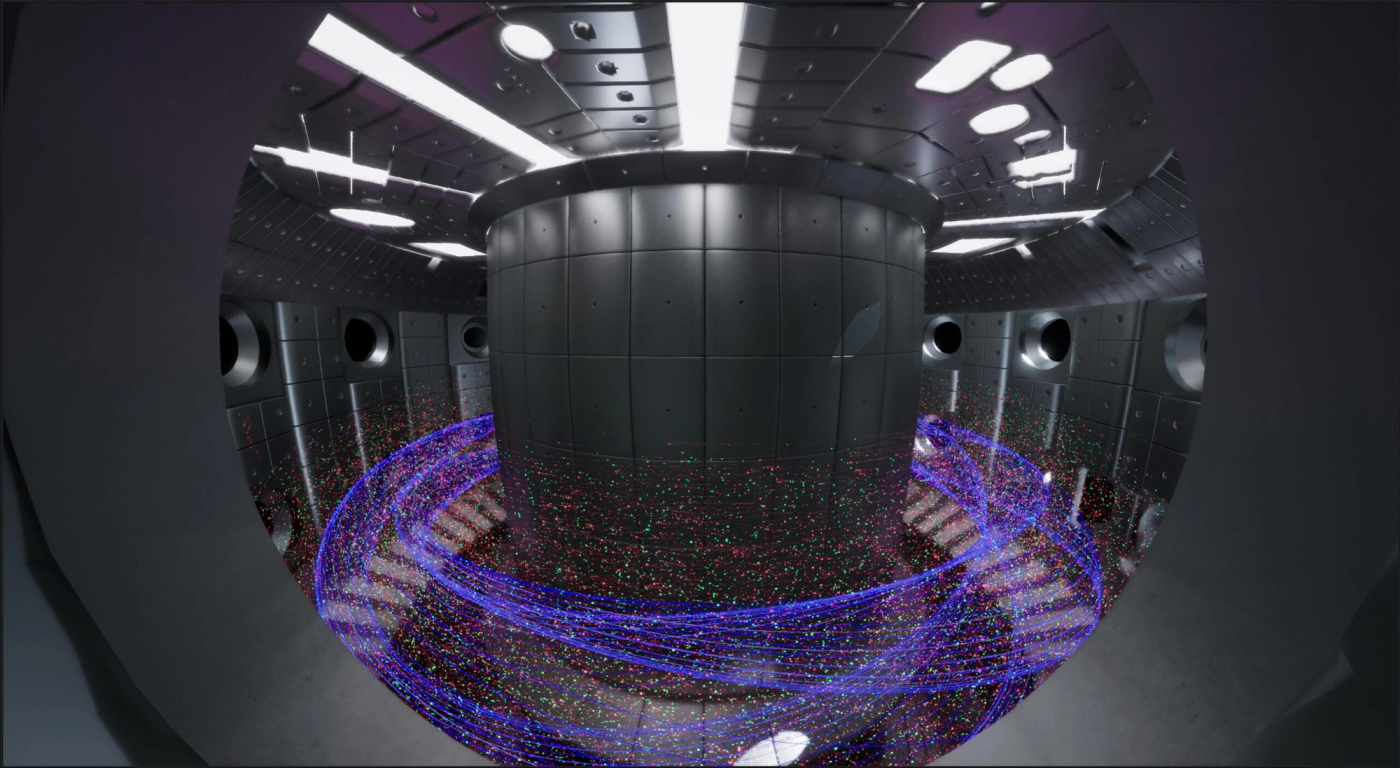
You can find a lot of video tour about these technology on Youtube.
The company landscape
Editorial map as of 7 July 2026: 56 core fusion developers + 12 enabling-stack specialists. Grouped by technical approach. This is not an official registry; company status and architecture can change quickly.
▣ Tokamak and toroidal magnetic systems
▣ Stellarator, helical and externally shaped magnetic systems
▣ FRC and compact magnetised plasmas
▣ Mirrors, dipoles and alternative magnetic geometries
▣ Z-pinch, pulsed magnetic and magneto-inertial systems
▣ Laser and inertial fusion
▣ Other alternative fusion concepts
▣ Enabling-stack specialists
The picks-and-shovels angle
The obvious question in any technology race is: which company wins?
I think that's the wrong frame for fusion — at least for now. A better question is: which capabilities become necessary regardless of which architecture wins?
That question produces a different investment map, and one with meaningfully lower binary risk.
HTS magnets and superconducting materials — needed by every magnetic confinement concept. The supply chain for HTS tape (Fujikura, Furukawa, SuNAM, SuperPower) is a genuine bottleneck. So are magnet winding, cryogenic systems, and quench protection. These are real manufacturing problems with markets that extend well beyond fusion.
Tritium handling and fuel cycle systems — Kyoto Fusioneering, Fusion Fuel Cycles, Tyne Engineering. A future D-T fleet that can't breed and recirculate its own tritium is not a fleet. This is undersupplied relative to its strategic importance.
Power electronics and pulsed power — relevant for both pulsed magnetic fusion and the internal energy management of any large reactor. Overlaps heavily with grid-scale energy storage, EV fast-charging, and defence.
Advanced materials and plasma-facing components — tungsten systems, low-activation alloys, radiation-resistant coatings. Oxford Sigma and Kyoto Fusioneering are active here. The requirement spans every reactor architecture that uses D-T fuel.
Plasma control, AI and digital twins — the control problem is essentially the same across architectures: real-time inference on a high-dimensional plasma state with millisecond latency requirements. Companies solving this for fusion will have directly applicable capability in aerospace, advanced manufacturing, and nuclear fission.
Robotics and remote handling — necessary for any D-T plant that expects to operate for decades. UKAEA explicitly identifies this as a major industrial opportunity as the sector moves from experimental machines toward demonstration plants.
My takeaway
The first era of fusion was a physics race: can we understand and produce the reaction?
The second era — the one we're in now — is a systems race: can we build a machine that turns the reaction into reliable, affordable electricity?
The company that produces the most impressive plasma result may not be the one that builds the best power plant. A reactor can fail commercially even after excellent physics — because components die too quickly, tritium doesn't close, maintenance takes too long, or magnets cost too much.
What fusion needs now are better magnets, better materials, better robotics, a tritium fuel cycle that actually works, and supply chains that don't yet fully exist.
That's the industrial stack. And increasingly, it's where the money is going.