
AI Infrastructure 101: Why is Frontier AI so expensive?
A clear breakdown of Frontier AI, its core stack, why it is so expensive to build, and why companies like OpenAI, Anthropic, Thinking Machines, and Hark are racing to own the next intelligence layer.

1. What is Frontier AI?
Frontier AI means building the most advanced AI models at the edge of current capability. Frontier AI companies train their own foundation models and try to push the boundary of reasoning, coding, multimodality, memory, agents, robotics, and human-AI interaction.
2. The Frontier AI stack
Think of Frontier AI as a pyramid, there will be 6 layers:
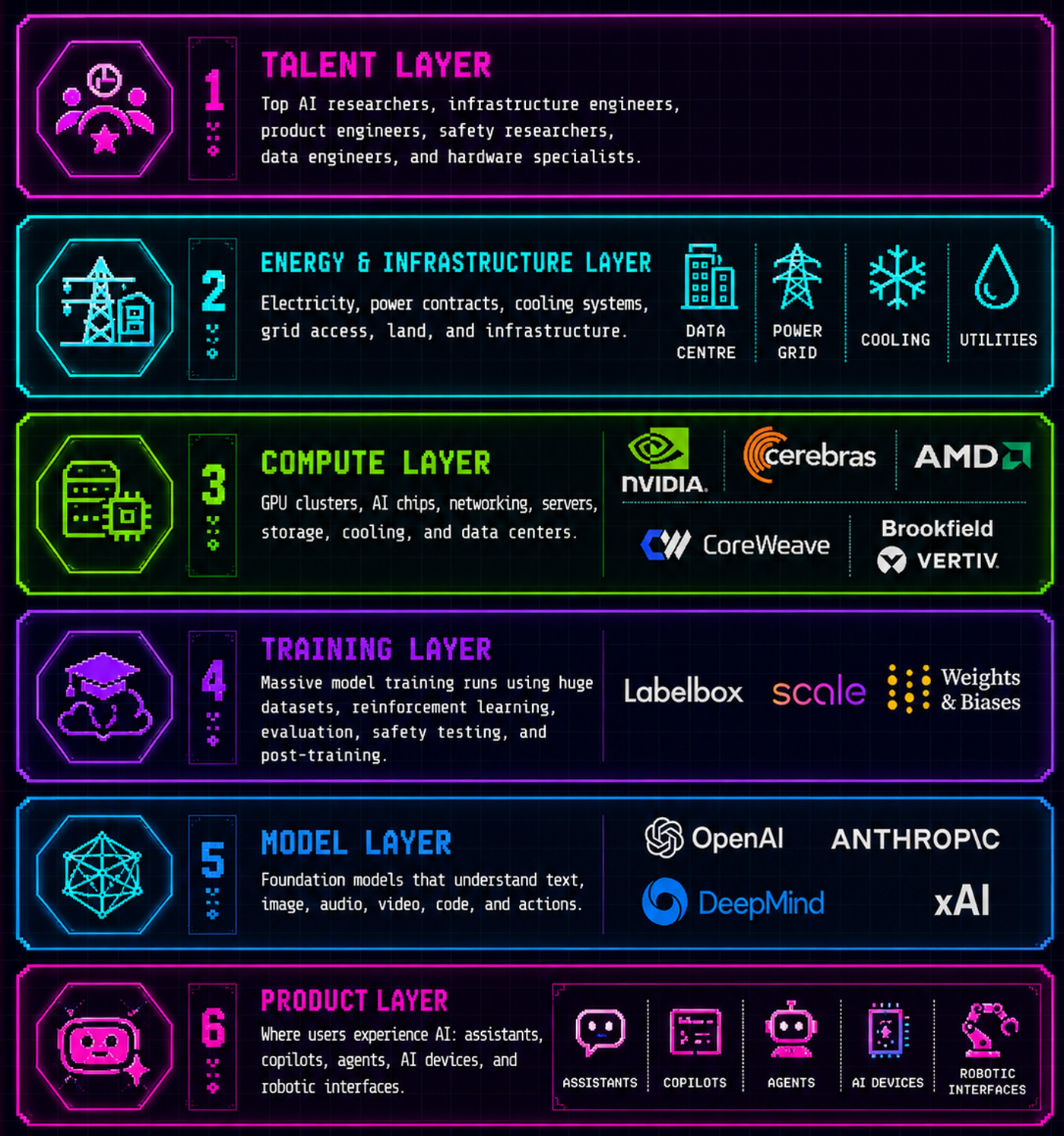
2.1. Talent Layer
This is the human layer that makes everything possible.
It includes frontier AI researchers, infrastructure engineers, data engineers, safety researchers, product builders, hardware engineers, and systems designers.
This layer is extremely expensive because the talent pool is tiny and insanely competitive. One great researcher or engineer can change the entire trajectory of a model.
2.2. Energy & Physical Infrastructure Layer
This is the real-world infrastructure underneath the “cloud.” It is land, buildings, cables, cooling, electricity, water, transformers, backup generators, and security. A frontier AI data center needs:
Data centers
Huge buildings filled with servers and GPU racks.
Electricity supply
Frontier AI clusters consume enormous power. Companies need access to reliable electricity, sometimes through long-term power contracts.
A useful example is OpenAI’s Stargate project with Oracle and SoftBank. Reuters reported that the project aims for 10GW of AI computing capacity and up to $500B of investment. To picture 10GW: that is not “office electricity.” That is power-plant scale.
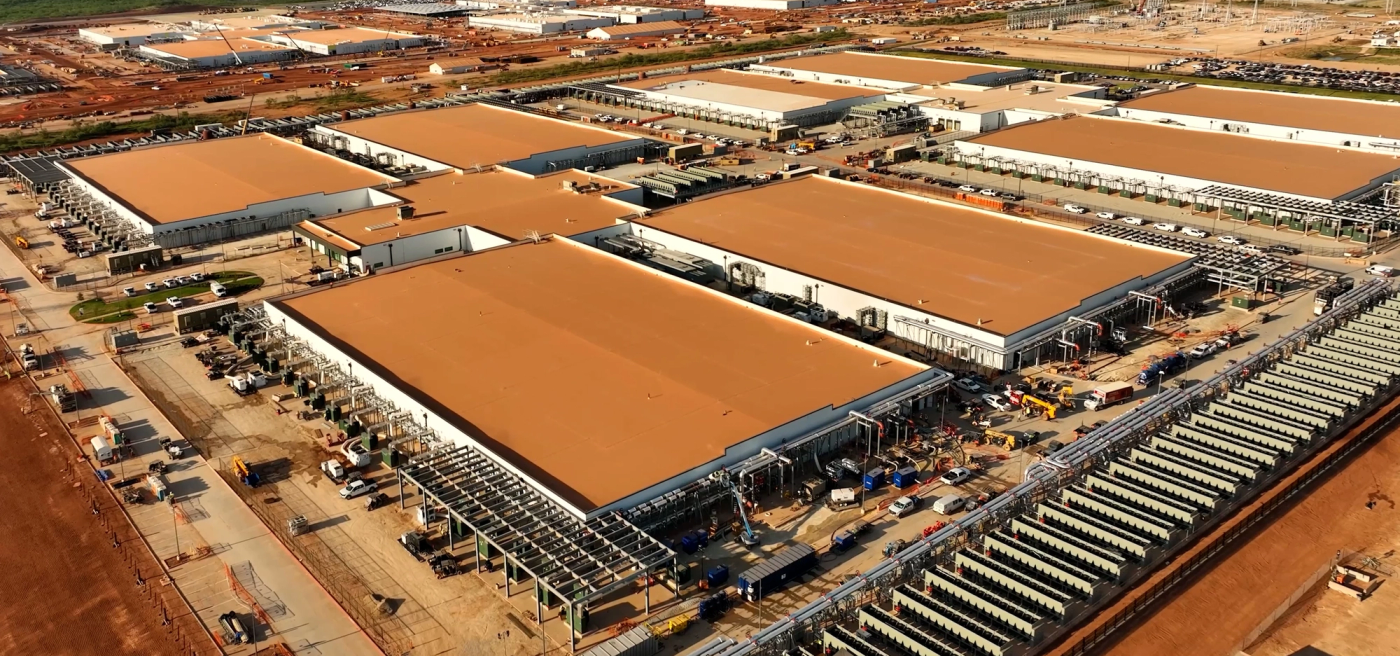
Power grid connection
Even if you can afford the chips, you need the local grid to support the load. In some places, grid access becomes the bottleneck.
Cooling systems
AI chips generate massive heat. Data centers need advanced cooling: air cooling, liquid cooling, chilled water, heat exchangers, etc. Modern AI racks can be too power-dense for normal air cooling. NVIDIA’s GB200 NVL72-style systems are associated with rack-level power/cooling needs around 140kW per rack, which is why liquid cooling is becoming important.
Land and construction
Large AI data centers need physical space, permits, engineering work, construction, and security.
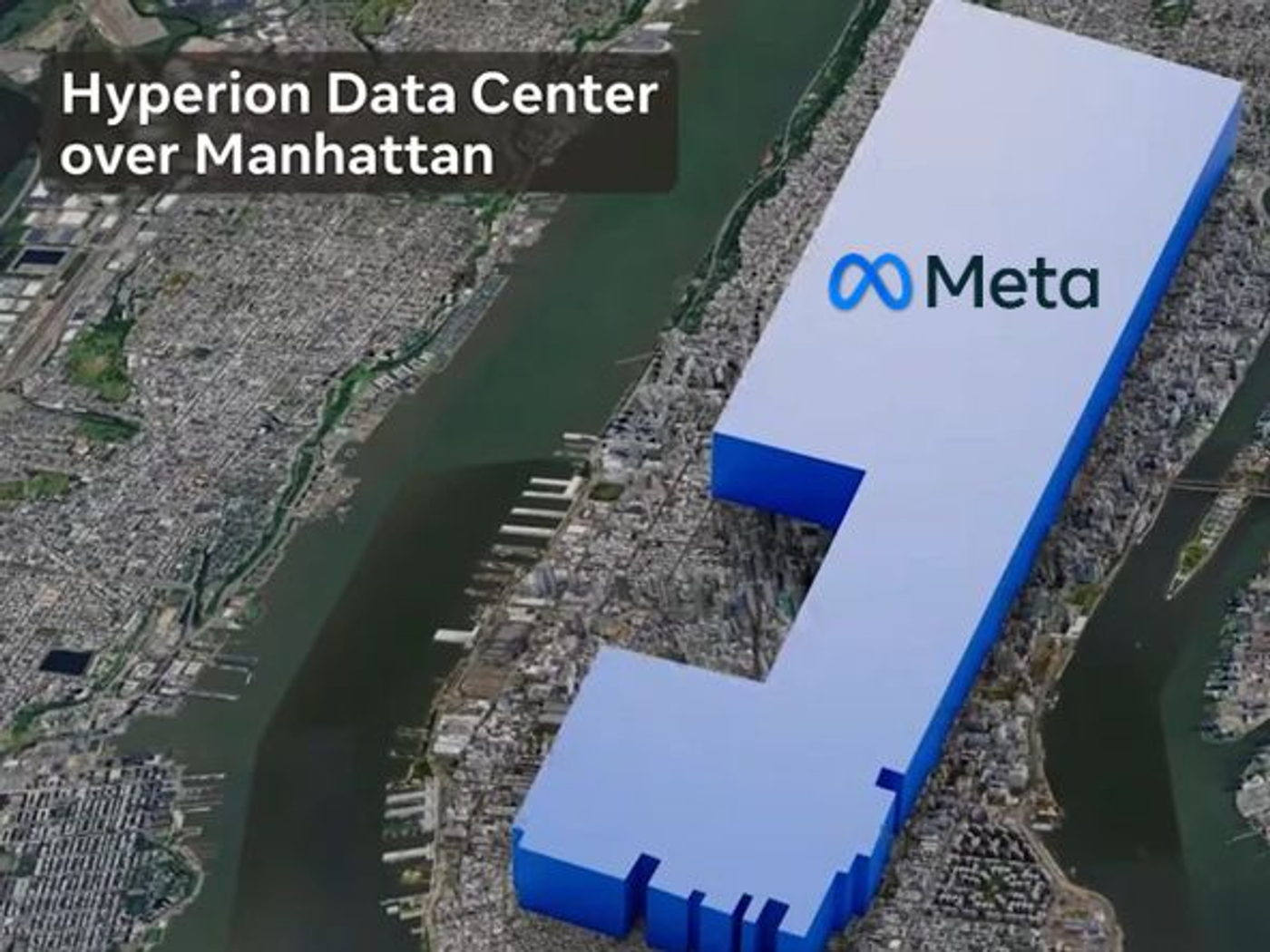
Another example: Meta’s planned Hyperion AI data center in Louisiana is expected to use up to 5GW and span 2,250 acres. That is the size of a small town, not a startup office.
Backup power and reliability
Data centers need generators, batteries, redundancy, fire safety, physical security, and uptime planning.
Supply chain
Racks, cables, transformers, cooling equipment, power systems, networking gear — all the boring stuff becomes strategically important.
2.3. Compute layer
If you think the infrastructure and energy have already been insane, welcome to compute layer!
This is the GPU/chip cluster that trains and runs the model.
For a normal software startup, your server bill might be a few thousand pounds a month. For frontier AI, the “server” is a giant cluster of expensive chips.
For example, xAI’s Colossus was reported in a 2025 AI supercomputer study as using 200,000 AI chips, costing around $7B in hardware, and requiring around 300MW of power. The study says that is roughly the electricity demand of 250,000 households.
So imagine this:
Not one laptop.
Not one server room.
A warehouse-scale machine with hundreds of thousands of chips, all working together like one giant brain.
And the cost does not stop after training. Every time a user asks a model something, the company pays inference cost. If the model is doing reasoning, coding, image/video, or agentic multi-step work, it may run multiple internal steps before answering. That means more chips, more electricity, more cost.
2.4. Training & Evaluation Layer
Training is not just pressing one button and waiting.
A frontier AI lab has to do:
Pre-training: feed the model massive data so it learns language, code, images, audio, video, reasoning patterns, etc.
Post-training: make it useful and less chaotic. Teach it to follow instructions, answer cleanly, refuse unsafe tasks, use tools, and behave like a product.
Evaluation: test it on coding, maths, reasoning, hallucination, safety, bias, cybersecurity, multilingual tasks, medical/legal reliability, and more.
Red-teaming: intentionally try to break it.
Monitoring: after launch, watch how it behaves in real-world use.
The expensive part is that this is repeated again and again. One failed training run can waste huge compute. One model bug can require more data, more tuning, more evaluations, and another round of testing.
2.5. Model Layer
This is the actual AI brain, and what we call language model. This is the real “frontier AI” layer.
It includes the large models that understand and generate text, image, audio, video, code, and actions. This is where companies like OpenAI, Anthropic, Google DeepMind, xAI, Thinking Machines, and Hark compete.
This layer pushes the boundary of intelligence: reasoning, memory, multimodality, tool use, real-time interaction, and eventually robotics intelligence.
Further breakdown of what are Small, Large, and Frontier AI Models can be found in this article of Jeyaram, which I found quite clear and helpful.
| Categories | Meaning | Example | Simple explaination | |
|---|---|---|---|---|
| Small Language Model | Smaller, cheaper models built for focused tasks | IBM Granite, Mistral Small | Fast specialist | |
| Large Language Models | Bigger general-purpose models that handle broad tasks | GPT-4-class, Claude, Gemini | Generalist brain | |
| Frontier Models | The most advanced models at the edge of capability | GPT-5-class, Claude Opus/Sonnet, Gemini Pro/Ultra, DeepMind/xAI models | Cutting-edge brain |
2.6. Application & Interface Layer
This is the layer we users actually touch. It includes things like ChatGPT, Claude, Gemini, Grok, AI copilots. More AI agents, AI devices, voice assistants, and eventually robots. These are usually not “frontier AI” by themselves. They are more often the application/product layer built on top of frontier models.
Example: GPT-5.5 is the LLM / model.
ChatGPT is the product layer that lets you use that model.
This is where AI becomes a real user experience.
KEY TAKEAWAY:
- Compute might the biggest direct cost.
- Energy and physical infrastructure are becoming the biggest bottleneck.
- Training is not one clean “press button” process. Every failed run or model issue burns more compute, time, and money.
- The model layer is where the real frontier competition happens.