
Cybersecurity Is the Real Bottleneck of Advanced AI Deployment
Because the moment AI moves from demo mode into real execution, it stops being just a model problem and becomes a trust, control, and infrastructure problem.

Everyone talks about AI as if the main challenge is model quality.
Can it reason better?
Can it code better?
Can it act like an agent?
Can it remember more?
Can it replace workflows?
But I think the real bottleneck is somewhere else:
cybersecurity
Because the moment AI moves from demo mode into real execution, it stops being just a model problem and becomes a trust, control, and infrastructure problem.
1. Better AI means a bigger attack surface
The more advanced AI becomes, the more systems it touches.
A simple chatbot is one thing. An AI agent connected to email, CRM, documents, code repositories, internal databases, SaaS tools, calendars, and payment systems is a completely different beast.
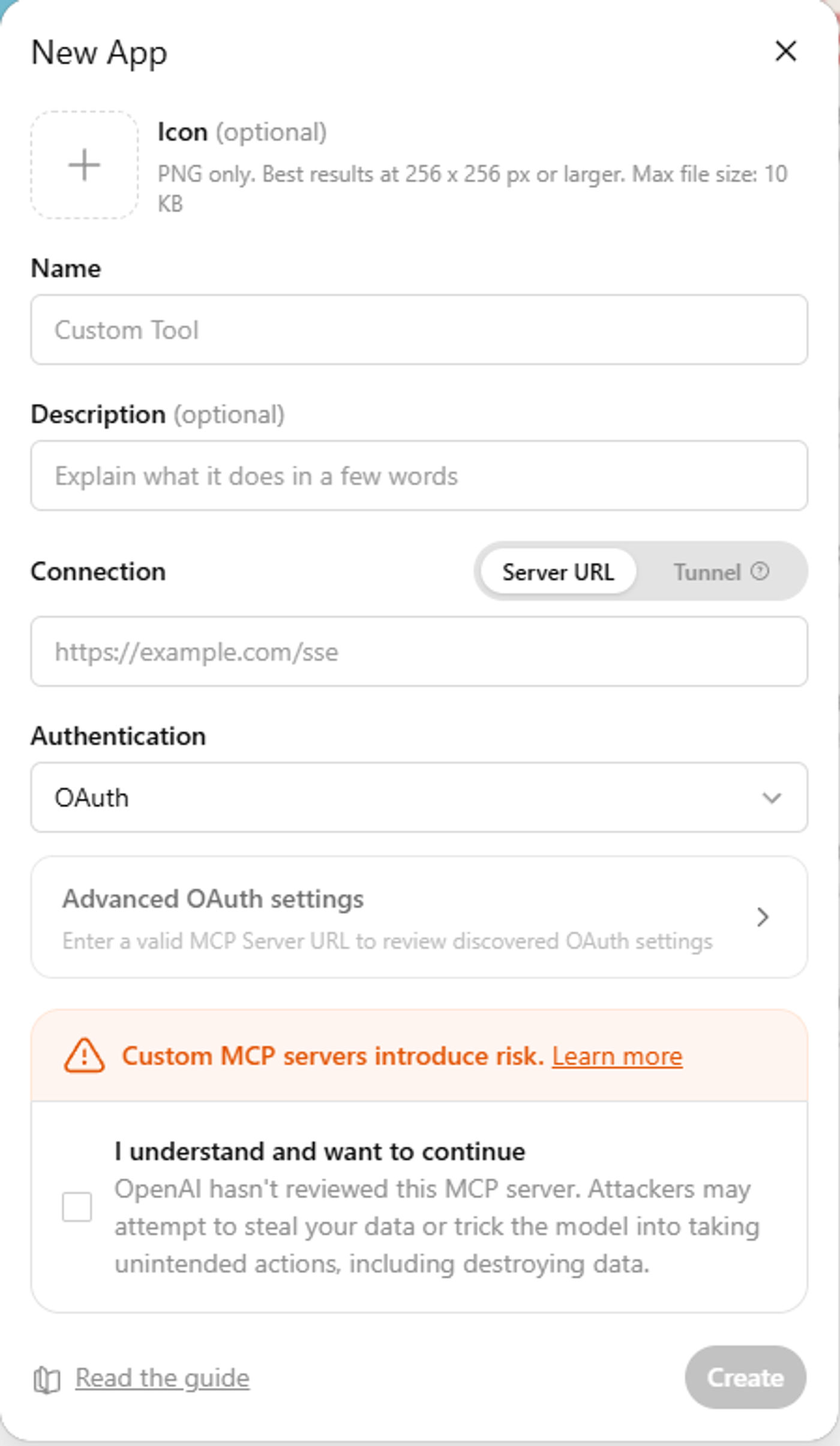
I felt this even while building my own AI agent. The irony is that even GPT itself warns you about the security risks once you start connecting external tools or using your own MCP layer. The more access you give the system, the more useful it becomes — but also the more dangerous it becomes if anything is compromised. That tension says a lot about where the market is right now.
OWASP’s 2025 Top 10 for LLM and GenAI apps makes this painfully clear. The list includes prompt injection, sensitive information disclosure, supply chain risk, data and model poisoning, improper output handling, excessive agency, system prompt leakage, vector/embedding weaknesses, misinformation, and unbounded consumption as core risks across the AI lifecycle.
That list alone tells the story: AI systems are not just “apps with nicer UX.” They create entirely new ways to break systems.
2. Prompt injection is not a bug. It is a structural problem
One of the biggest misconceptions in AI is thinking that prompt injection is a cute jailbreak issue.
It is not.
OWASP ranks Prompt Injection as LLM01:2025, the first risk on its list. That is because if an AI system can be manipulated through instructions hidden in user content, documents, emails, or websites, then the model is not just generating text — it is becoming a confused executor of attacker intent.
This becomes much worse with agents.
Once an AI system has tools, memory, and permissions, prompt injection is no longer just “say something weird.” It can become: leak data, trigger workflows, alter actions, or misuse connected systems.
That is why agentic AI security is so much harder than normal app security.
3. Working inside a corporate environment makes this risk feel very real
My own job in a corporate environment made me realize how vulnerable systems actually are, especially inside a huge group with multiple tools, teams, vendors, permissions, and legacy processes all tied together.
From the outside, big companies can look slow or overly cautious when it comes to adopting new systems or digital products. But once you see how interconnected and fragile internal infrastructure can be, it starts to make sense. One weak point is rarely just one weak point. In a large organization, one vulnerability can ripple across teams, data flows, reporting layers, and external partners.
That is why so many corporates are hesitant to adopt new AI systems quickly. It is not always because they are conservative or behind. A lot of the time, it is because they know exactly how expensive, messy, and dangerous a bad implementation could become.
4. AI security is not only about data leakage. It is also about model integrity
People usually think AI security means “don’t leak the data.”
That matters, obviously. But it is only one layer.
The deeper issue is model integrity:
- Was the model trained on poisoned or manipulated data?
- Can retrieval systems be contaminated?
- Can embeddings be exploited?
- Can the system’s outputs be trusted?
- Can the model be manipulated into acting outside its intended rules?
OWASP explicitly highlights supply chain risk and data/model poisoning as top-tier risks in 2025.
That matters because AI systems are not static software. They depend on model providers, fine-tuning data, retrieval pipelines, vector databases, plugins, orchestration frameworks, external APIs, open-source packages, and cloud infrastructure.
So the risk surface is both broader and more dynamic than traditional software.
5. Even the frontier labs are warning about this
This is not just a paranoid enterprise IT take.
OpenAI has warned that more capable models may pose a high cybersecurity risk, including the ability to help create zero-day remote exploits or assist in complex intrusions. Reuters reported that OpenAI said it is responding with tighter access controls, infrastructure security, egress restrictions, and continuous monitoring.
That is a huge signal.
If the companies building frontier AI are openly saying their own models raise serious cyber risk, then security is not a side issue. It is central to deployment.
6. Real-world incidents already show the problem
This is not theoretical anymore.
Reuters reported recently that Meta’s AI-powered Instagram support chatbot was manipulated into granting access to high-profile accounts because the system reportedly reset credentials without proper identity verification. Experts pointed to it as a clear example of the security risks of automating sensitive functions without adequate safeguards.
That is exactly the point.
AI works beautifully in demos because demos rarely include hostile inputs, malicious users, identity abuse, privilege misuse, indirect prompt attacks, or messy real-world system environments.
The more AI is allowed to act, the more catastrophic these failures become.
7. Governance is now part of the product
NIST’s AI Risk Management Framework exists for a reason. NIST says the framework is meant to help organizations manage risks to individuals, organizations, and society associated with AI, and it later added a Generative AI Profile to address GenAI-specific risks.
This is the important shift.
In the first wave of AI adoption, companies asked:
How do we use AI?
Now the harder question is:
How do we use AI safely, with control, auditability, and resilience?
That is why governance, identity, access control, monitoring, red-teaming, and incident response are no longer boring compliance topics. They are part of the deployment stack.
8. What must evolve before advanced AI can scale safely
Infrastructure
AI cannot sit on messy legacy systems with random permissions and invisible data flows. Organizations need cleaner architecture, stronger segmentation, and better visibility into how models, tools, and data interact.
Zero-trust security
If agents can act across systems, they should not inherit broad default access. Least privilege, strong identity controls, tool-level permissions, and isolated execution environments become essential.
Model and application security tooling
Traditional AppSec is not enough. Teams need AI-specific red-teaming, prompt-injection testing, retrieval-layer monitoring, model behavior evaluation, and controls around agent actions.
Governance and auditability
If an AI system makes a bad recommendation or triggers a harmful action, someone needs to know what the model saw, what tools it accessed, what it was instructed to do, why it behaved that way, and how to stop it next time.
Human oversight
The strongest near-term pattern is not full autonomy. It is highly capable systems with constrained authority and human review at critical points.
9. My takeaway
AI is not being slowed down mainly by lack of capability anymore.
It is being slowed down by lack of secure capability.
That is the real bottleneck.
Because advanced AI only becomes economically useful when it can touch real workflows, real data, real systems, and real decisions. And the moment it does that, cybersecurity stops being a back-office function and becomes the thing that decides whether deployment is even possible.
So I do not think the next big AI winners will only be the companies with the smartest models.
They will be the companies that can answer this much harder question:
Can this system be trusted inside a real enterprise environment?
Until that answer is yes, cybersecurity remains the gatekeeper to advanced AI execution.