Biotech 101: Computing With Living Human Neurons
Singapore now has a server rack that needs to be fed. Inside are living human neurons wired into silicon chips, raising a bigger question: can biology become a new computing substrate?
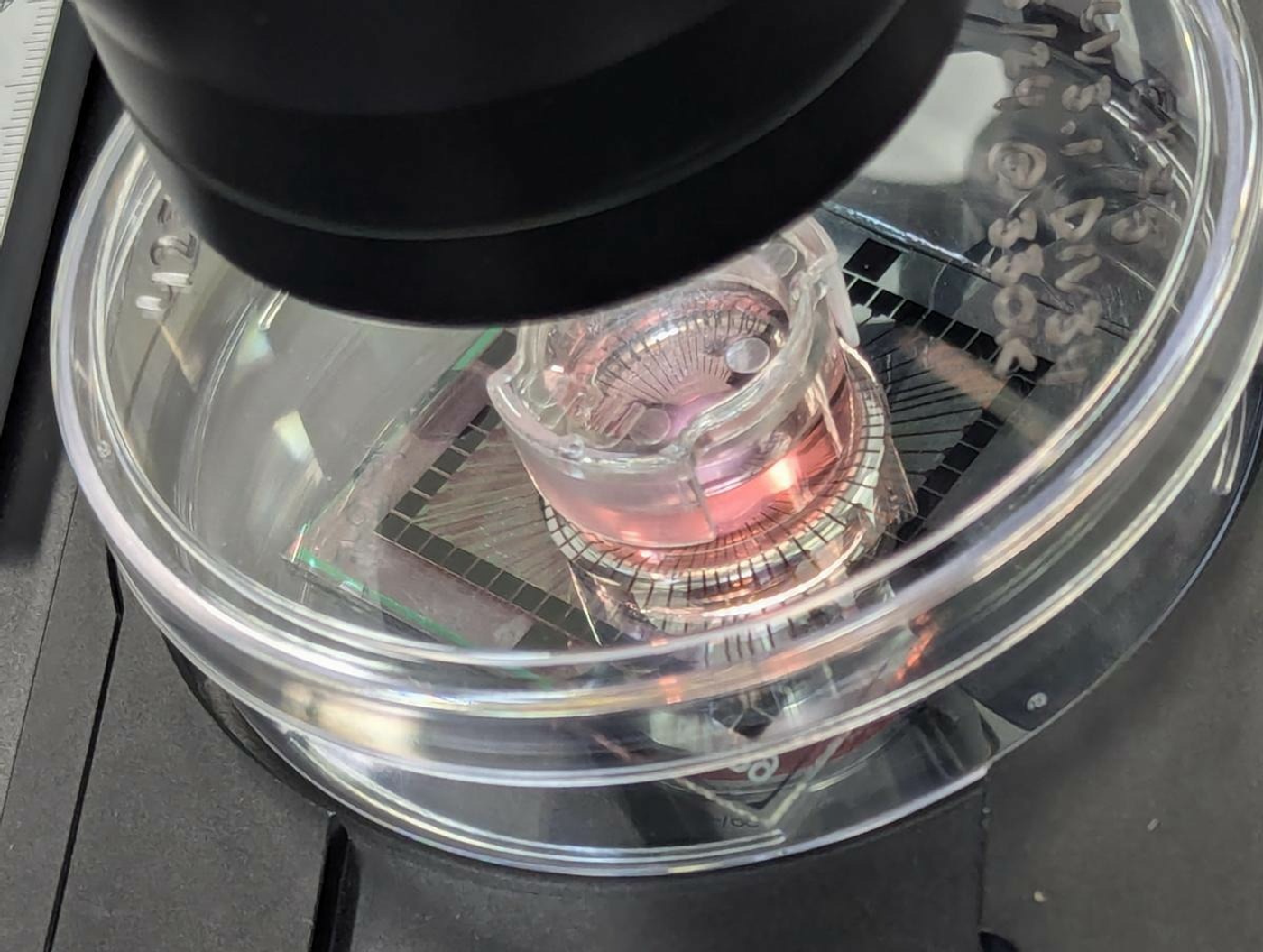
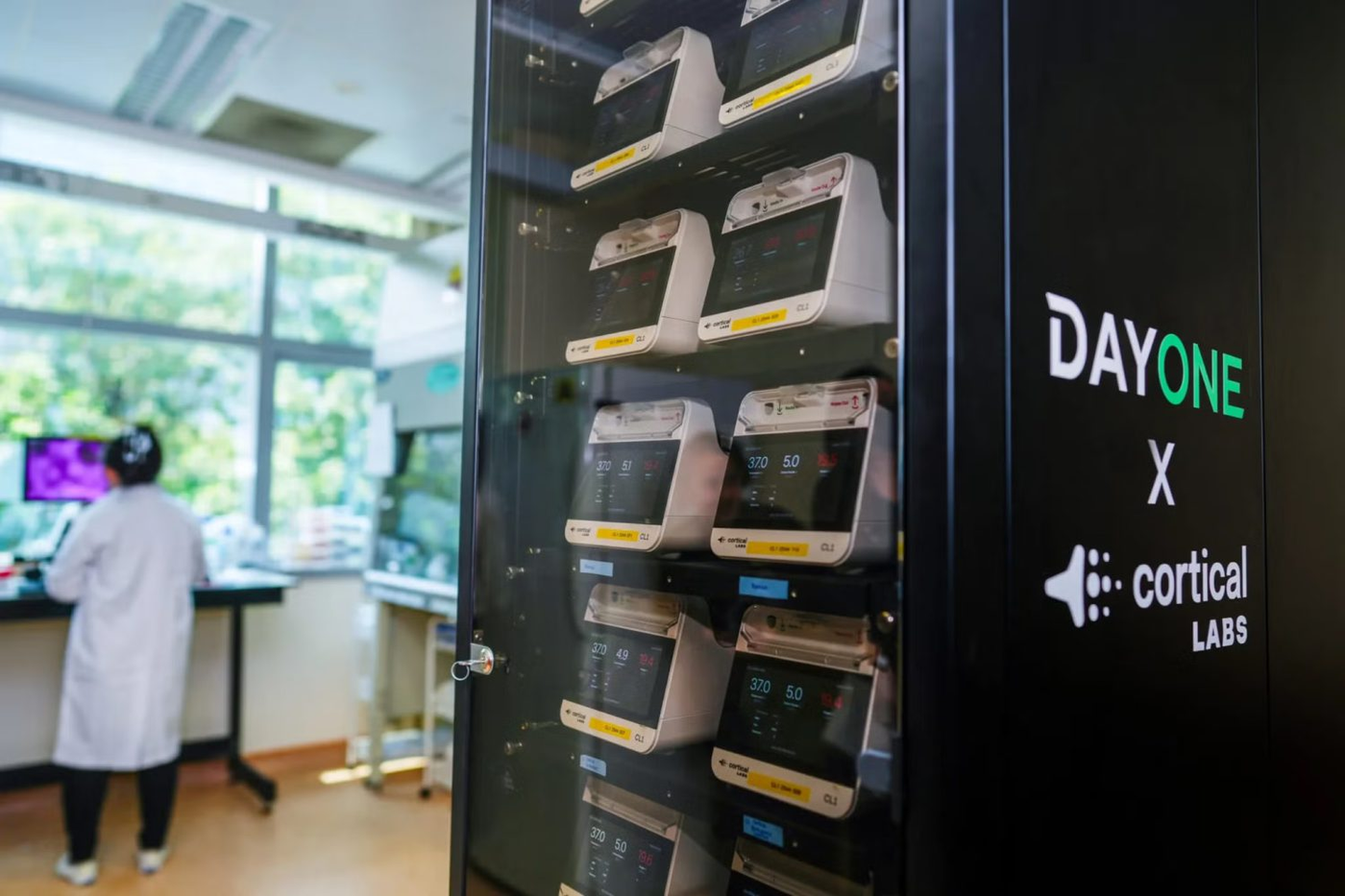
Singapore now has a server rack that needs to be fed. Inside NUS Medicine sits a prototype Biological Data Centre built by Australian startup Cortical Labs, Singapore data-centre operator DayOne, and NUS. Instead of relying only on silicon processors, the rack contains 20 CL1 biological computers, each using living human neurons grown on a silicon chip.
This sounds somewhere between brilliant and deeply cursed. But underneath the headline is a genuinely interesting question: can biology become a new computing substrate?
What exactly is the Singapore biological computer?
The core machine is called CL1, built by Cortical Labs. Most of it is still conventional hardware, electronics, software and life-support equipment. The unusual part is the processor in the middle. Human cells are reprogrammed into stem cells and differentiated into neurons. Those neurons are grown directly over a silicon chip containing a grid of microscopic electrodes.
Cortical Labs calls this Synthetic Biological Intelligence, or SBI.
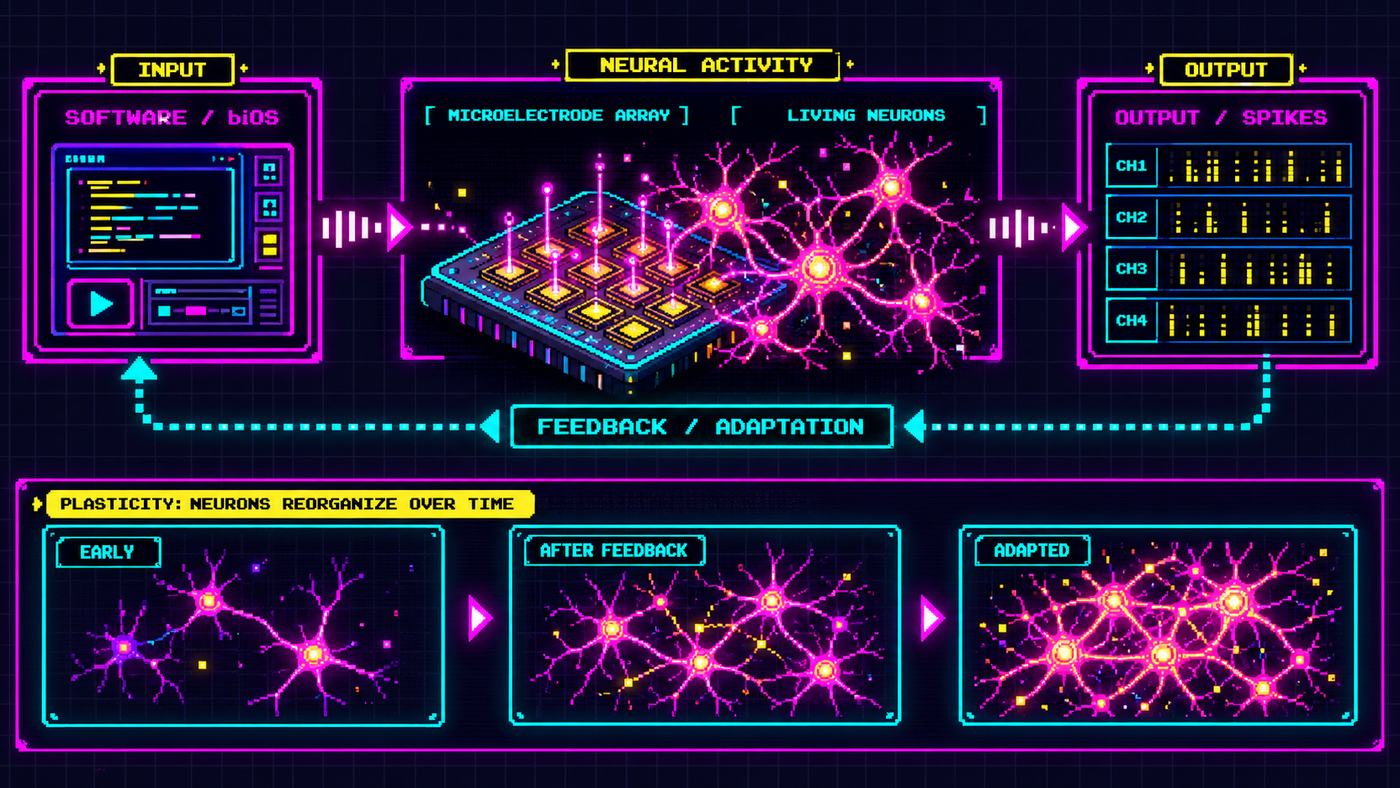
Neurons naturally communicate through electrical activity. CL1 uses a microelectrode array underneath the cells to both stimulate and read them. Software converts information into patterns of electrical signals, the electrodes send those signals into the neural culture, the neurons respond by firing, and the chip records that activity.
Then the software gives new feedback and the loop repeats:
Input → neural activity → output → feedback → adaptation
Cortical’s software layer, called biOS, manages this interaction and lets developers work with the system through Python rather than becoming neuroscientists first.
You do not explicitly program every connection inside the biological network.
The neurons reorganise themselves.
That ability to change with experience is called plasticity.
The Pong experiment
Cortical Labs first became famous through DishBrain, the predecessor to CL1. In a 2022 peer-reviewed experiment, researchers connected human and mouse neurons to a simplified game of Pong. Electrical stimulation represented where the ball was, neural activity controlled the paddle, and different feedback followed successful and unsuccessful actions.
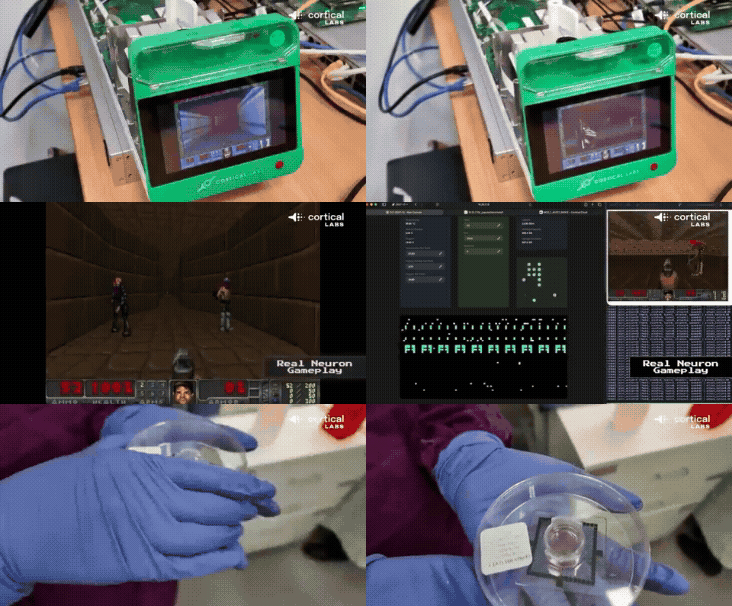
Over time, the neural cultures changed their behaviour and improved at the task. That does not mean a tiny brain became conscious and decided it liked Pong. What it showed was much narrower: a living neural network could receive information, act on it, receive feedback and adapt its future behaviour.
That is enough to make computer scientists interested.
Why use neurons when GPUs already exist?
Because neurons and GPUs are good at different things.
GPUs are extremely good at precise numerical computation. Meanwhile, brains are very good at continuous learning, adaptation and learning from relatively little data. Modern AI often needs enormous datasets and expensive training runs to learn something humans can pick up from a few experiences.
The plausible future could be:
silicon + biological co-processor
Silicon handles storage, precise computation, networking and normal software. Biological systems could eventually handle specific problems where adaptation and learning efficiency matter more.
The data centre installation of this contains 20 CL1 units in one rack, which NUS describes as the world’s first independently operated biologically integrated server rack. DayOne is involved because the goal is to test whether this technology can operate like real infrastructure, not just as a lab experiment. They are even exploring expansion to as many as 1,000 units in Singapore, subject to technical validation and regulation.
So this is not only science for science’s sake!!
You have to feed your server
Living processors come with a slight inconvenience: they are alive.
The cells need nutrients, temperature control, oxygen and carbon dioxide management, fluid circulation and waste removal. Technicians have to replenish the cultures, and Cortical says a neural culture can currently stay alive for roughly six months.
That creates some very non-standard IT problems. A GPU does not mature, biologically drift or die six months later. Two batches of GPUs also behave much more consistently than two living neural cultures.
So before biological computing becomes infrastructure, the field has to solve not just intelligence but reproducibility, maintenance and manufacturing.
Breakthrough or creepy?
Probably both, depending on which part you focus on.
The exciting argument is that brains perform remarkable computation on very little power. If even part of that efficiency can be engineered into useful systems, biological computing could eventually complement energy-hungry AI infrastructure. It could also become valuable for drug discovery and neurological disease research, because researchers would be experimenting directly on living human neural tissue rather than only animal models or static cell cultures.
The uncomfortable part is obvious too. These are living human neurons receiving stimuli, adapting and learning.
That raises questions about tissue consent, commercialization and, eventually, whether sufficiently complex biological systems could develop morally relevant capacities. There is currently no good evidence that today’s neural cultures are conscious in anything resembling the human sense, but researchers are already debating where ethical boundaries should sit.
What does Cortical Labs actually want to build?
Cortical’s ambition goes much further than neuroscience equipment. The company wants to build a new generation of biological computers that learn from less data, use less energy and eventually handle problems conventional computing solves inefficiently.
The Singapore project is explicitly meant to move the technology from research toward commercial applications. Cortical has mentioned areas including drug discovery, humanoid robotics, cybersecurity and fraud detection, especially problems where a system has to adapt quickly from limited information.
The company is already commercialising the platform. Researchers and developers can buy CL1 hardware or access living neurons remotely through Cortical Cloud, using Jupyter notebooks and a Python SDK.
That may be the most important commercial step so far. Something that once required a specialist neuroscience lab is starting to look like a developer platform.
Who else is doing this?
Cortical Labs is not alone anymore.
| Company | What it is building | Difference from Cortical |
|---|---|---|
| Cortical Labs, Australia | Living human neuronal networks on silicon chips | Most productised general-purpose biological-compute platform |
| FinalSpark, Switzerland | 3D human brain organoids connected to electrodes | Closest wetware-as-a-service model, but uses organoids |
| Frontier Computing, UK | Large biological neural networks for ML workloads | More aggressive attempt to scale biological compute |
| 28bio, US | Trainable human cortical organoids | More focused on drug discovery |
| Koniku, US | Living neurons integrated with electronics | Mainly focused on biological sensing |
FinalSpark is probably the closest comparison. Its Neuroplatform gives researchers remote access to human brain organoids, with electrical stimulation, recording and a Python API.
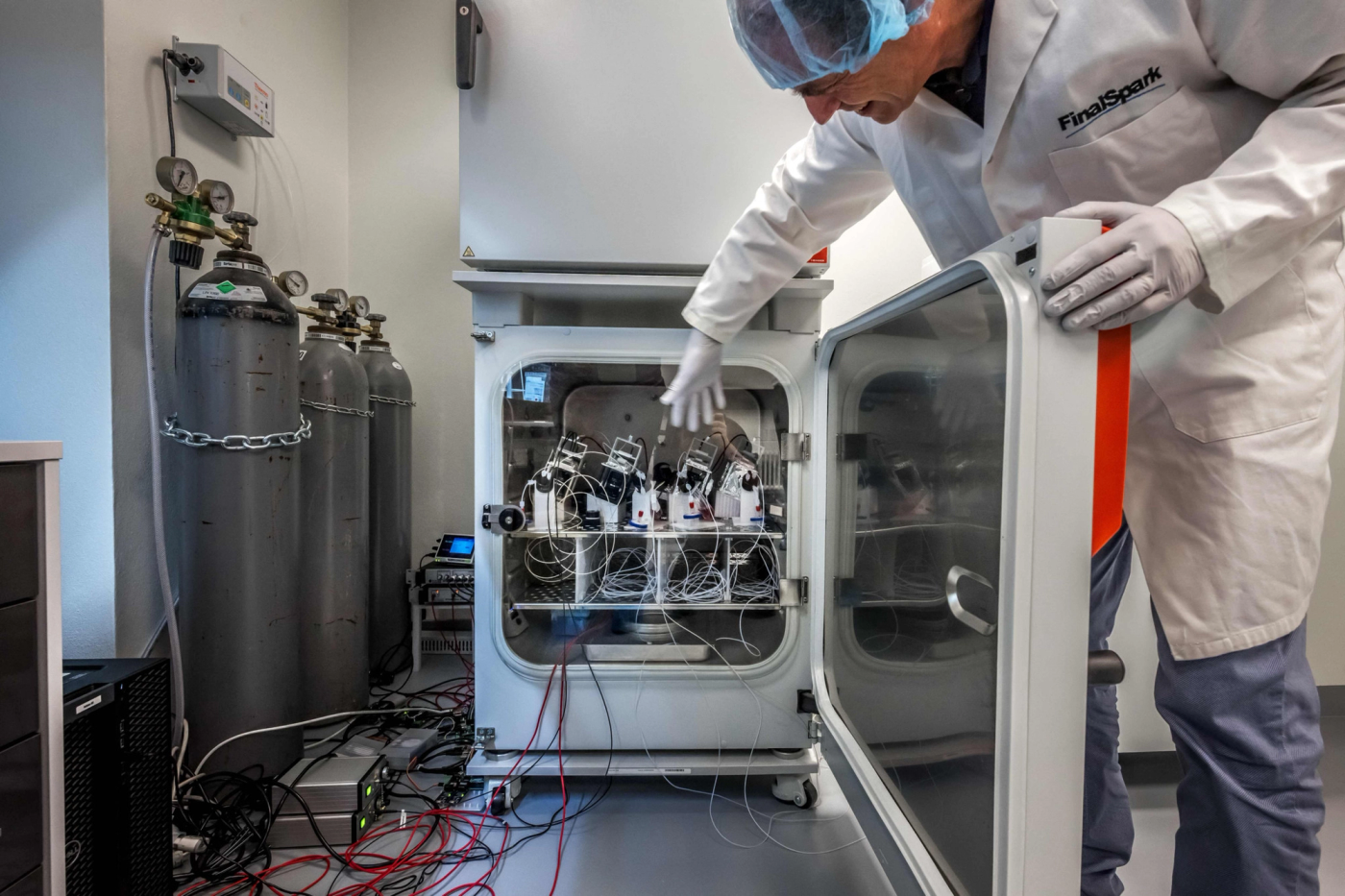
Frontier Computing is taking the most aggressive compute-first approach. It says it is working toward much larger biological neural systems for machine-learning workloads. Those systems still need much more independent validation, but the company’s existence suggests biocomputing is starting to look like an actual startup category.
28bio shows another commercial path. Rather than trying to replace computers, it uses trainable human cortical organoids to test how drugs affect learning, memory and neural plasticity. That may actually become commercially useful sooner than biological AI.
The commercial question
Biological computing already has commercial value in neuroscience research, drug discovery and biological experimentation, but using living neurons as a general computing substrate still needs to prove scalability, reliability and a clear advantage over silicon. Like whether we have enough human neurons to run the large amount of computers at scale…