
Cerebras IPO: The “Not Nvidia” AI Chip Bet
Cerebras going public is more than another AI IPO. It is a bet that the AI infrastructure market is finally big enough to support serious alternatives to Nvidia.

Cerebras going public is more than another AI IPO. It is a bet that the AI infrastructure market is finally big enough to support serious alternatives to Nvidia.
For the last two years, Nvidia has basically been the main character of the AI economy. If you wanted to train or run frontier models, you probably needed Nvidia GPUs, Nvidia networking, Nvidia software, and the whole CUDA ecosystem. That dominance is powerful, but it also creates a problem: everyone is fighting for the same chips, paying high prices, and worrying about being too dependent on one supplier.
That is where Cerebras becomes interesting.
What makes Cerebras different
Cerebras does not build a normal GPU. Its core product is the Wafer-Scale Engine, a giant AI processor built across an entire silicon wafer. The latest WSE-3 has been described as having 4 trillion transistors and 900,000 AI-optimised cores, which is why Cerebras markets itself around extreme scale and speed.
The normal chip industry cuts a silicon wafer into many smaller chips. Cerebras basically looked at that and said: cute, but what if the whole wafer was one chip?
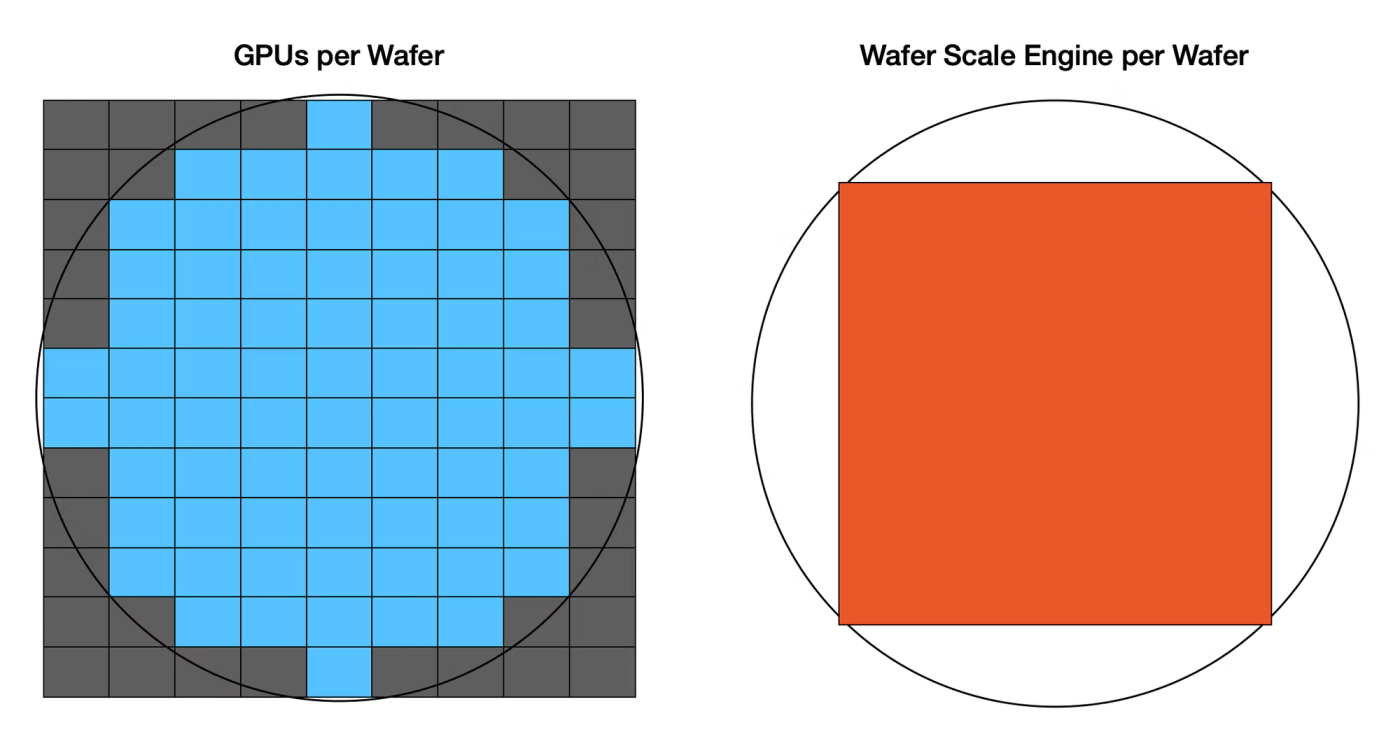
That is the whole point. Instead of connecting thousands of separate GPUs together and losing time moving data between them, Cerebras tries to keep compute, memory, and communication closer together on one massive processor. This can help with workloads where communication and memory movement become the bottleneck.
In simple terms:
Nvidia is the city of many powerful buildings connected by roads.
Cerebras is trying to build one giant mega-building where everyone is already inside.
Why this matters for AI
AI is becoming less about “who has a nice app” and more about who controls compute. Training and inference are both extremely expensive. As models get larger and more agentic, companies need faster, cheaper, and more available compute.
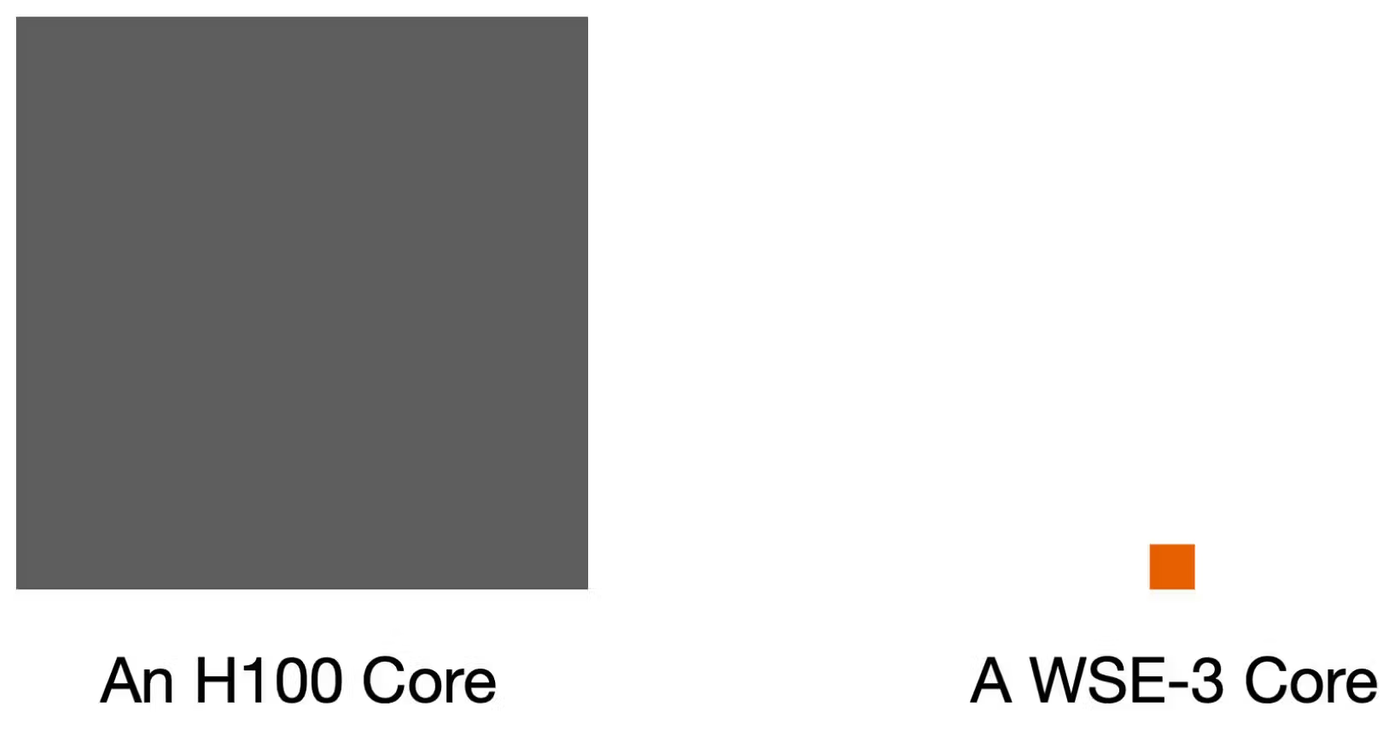
Cerebras is pitching itself as one answer to that problem. It sells AI systems and cloud compute built around its wafer-scale chips. Its differentiation is especially relevant for inference speed, high-throughput workloads, and certain scientific computing tasks. Recent research on stencil computations found that the WSE-3’s distributed on-chip memory and mesh interconnect can avoid some traditional GPU memory bottlenecks, with very large speedups in specific workloads.
| Large GPU | WSE-3 | |
|---|---|---|
| Number of Chips per Wafer | 72 | 1 |
| Total Chip Area | 58,608 | 46,225 |
| Defect Rate per mm2 | 0.001 | 0.001 |
| Number of Defects Total | 59 | 46 |
| Core Size (mm2) | 6.2 | 0.05 |
| Die Space Lost | 361 | 2.2 |
That does not mean Cerebras beats Nvidia everywhere. It means the AI hardware market is becoming more specialised. Different workloads may need different chips.
The IPO signal
Cerebras’ public-market story is also about timing. Recent reports describe its IPO as a major AI infrastructure listing, with strong investor interest and a large first-day stock move. Financial Times reported that Cerebras raised $6.4 billion in what it described as the largest semiconductor IPO in history, with the stock jumping sharply on debut and reaching a valuation around $70 billion.
That matters because capital-intensive AI companies need huge funding. Chips, data centres, power, packaging, cooling, and software ecosystems are not cheap. Public markets give companies like Cerebras a way to raise much larger pools of capital than private venture rounds alone.
Why customers want a Nvidia alternative
The biggest reason is simple: nobody wants one company to control the entire AI compute stack.
OpenAI is a good example. Reuters reported that OpenAI agreed to buy up to 750 megawatts of compute capacity from Cerebras through 2028 in a deal worth more than $10 billion. That is not a small experiment. It shows that even the biggest AI labs want more optionality beyond Nvidia-heavy infrastructure.
Google is also pushing its own TPU ecosystem harder. A recent Google–Blackstone venture aims to offer TPU compute-as-a-service, with $5 billion of equity backing and 500MW of planned data centre capacity by 2027. That is another sign that the market wants more than one dominant compute pathway.
So the trend is clear:
Nvidia is still dominant, but the market is actively funding alternatives.
Those alternatives include Cerebras, Google TPUs, AMD GPUs, AWS Trainium, custom ASICs, photonic chips, and other specialised accelerators.
The risks
Cerebras still faces real challenges.
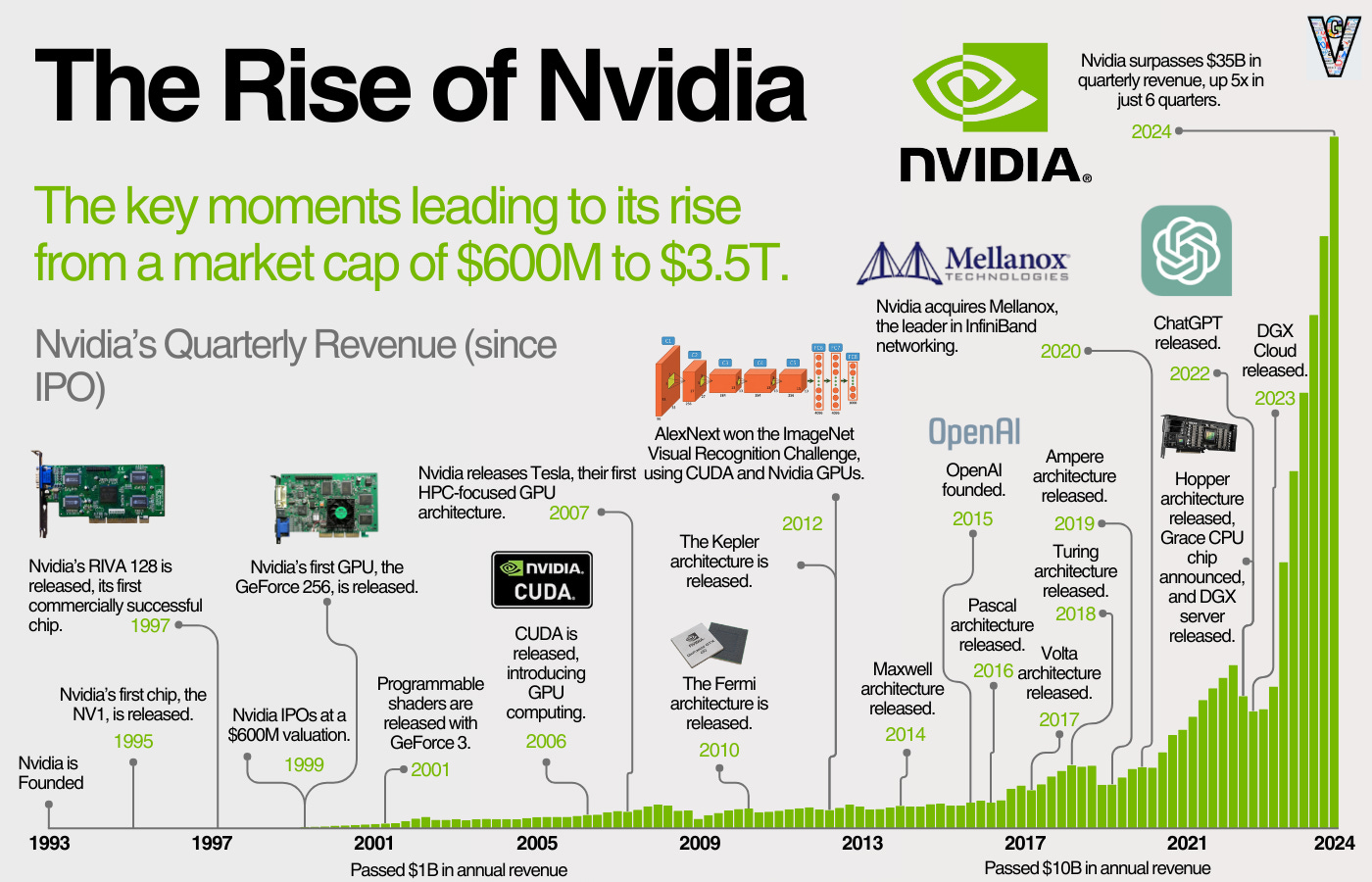
First, Nvidia’s moat is not only hardware. It is also software, developer familiarity, CUDA, networking, supply chain, and customer trust. That ecosystem is very hard to beat.
Second, alternative chips need high utilisation to make the economics work. A 2026 accelerator study found that platforms including Cerebras can have higher idle power than Nvidia and AMD GPUs, which means utilisation matters a lot if customers want to realise the promised efficiency gains.
Third, AI hardware is brutally cyclical and capital-intensive. A company can have brilliant architecture and still struggle with manufacturing, supply, software maturity, customer concentration, or pricing pressure.
My takeaway
Cerebras is compelling because it is not trying to be a slightly cheaper Nvidia clone. It is making a different architectural bet: wafer-scale compute, extreme on-chip parallelism, and a system designed around AI workloads from the ground up.
The IPO matters because it shows public investors are no longer only buying “AI apps.” They are buying the infrastructure layer underneath AI: chips, data centres, energy, and compute capacity.
Nvidia is still the king. No debate there.
But the AI economy is now too important, too expensive, and too supply-constrained for everyone to rely on one throne.
Cerebras is basically saying:
What if the next AI infrastructure winner does not look like Nvidia at all?
And honestly, that is what makes it interesting.