
Waymo crash rate falls below human drivers
Independent IIHS research found materially lower crash involvement for Waymo’s driverless vehicles across 50 million miles, with important limits around geography and reporting.
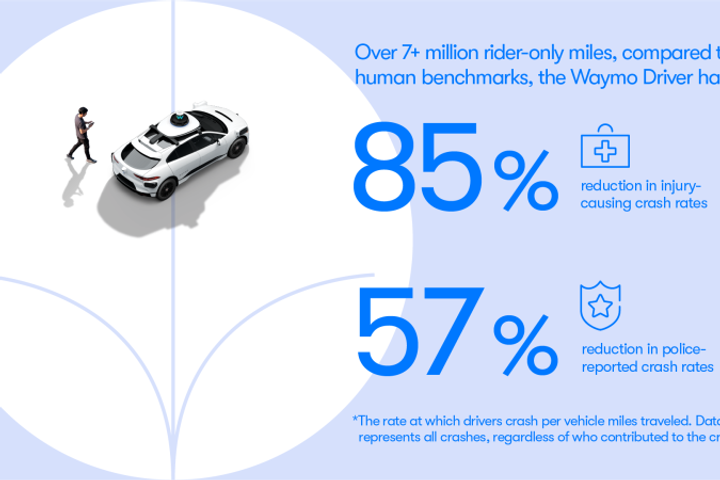
Autonomous-driving companies often publish their own safety statistics. Independent evidence matters more because it tests the same claims without relying entirely on the operator’s framing.
What happened
Research from the Insurance Institute for Highway Safety found that Waymo vehicles operating without human drivers had police-reportable crash-involvement rates 68% below those of human drivers in the same locations and time periods.
The analysis covered approximately 50 million driverless miles across Phoenix, San Francisco, Los Angeles and Austin. It also found lower rates of single-vehicle crashes and crashes involving injuries.
The results were not identical across every city or crash type. Austin had a smaller operating sample, and differences in local roads, weather, traffic and deployment design limit how broadly the findings can be generalised.
The study applies to Waymo’s tested operations. It does not establish that all autonomous-driving systems are safer than people, and it does not remove the need for consistent reporting across the wider industry.
Why it matters
Safety is the core condition for robotaxi expansion. Regulators, cities and passengers need evidence that autonomous systems reduce risk in real traffic, not only that they perform well in controlled testing.
A large independent dataset strengthens Waymo’s case for expanding service, especially because the comparison adjusts for where and when the vehicles operated. It also gives policymakers a more useful reference than raw crash totals, which can be misleading when fleets drive different numbers of miles.
The bigger picture
Autonomous vehicles are moving into a phase where safety claims must become standardised and comparable. Companies currently report incidents in different ways, and public agencies often lack consistent mileage and exposure data.
Waymo’s result creates pressure for common reporting rules covering miles driven, operating conditions, severity and responsibility. Better evidence could accelerate deployment for systems that perform well while making it harder for weaker operators to hide behind selective statistics. The competitive advantage may increasingly come from verifiable safety performance rather than the size of a test fleet alone.