
Walden Robotics launches with $300M and robots already working at Toyota
Walden Robotics has launched with approximately $300M in funding and a $1.1B valuation, claiming its general-purpose robots are already performing production tasks inside a Toyota factory.
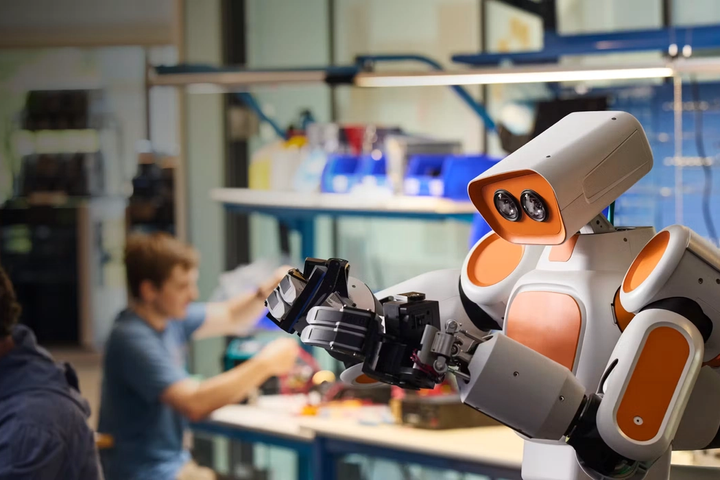
Walden Robotics is entering the physical-AI race with an unusually large starting position: approximately $300M in funding, a $1.1B valuation and robots that the company says are already performing real production work inside a Toyota factory.
What happened
The Cambridge, Massachusetts startup is led by cofounder and chief executive Russ Tedrake, an MIT professor and longtime robotics researcher who previously led large-behaviour-model work at Toyota Research Institute. Walden is building general-purpose robots for manufacturing and logistics, supported by proprietary models intended to learn physical tasks from human demonstrations and improve through deployment.
Toyota and Deviation Capital co-led the financing. Strategic and venture participants include Nvidia, Boeing, Samsung Ventures, Prologis Ventures, CoreWeave Ventures and Menlo Ventures. Some reports have described the financing as a seed round, but the company’s deal announcement refers only to approximately $300M in funding, so the formal stage remains unclear.
Walden’s current machines use humanoid-style upper bodies with arms and sensors but generally rely on wheeled or fixed bases rather than legs. The company argues that this design is more stable, easier to certify and better suited to present-day factory work. It says robots have been operating at a North American Toyota facility since February 2026, supporting tasks such as machine tending, parts kitting, tool setting, assembly support and equipment cleaning.
Why it matters
Many robotics companies can demonstrate impressive behaviour in controlled environments. The harder problem is delivering useful work safely and repeatedly inside factories, where downtime and errors are expensive. Toyota gives Walden access to production environments, operational expertise and the real-world data needed to improve its models.
Walden plans to offer its systems through a robots-as-a-service model. Customers would pay for ongoing use rather than buying the machines outright, lowering upfront adoption costs but leaving Walden responsible for hardware, maintenance and field support.
The bigger picture
The company represents a more pragmatic branch of the humanoid-robotics market. Instead of prioritising human-like appearance or walking, Walden is optimising for economically useful manipulation in existing industrial settings.
Important questions remain unanswered: how many robots are deployed, how autonomous they are, how often humans intervene and whether the service model can generate attractive margins. Toyota is a major advantage, but it also creates early customer concentration. Walden now has to prove its learning system transfers beyond one factory and one strategic partner.