
Unitree clears key hurdle for $619M robotics IPO
Unitree’s planned Shanghai listing could become a major public-market test for embodied AI, robotics manufacturing and China’s push to scale intelligent machines.
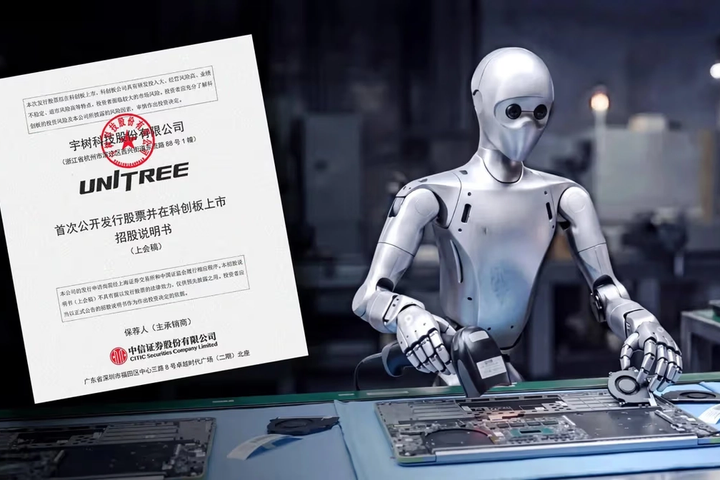
Robotics is moving from private-market hype toward a much harder test: whether public investors will fund the transition from impressive demos to scaled manufacturing.
What happened
Chinese robotics company Unitree received regulatory approval for a Shanghai STAR Market listing through which it plans to raise 4.2B yuan, or about $619.4M.
The company has not yet set a launch date or price range. Its prospectus says the proceeds are intended for robot AI model research, development of new robot products and expansion of smart manufacturing capacity.
Unitree is best known for legged robots and has become one of the more visible companies in China’s broader embodied-AI push.
Why it matters
This is more than another robotics funding round. A public listing would test whether investors believe robotics companies can convert technical progress into repeatable production, commercial demand and sustainable margins.
That matters because physical AI is capital-intensive. Better models alone are not enough; companies also need hardware supply chains, manufacturing capacity, reliability and enough real-world use cases to support scale.
A successful listing could also give other robotics companies a public-market benchmark for valuation and investor appetite.
The bigger picture
The embodied-AI race is entering a more industrial phase. The question is shifting from “can the robot do this?” to “can the company manufacture, deploy and support thousands of systems economically?”
Unitree’s IPO plans put that question directly in front of public investors and could become an important signal for China’s robotics sector more broadly.