
Ubitium Raises $14M for Physical AI Chip
Semiconductor startup Ubitium has raised $14 million to commercialise a processor that aims to combine sensing, AI inference and real-time control on one programmable architecture.
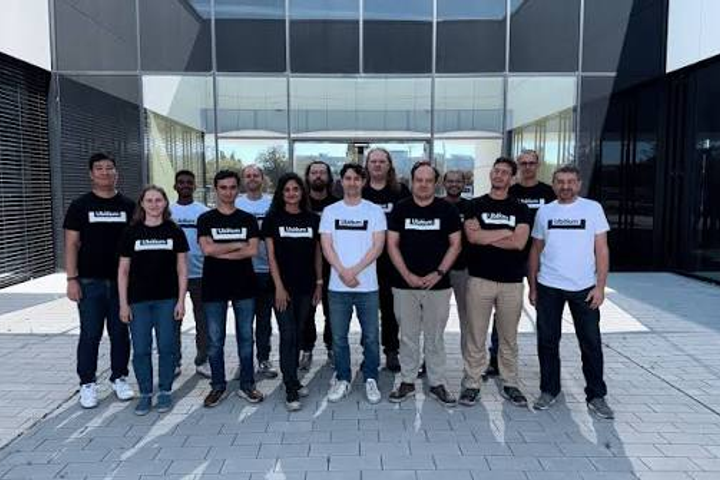
Semiconductor startup Ubitium has raised $14 million to commercialise a processor that aims to combine sensing, AI inference and real-time control on one programmable architecture.
What happened
The new seed financing was led by Ibex Investors with participation from OpenOcean, KBC Focus Fund, Runa Capital and other backers. Ubitium says total seed funding has reached $18 million. Its first silicon, UB108, was manufactured using Samsung's 8nm process and contains 256 processing elements. The company says the chip has demonstrated signal processing, AI inference and control workloads on the same reconfigurable architecture. A planned follow-on product, UB410, is intended to expand to 4,096 processing elements, with tape-out and evaluation units targeted for 2027. The architecture is intended to work with RISC-V development tools and unified memory. Performance, power and commercial advantages remain company claims rather than independent benchmarks.
Why it matters
Autonomous machines typically process information through several hardware blocks: sensors capture signals, accelerators run AI models and controllers translate results into actions. Moving information between them can add cost, power use, latency and software complexity. A shared programmable platform could simplify that stack in devices such as drones, industrial systems and smart sensors.
The bigger picture
Physical AI will require chips optimised for complete sensing-to-action workflows, not only fast neural-network inference. Ubitium's funding reflects interest in that broader computing market. Adoption will depend on real-world performance, software compatibility and whether integrated hardware outperforms established specialised components.