
Thea Energy Wins $20M to Simplify the Magnets Used in Fusion Reactors
Thea Energy has received a $20 million ARPA-E award to manufacture modular superconducting magnets for its stellarator fusion reactors.
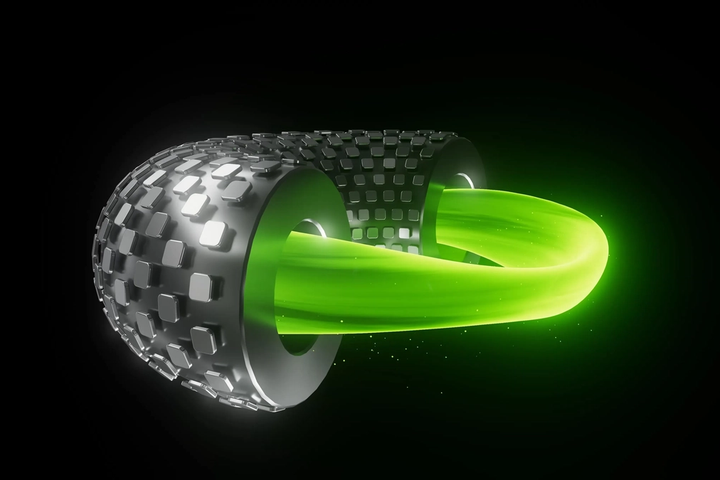
Stellarators can confine fusion plasma without relying on the same pulsed operating cycle as many tokamak designs. Their weakness is complexity: the magnets are notoriously difficult to design and manufacture.
Thea Energy has received new federal funding to test a more modular approach.
What happened
Thea Energy received a $20 million ARPA-E award to manufacture modular, high-temperature superconducting magnets for its stellarator fusion reactors.
A stellarator uses magnetic fields to hold extremely hot plasma away from the reactor walls. Conventional designs create the required twisted field with complicated three-dimensional coils that are expensive to build.
Thea’s approach uses repeated magnet modules arranged around the plasma. Software controls the electrical current in those modules to create the required magnetic-field shape.
Why it matters
If the same basic magnet components can be manufactured repeatedly, Thea may be able to replace a bespoke engineering challenge with a more standard production process.
High-temperature superconductors can also carry large electrical currents with very little resistance, enabling powerful magnetic fields in a more compact system. The challenge is proving that the modules can maintain the required precision, reliability and cooling performance inside a working reactor.
The award funds manufacturing capability rather than demonstrating net energy from fusion. That distinction matters: better magnets solve one major bottleneck, but a commercial power plant still requires many other systems to work together.
The bigger picture
Fusion companies are increasingly differentiating themselves through manufacturability, not only plasma physics.
Thea’s bet is that a stellarator can become practical if its most complicated hardware is converted into modular components controlled through software.