
Sunthetics Joins Autonomous Chemistry Lab Project
Sunthetics joined a $19.5M initiative to build AI-powered autonomous lab infrastructure for chemistry research.
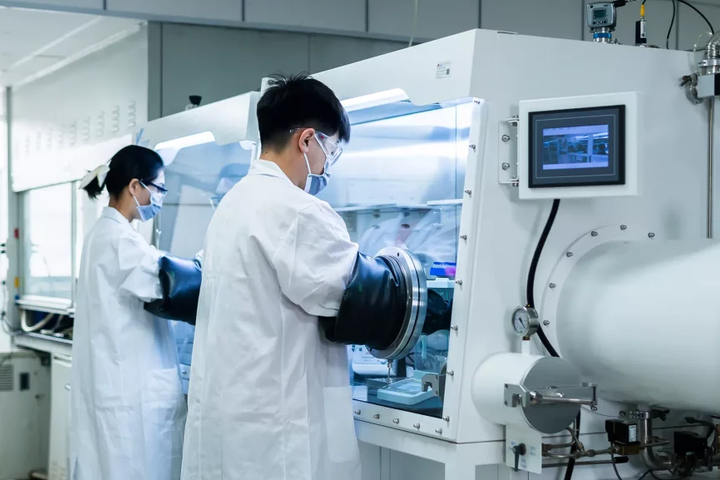
Sunthetics is part of a broader push to connect AI research ideas with real experimental execution.
What happened
Sunthetics was selected as a co-principal investigator on a $19.5M initiative to advance AI-powered autonomous laboratories.
The broader project includes Scripps Research and UCLA, with the goal of building automated chemistry infrastructure that researchers can access remotely.
Autonomous labs combine robotics, experiment planning, data capture and machine learning. The idea is to let scientists run more experiments, collect cleaner data and shorten the loop between hypothesis and result.
Sunthetics brings startup participation into that research infrastructure, positioning the company around the automation layer for chemistry and materials experimentation.
Why it matters
This is a good AI-for-science infrastructure item.
AI can propose molecules, reactions or materials, but scientific progress still depends on physical experiments. If lab automation remains slow, expensive and fragmented, model-generated ideas will struggle to translate into real-world discoveries.
Autonomous laboratories are one credible way to close that gap. They can generate structured experimental data and make research workflows more repeatable.
The challenge is that lab automation is hard. Equipment, protocols, safety requirements, data quality and scientific judgment all need to work together.
The bigger picture
AI-for-science is moving from software-only prediction toward closed-loop discovery systems.
The most valuable platforms may be the ones that connect models, robotics and experimental data. Sunthetics’ role in this project is a signal that startups can help build the infrastructure behind that shift, not just the AI models that sit on top of it.