
Silicon Microgravity raises €7.08M to navigate where GPS cannot
The Cambridge spinout is scaling compact inertial and gravity sensors for defence, autonomous systems, spacecraft and other GPS-denied environments.
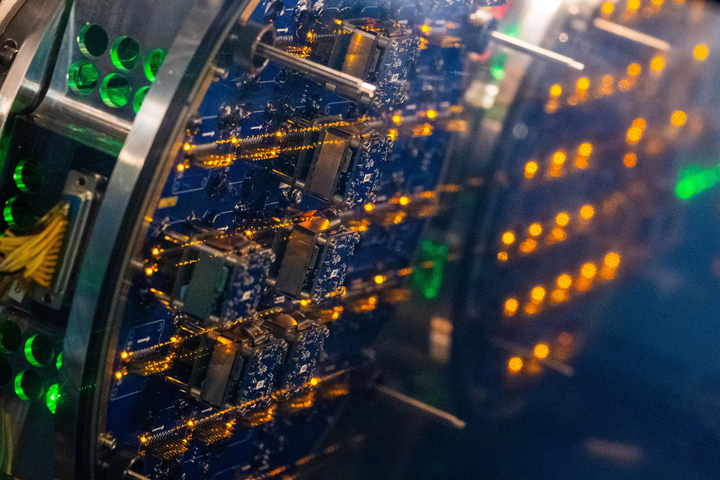
Silicon Microgravity has raised €7.08M to commercialise sensors designed for situations where satellite navigation is unavailable, unreliable or deliberately jammed.
What happened
The Cambridge spinout raised €7.08M in a round led by West Hill Capital, with participation from the UK Innovation & Science Seed Fund’s defence, security and space portfolios.
The company develops MEMS-based accelerometers, gyroscopes and gravity sensors. These devices measure motion and local gravitational effects, allowing systems to estimate position and orientation without continuously receiving a GPS signal.
Target applications include defence platforms, autonomous vehicles, spacecraft, launch systems, underground resource exploration and other environments where compact, accurate sensing is required. The financing will also support UK manufacturing capability for the underlying semiconductor and sensor technology.
Why it matters
GPS is cheap and effective, but it is not universally available. Signals can be blocked by buildings, unavailable underwater or underground, and disrupted through jamming or spoofing in contested environments.
More accurate compact inertial sensors could let vehicles and machines continue navigating when satellite signals disappear. That creates both commercial and national-security value.
The bigger picture
The technical challenge is drift: small measurement errors accumulate over time and gradually reduce positioning accuracy. Silicon Microgravity must show that its sensors can maintain useful precision outside controlled demonstrations and be manufactured consistently at competitive cost. If it succeeds, the company could supply a foundational component across several autonomous, space and defence markets rather than depending on one end product.