
Rendezvous Raises $20M for Self-Assembling Spacecraft
Rendezvous Robotics raises a $20 million seed round to develop modular spacecraft tiles designed to autonomously assemble and reconfigure in orbit.
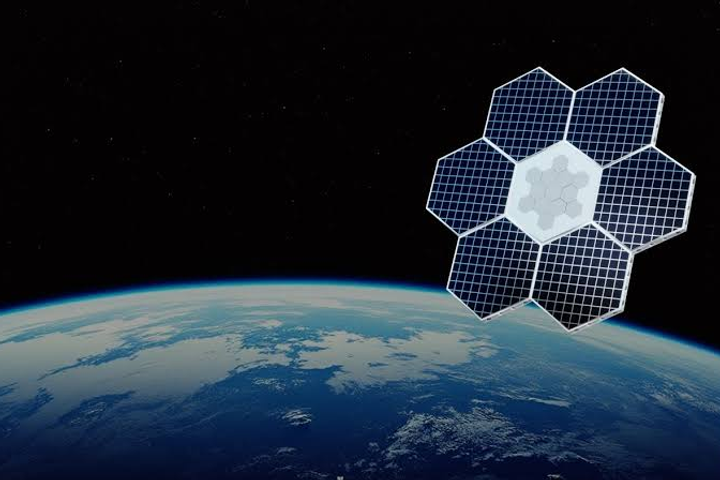
Spacecraft design is constrained by the size of the rocket that carries equipment into orbit. Rendezvous Robotics is developing building blocks intended to assemble themselves after launch.
What happened
Colorado-based Rendezvous Robotics closed an oversubscribed $20 million seed financing co-led by MaC Venture Capital and Toyota Ventures, with participation from other institutional and existing backers.
The company's approach uses modular spacecraft tiles that can move, connect and separate autonomously. It draws on earlier TESSERAE research originally developed at MIT. Rather than launching one large rigid structure, the concept is to launch smaller components and assemble larger systems in space.
Upcoming milestones include planned microgravity tests in late 2026 and a free-flying demonstration targeted for 2028 or later. The company plans to test how independent tiles can assemble, separate and reassemble into a different configuration. These are future demonstrations, not capabilities already proven in routine orbital operations.
Why it matters
Large space structures such as antennas, solar arrays and thermal radiators can be difficult to package inside existing launch fairings. Modular assembly might make it possible to deploy larger or more adaptable structures without requiring a single fully assembled spacecraft.
However, coordinating independent modules in microgravity raises difficult issues around positioning, collision avoidance, power, mechanical connections and system reliability. Testing on the ground or in short periods of microgravity is not equivalent to proving long-term autonomous operation in orbit.
The bigger picture
As satellite constellations and space infrastructure become more ambitious, in-space assembly could emerge as an enabling technology. Rendezvous is pursuing a distinct architecture, but practical adoption depends on successful demonstrations and economics compared with conventional deployable structures.