
Qureight Raises $20M to Make Clinical Trials More Measurable
Cambridge-based Qureight has raised $20 million to use quantitative medical imaging to produce more precise signals in lung and heart clinical trials.
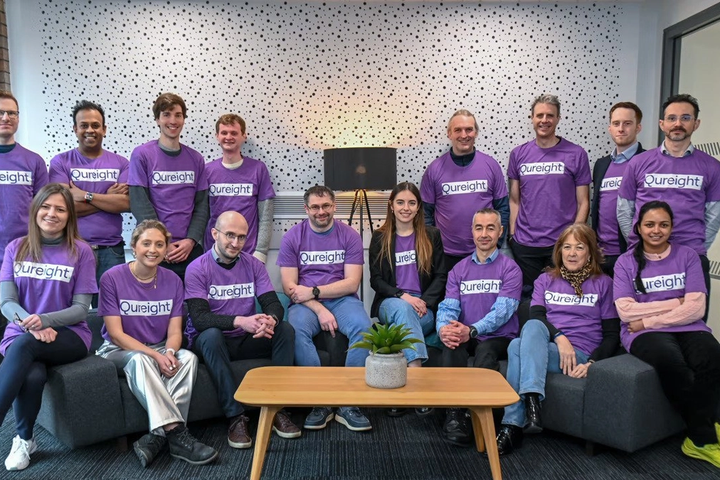
A clinical trial can fail to produce a clear answer even when the underlying medicine is promising. Qureight wants to make the evidence more measurable.
What happened
Cambridge-based Qureight closed a $20 million Series B led by Molten Ventures. Its platform analyses 3D medical images to quantify how diseases affecting the lungs and heart change over time.
Traditional trial endpoints can depend on broad clinical measures or manual interpretation. Qureight instead aims to extract consistent imaging biomarkers from scans, giving researchers a more precise way to track whether a condition is progressing and whether a treatment is having an effect.
The company also works with synthetic control approaches. Rather than recruiting every comparison patient from scratch, researchers may be able to use carefully selected historical data to support the control group. This does not remove the need for rigorous trial design, but it could help companies make better use of existing information.
Why it matters
Drug development is slow and expensive partly because weak or noisy endpoints make it difficult to see a treatment signal. If imaging can identify meaningful changes earlier, biopharma companies may be able to stop unpromising programmes sooner or advance promising ones with greater confidence.
That makes Qureight part of a broader shift in health AI: using software not to replace clinicians, but to turn medical data into more consistent measurements for research and development.
The bigger picture
The difficult part is validation. A biomarker can be technically measurable without being clinically meaningful, and regulators still need evidence that it reliably supports a trial decision. Synthetic controls also require careful matching to avoid introducing hidden bias.
Qureight’s opportunity therefore depends on trust from pharmaceutical companies, clinical researchers and regulators. The $20 million round gives it capital to expand the platform and work across more trials, but the strongest proof will come from prospective studies showing that its measurements improve trial design or decision-making in practice.