
Physical AI Is Becoming Bigger Than Robotics
A former Nvidia robotics executive argues that physical AI investment extends from robots into materials, medicine and industrial machines.
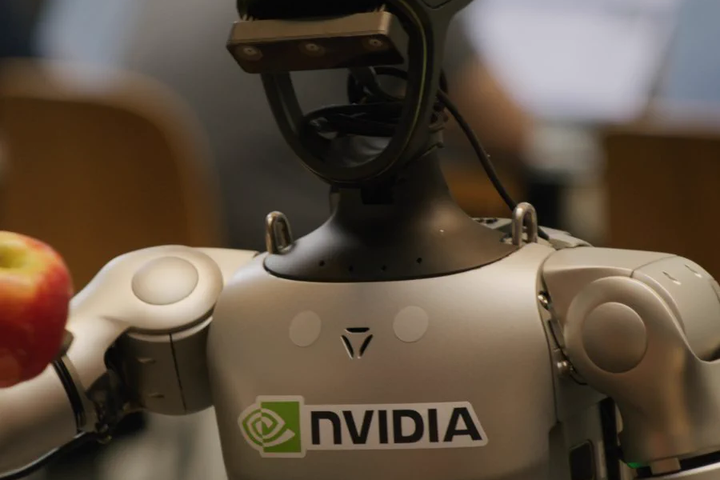
The physical AI investment thesis is expanding beyond humanoid robots. It increasingly includes the materials, components and scientific systems that allow intelligence to operate in the physical world.
What happened
Amulya Vishwanath, who spent seven years leading product marketing for Nvidia's robotics platforms and now runs early-stage investor Techable VC, described robotics as being in its “Lego era.”
Her argument is that many of the basic building blocks—including actuators, robotic hands, software and safety standards—are still being rebuilt. That makes a single general-purpose model unlikely to create an immediate “ChatGPT moment” for robotics.
Her definition of physical AI is also broader than machines that move. It can include a molecule, a material, a medicine or equipment operating on a factory floor. Techable VC is investing across robotics, materials science and life sciences using this wider definition.
Why it matters
The framing changes where investors might look for value. The strongest companies may not be the most visible humanoid-robot brands. They could instead provide simulation, sensing, specialised materials, components or scientific systems used across many physical-AI applications.
It also explains why progress in the physical world is slower than in software. Hardware must work safely and repeatedly under real-world constraints, and failures cannot always be fixed with a simple software update.
The bigger picture
Physical AI is developing as an ecosystem rather than a single product category. Foundation models remain important, but commercial deployment will also depend on reliable hardware, domain expertise, manufacturing capacity and integration into existing workflows.
The opportunity may therefore be distributed across the stack rather than captured by one universal robotics platform.