
Palladyne AI extends Air Force robotics deal
A new $2.9M option takes Palladyne’s Air Force programme above $10.6M and provides another deployment milestone for its collaborative robotics software.
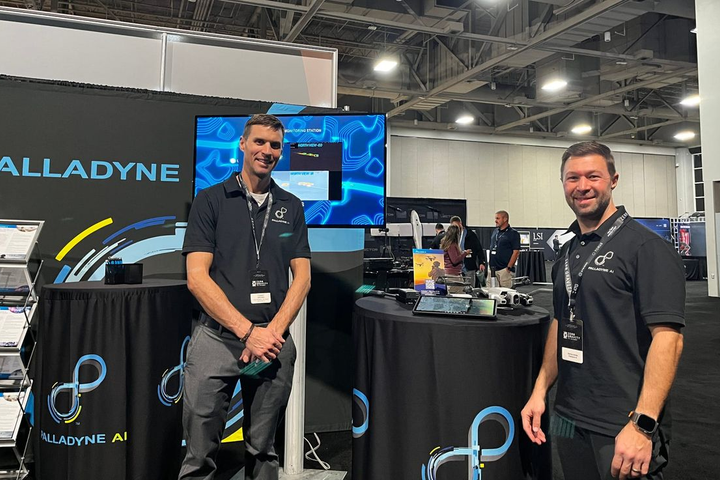
For defence-technology companies, a contract extension can be more meaningful than an initial pilot. It indicates that a customer has reviewed progress and chosen to fund the next stage.
What happened
The US Air Force exercised a $2.9 million option under Palladyne AI’s Strategic Funding Increase agreement. The option raises the total value of the programme to more than $10.6 million.
The work supports Palladyne IQ, an embodied-AI architecture intended to help different robotic systems perceive their environment, adapt to changing conditions and coordinate with one another.
The announcement is a contract milestone, not a venture round. It provides non-dilutive revenue and continued government evaluation of the technology.
Why it matters
Robotics platforms often perform well in controlled demonstrations but struggle when multiple machines, sensors and communication systems must work together in unpredictable environments.
A shared autonomy layer could reduce the need to build separate intelligence software for every robot. Continued Air Force funding gives Palladyne access to demanding use cases and structured technical feedback.
The bigger picture
Government customers are using staged contracts to finance the transition from research into deployable systems. Each option creates a decision point where performance can be assessed before more capital is committed.
The additional funding is relatively small compared with large defence procurements, so it should not be interpreted as evidence of broad deployment. Its value is as another step in customer validation. Palladyne must eventually show that its architecture can work across different hardware and deliver reliable autonomy outside a single programme.