
OpenAI Launches Cheaper GPT-6.1 Sol
OpenAI has launched GPT-6.1 Sol, positioning it as a substantially cheaper model for coding, computer use and professional workflows.
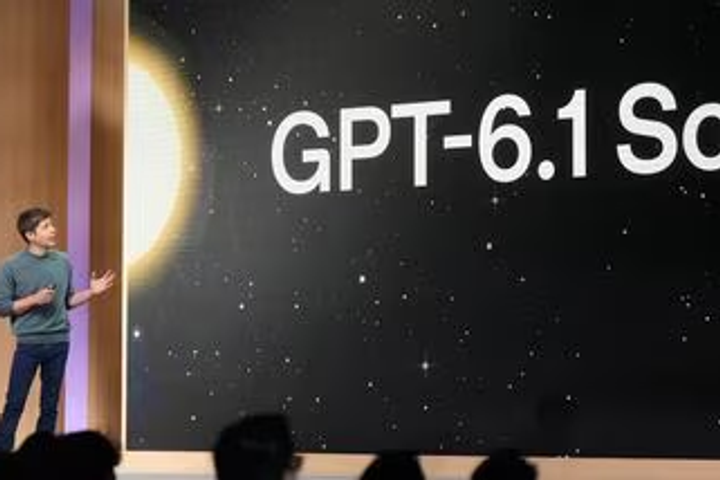
OpenAI has launched GPT-6.1 Sol with a message that increasingly defines frontier-model competition: better economics can matter as much as higher benchmark scores.
What happened
The company introduced GPT-6.1 Sol, positioning it as a lower-cost model that approaches GPT-6 Astra performance across agentic coding, computer use and professional workflows.
OpenAI says standard input and output token pricing is around one-fifth of GPT-6 Astra's.
Performance and reliability comparisons are based on company benchmarks and should be treated as such.
Why it matters
Model costs become especially important once agents perform long-running tasks.
An agent may generate thousands of tokens, make repeated tool calls and operate continuously, so even modest inference savings can materially change the economics of deployment.
That means a cheaper model with near-frontier performance may be more commercially important than a flagship model that is only marginally more capable.
The bigger picture
The AI market is entering a phase where model providers must compete on a broader set of variables: intelligence, latency, reliability and cost.
As capabilities converge, pricing efficiency becomes a strategic weapon.
GPT-6.1 Sol reflects that shift.
The next stage of AI adoption may be driven less by which model tops a benchmark and more by which model delivers enough intelligence at a cost that makes always-on agents financially viable.