
OpenAI’s infrastructure plan reaches $750B
OpenAI’s projected compute spending now resembles a national infrastructure programme, with power, land and project finance becoming core AI advantages.
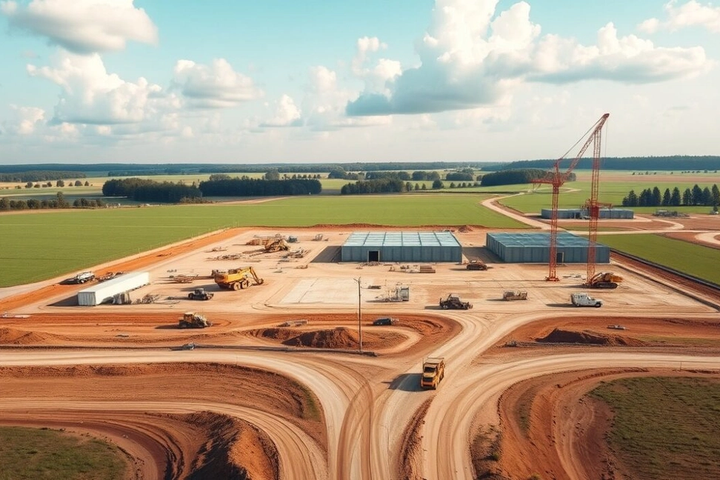
OpenAI’s competitive strategy is no longer only about training better models. It is increasingly about securing enough electricity, land, chips and construction capacity to operate them at enormous scale.
What happened
OpenAI reportedly expects to spend about $750 billion on computing infrastructure through 2030, up from an earlier estimate of roughly $600 billion.
A central project is Project Camellia, a proposed $20 billion data-centre campus in Effingham County, Georgia. OpenAI is taking a more direct role in designing and developing the site, which is expected to receive 3.2 gigawatts of power in phases between 2028 and 2032.
The company has said it will cover the infrastructure and electricity-service costs required for the campus, use a closed-loop cooling design with limited water consumption, and reduce its own demand during periods of stress on the local grid. These commitments respond to growing resistance from communities concerned about electricity prices, water use and the limited local employment created by highly automated facilities.
Why it matters
Frontier AI is becoming an industrial-scale business. Model quality still matters, but the ability to deploy models cheaply and reliably may depend just as much on long-term power contracts, construction expertise and access to capital.
OpenAI is also taking on more execution risk. Data-centre projects can face years of delays from grid connections, permitting, equipment shortages and local opposition. Spending commitments do not automatically translate into usable capacity.
The bigger picture
The AI market is starting to resemble energy and telecommunications infrastructure. The leading labs are signing multiyear cloud contracts, developing dedicated campuses and building teams that can manage physical construction.
This changes where value may accrue. Utilities, cooling providers, grid software, specialised lenders and data-centre developers could become as strategically important as model researchers. It also raises a central question for the AI boom: whether revenue can grow quickly enough to justify infrastructure commitments measured in hundreds of billions of dollars.