
Omen raises $31M for AI cooling infrastructure
Omen is monitoring the coolant inside high-density AI systems, targeting failures that can shut down expensive computing clusters.
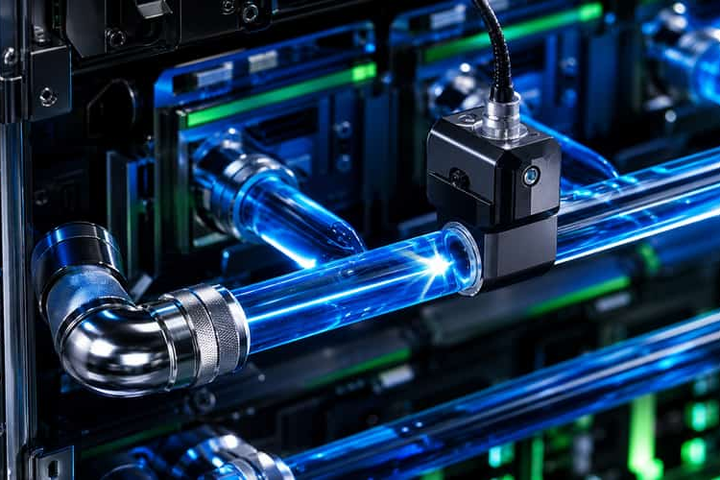
As AI chips consume more power, liquid cooling is becoming standard infrastructure. That creates a new maintenance problem: operators must know what is happening inside the fluid circulating around equipment worth millions of dollars.
What happened
Omen AI raised a $31 million Series A led by Nava Ventures, bringing its total funding to $41.5 million. Participants included CRV, Mann+Hummel, Sheryl Sandberg and investors with experience across industrial equipment and AI infrastructure.
Omen builds spectroscopic sensors that continuously analyse coolant and other industrial fluids. The system looks for contamination, metal particles, bacteria and chemical degradation that can signal corrosion or an approaching equipment failure.
Data centres traditionally send periodic samples to external laboratories and wait for results. Omen’s permanent and portable sensors are designed to provide continuous information instead. The company sells the equipment through subscriptions priced partly around the capacity being monitored.
Why it matters
A coolant problem can force an operator to shut down a cluster, drain the system and flush the fluid. The maintenance cost matters, but the larger loss can be unavailable computing time on scarce AI hardware.
Continuous monitoring gives operators a chance to intervene earlier and maintain equipment based on condition rather than a fixed testing schedule.
The bigger picture
The AI infrastructure boom is creating specialised markets around every data-centre bottleneck: electricity, transformers, cooling, networking and maintenance intelligence.
Omen’s opportunity depends on whether its sensors produce actionable information and remain accurate across different coolant chemistries and system designs. Hardware deployment can also be slower than software adoption. But if liquid cooling becomes universal for advanced computing, monitoring the fluid could become a standard layer of data-centre operations.