
NVision Demonstrates Molecular Quantum Qubit
NVision reports peer-reviewed research on an optically addressable molecular qubit and a photonics integration partnership.
Building a useful quantum computer requires more than creating a qubit. Researchers must control many qubits, connect them and manufacture components repeatably. NVision is exploring a molecule-based route to those goals.
What happened
German quantum technology company NVision announced research published in Nature demonstrating an individually addressable molecular spin qubit with an optical interface. The team designed and evaluated organic molecules whose quantum states can be manipulated and read through interactions involving light.
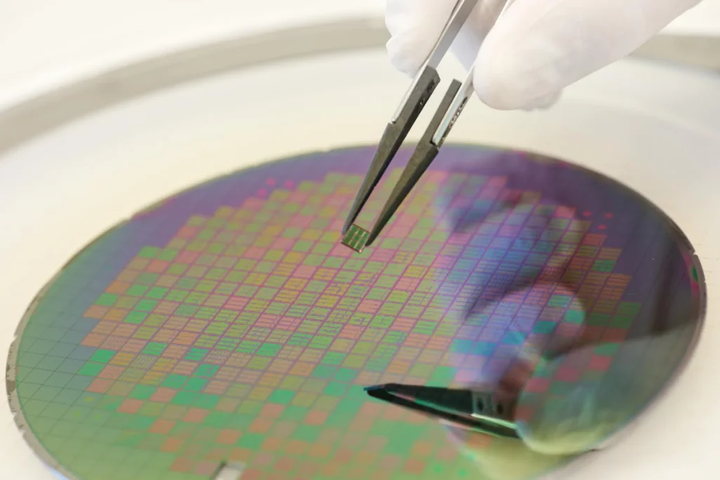
NVision also announced a collaboration with HyperLight to explore integrating molecular qubits onto photonic chips. Its longer-term objective is to deposit molecular quantum components using manufacturing techniques compatible with existing chip processes.
The research demonstrates a specific physical building block, not a large-scale quantum processor. Initial integrated prototypes remain a development target, and questions around coherence, scalability and error correction are unresolved.
Why it matters
Many quantum architectures rely on sophisticated fabrication or cryogenic control infrastructure. Molecular systems could potentially offer different manufacturing and optical-interconnection options.
Their ultimate usefulness depends on maintaining stable quantum information, controlling errors and linking devices at scale. A device that works in a laboratory experiment may face substantial challenges when thousands or millions of elements must perform reliably.
The bigger picture
Quantum computing continues to explore multiple hardware architectures rather than converge on a single winner. NVision's work is scientifically important as an alternative route, but its commercial relevance depends on translating component-level research into reproducible systems.