
NeuroXess Raises RMB700M for Brain Interfaces
Chinese brain-computer-interface startup NeuroXess raises RMB700 million in Series B funding to advance implantable neural technology and clinical development.
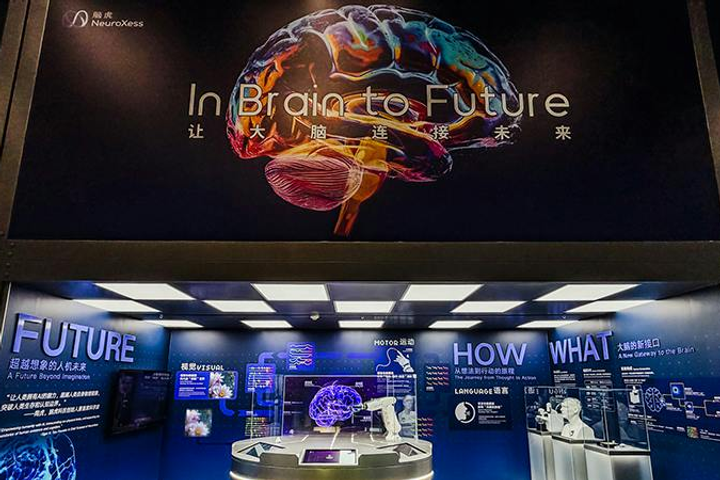
Brain-computer interfaces are beginning to move beyond laboratory prototypes into clinical development and manufacturing planning. NeuroXess has raised substantial financing to accelerate that transition.
What happened
Shanghai-based NeuroXess announced a RMB700 million Series B, equivalent to roughly $98 million. The financing was co-led by SDIC Juli, Shenzhen Capital Group and Qinzhi Capital, with additional participation from institutional investors.
The company develops implantable brain-computer-interface technology intended to decode neural signals and turn them into commands for external devices. Its platform combines flexible electrodes, implantable electronics, wireless transmission and signal-processing algorithms. The intended medical applications include restoring communication or control capabilities for people with serious neurological impairments.
NeuroXess reports experience across 65 clinical cases and says its programme entered a regulatory clinical-trial pathway in July 2026. The financing will support multicentre studies, regulatory work and the development of manufacturing capacity. Those reported clinical milestones do not establish regulatory approval or independently validated long-term patient outcomes.
Why it matters
Implantable neural interfaces face multiple interlocking challenges: capturing useful brain signals, maintaining reliable long-term contact with tissue, decoding intent accurately and limiting surgical and device-related risks.
A promising demonstration is only the beginning. A medical-device business must also show repeatable performance, biocompatibility, manufacturing quality and a viable clinical workflow.
The size of this round suggests investors see significant potential in neural-interface technology, but commercialisation may take years and require substantial additional evidence.
The bigger picture
Brain-computer interfaces sit at the intersection of medical devices, neuroscience and AI. Investment is increasing across different approaches, from fully implanted systems to less-invasive alternatives. Clinical safety and patient benefit, rather than the sophistication of a demonstration, will determine which technologies achieve widespread use.