
NEURA Launches Multimodal Physical AI Model
German robotics company NEURA has launched Neuron AI, a multimodal foundation model intended to let robots combine vision, touch, force, sound, movement and language when acting in the physical world.
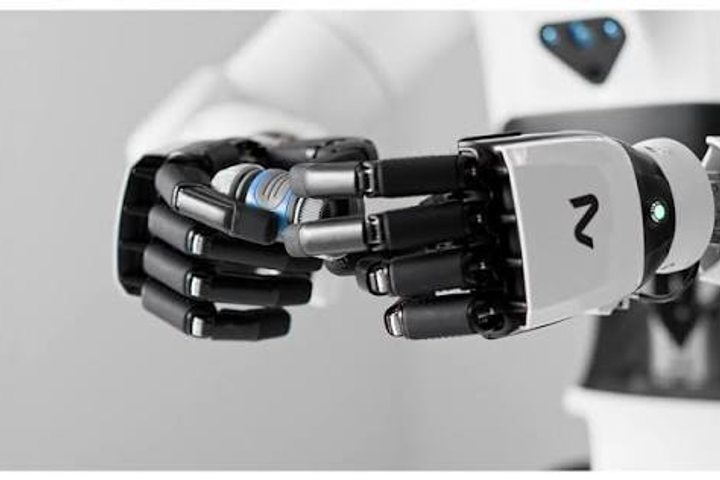
German robotics company NEURA has launched Neuron AI, a multimodal foundation model intended to let robots combine vision, touch, force, sound, movement and language when acting in the physical world.
What happened
Neuron AI is designed to process data from 3D vision systems, force and touch sensors, audio, robot motion and language instructions while retaining memory of previous observations and actions. NEURA says the model is trained using a combination of real robot data, simulation and human demonstrations. The company plans to demonstrate its 4NE1 humanoid performing a roughly 11-minute laundry sequence at Nvidia GTC Berlin. The capabilities and benchmark results are company-reported, and the launch does not independently establish robust general-purpose autonomy across many tasks or environments.
Why it matters
Physical tasks depend on more than visual perception. A robot needs to know whether it has actually grasped an object, how much force is being applied and whether an action produced the intended result. Combining multiple sensory signals into a shared model could improve control and adaptation.
The bigger picture
Physical AI is moving toward models that learn from interaction rather than only internet-scale text and images. NEURA is attempting to build the intelligence layer alongside its own hardware. The key test is whether the model generalises beyond rehearsed demonstrations into messy, variable real-world settings.