
NASA’s First Commercial Telescope-Reboost Mission Hits Trouble
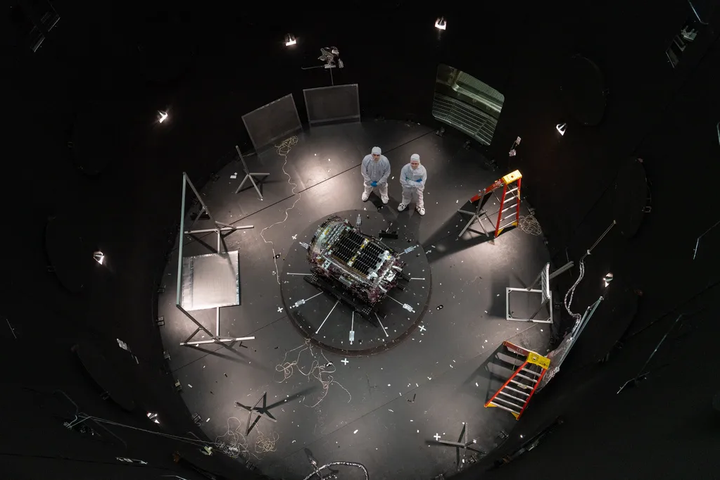
Katalyst Space’s LINK spacecraft has developed attitude-control problems during a mission designed to capture and raise the orbit of NASA’s Swift Observatory.
A mission meant to demonstrate commercial satellite servicing is facing an early reliability test in orbit.
What happened
Katalyst Space’s LINK spacecraft developed attitude-control problems, causing it to spin and communicate only intermittently.
NASA says two of LINK’s three reaction wheels are currently inoperable, while its cold-gas thruster system has lost some functionality. The spacecraft was launched to capture the Swift Observatory and raise its orbit under a $30 million NASA contract.
The mission remains active, and teams are still working to stabilise the spacecraft.
Why it matters
LINK is supposed to show that a commercial vehicle can rendezvous with, capture and reposition an existing scientific spacecraft. If that capability becomes repeatable, satellite operators could extend missions instead of replacing valuable hardware.
The current problem shows why the market is difficult. A servicing spacecraft must navigate precisely, remain controllable and interact safely with another object in orbit. A small failure in one subsystem can threaten the entire mission.
The bigger picture
On-orbit servicing is often presented as part of a future circular space economy built around repair, refuelling and reuse. LINK is a reminder that the industry must first prove basic operational reliability.
This is a setback, not yet a mission failure. How Katalyst and NASA recover will matter almost as much as the original technical fault.