
Moa raises £22.2M for resistance-breaking herbicides
Moa Technology has raised £22.2M to move novel herbicide programmes from discovery into international field testing and commercial development.
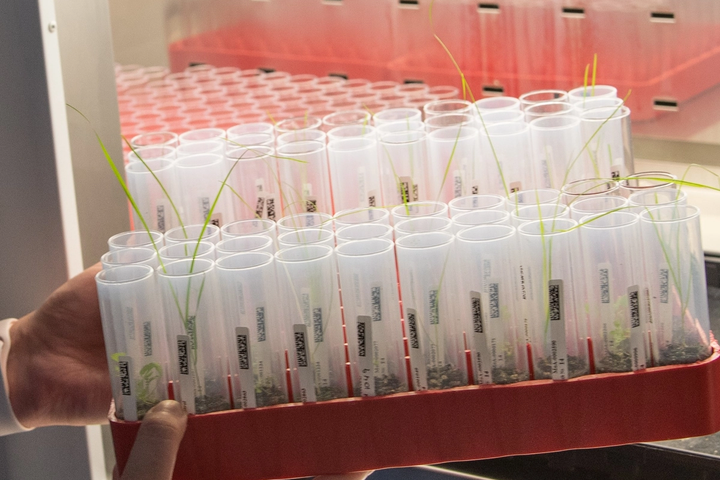
Herbicide resistance is reducing the effectiveness of some of agriculture’s most important tools, while the pipeline of genuinely new modes of action remains limited.
What happened
Oxford University spinout Moa Technology raised a £22.2M Series C, co-led by Oxford Science Enterprises and Supernova Invest.
Moa uses proprietary screening platforms to identify herbicides that act on biological targets different from those used by existing products.
The company says it has screened more than 900,000 compounds, identified over 80 promising target areas and moved several programmes into international field trials. Those development figures are company-reported.
The new capital will support later-stage validation and the work required to turn scientific candidates into products suitable for agricultural use.
Why it matters
Weeds evolve resistance when farmers repeatedly use herbicides built around a limited number of biological mechanisms. New modes of action could protect crop yields and extend the usefulness of integrated weed-management systems.
However, discovery is only the beginning. A product must work across field conditions, meet safety and environmental standards and be manufactured at an acceptable cost.
The bigger picture
Agricultural biotechnology is attracting capital where it can address structural productivity problems rather than simply digitise farm management.
Moa’s Series C marks the difficult transition from platform promise to product development. Success would create value for both crop-protection companies and farmers, but the regulatory and commercial timeline remains significantly longer than in software.