
Microsoft Unveils Maia 300 AI Chip
Microsoft plans multi-gigawatt deployments of its custom Maia AI chips in 2027 as it seeks more efficient inference and less reliance on external accelerators.
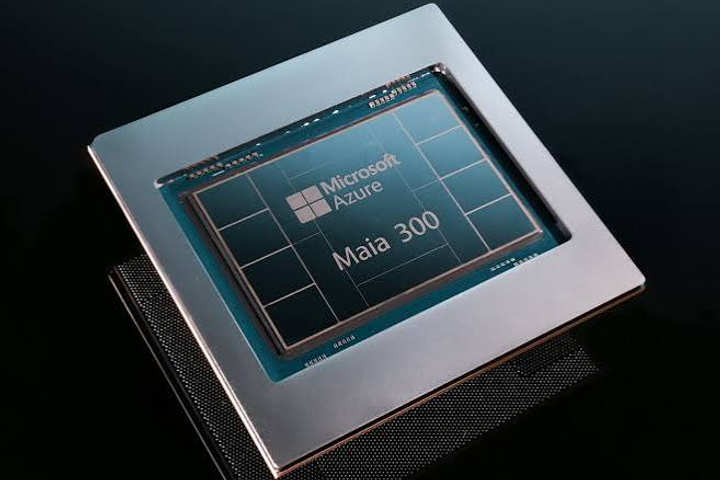
Microsoft is preparing to run a much larger share of its AI workloads on processors it designs itself, shifting part of the competition in AI from model capability to the economics of the infrastructure beneath it.
What happened
Microsoft unveiled Maia 300, the third generation of its custom artificial-intelligence accelerator, and outlined plans for large-scale deployment beginning in 2027. Its previous-generation Maia 200 is already serving production workloads, including Microsoft Copilot, while the company plans to make the Maia family a primary inference system for its services.
The new design combines advanced chiplets for computing with separate components for data movement and memory. Microsoft says its system can deliver around 40% more useful AI computing per megawatt than leading GPU-based systems. That is a company performance claim, not an independent comparison. Microsoft has discussed deploying potentially more than a million Maia 300 chips as its infrastructure expands.
Why it matters
AI inference—the process of running a trained model to answer queries or carry out tasks—is becoming an enormous recurring cost for cloud providers. Even modest gains in tokens processed per watt can materially affect data-centre power demand and the cost of serving millions of users. Designing both the chips and the software stack gives Microsoft more control over those trade-offs.
The bigger picture
Hyperscalers increasingly want alternatives to buying all their AI computing capacity from Nvidia and other merchant chip vendors. Custom silicon does not eliminate the need for third-party GPUs, but it gives Microsoft a way to optimise specific workloads, negotiate from a stronger position and reduce its dependence on one hardware supply chain. The critical test will be production-scale reliability and real-world economics after deployment.