
Meticulous raises $15M to catch mistakes in AI-generated code
Meticulous raised $15M to automate software testing as AI coding tools increase the volume and speed of code changes.
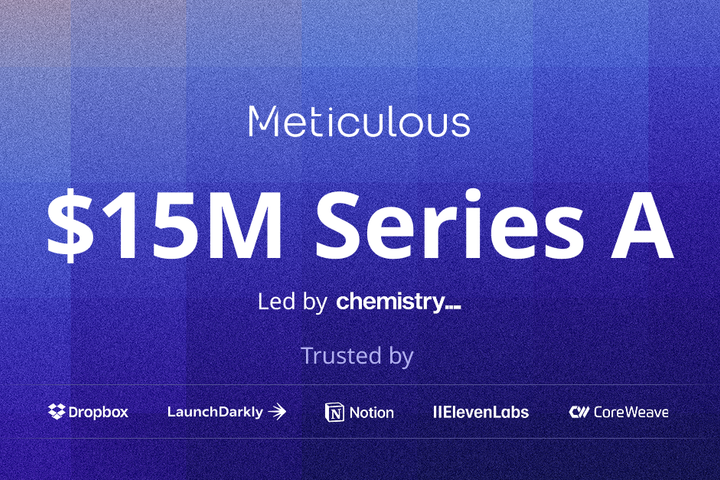
AI coding tools can generate software faster than human teams can review it. Meticulous has raised $15M to address the resulting quality-control problem by automating how companies test changes before they reach users.
What happened
The company secured $15M from Chemistry, Menlo Ventures and angel investors connected to Poolside, Dropbox, Vercel and OpenAI. The accessible announcement confirms the amount and investor group, although the round stage has not been reliably verified and should not be presented as a confirmed Series A.
Meticulous was founded by former Palantir and Dropbox employees. Its software is used by companies including ElevenLabs, Notion and Wiz to detect whether new code has broken existing product behaviour.
Rather than relying only on manually written test scripts, the platform observes how applications are used and reproduces realistic user flows. It can then compare the behaviour of a new software version against earlier versions and flag unexpected changes.
Why it matters
Generative coding tools are increasing the number of code changes companies can produce. That creates a new bottleneck: reviewing, validating and safely deploying those changes. A team that can generate ten times more code does not gain much if testing capacity remains unchanged.
Automated testing is therefore becoming part of the control layer around AI-assisted development, alongside code review, permissions, sandboxing and deployment monitoring.
The bigger picture
The rapid growth of coding agents could benefit companies that manage the risks created by those agents as much as the companies building the agents themselves. Meticulous is positioned in that second category. Its challenge is proving that automated tests can catch subtle failures without creating excessive false alarms or missing important edge cases. If it succeeds, software testing could shift from a manual checkpoint at the end of development into a continuous system that runs alongside AI-generated changes.