
MDA Space joins Europe’s Argonaut lunar mission
MDA Space UK has begun preliminary work on lidar landing sensors for Europe’s Argonaut lunar cargo spacecraft.
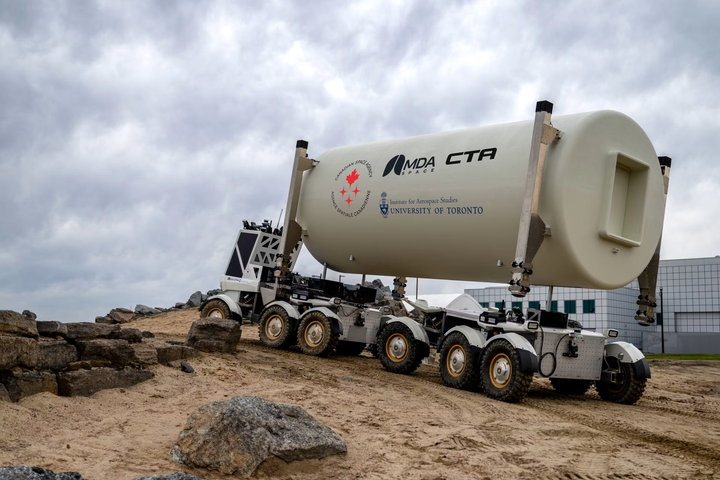
Europe’s plan for independent lunar logistics depends on spacecraft that can identify safe landing areas without relying on constant human control.
What happened
MDA Space UK received a preliminary authorisation from OHB to begin work on landing sensors for the European Space Agency’s Argonaut lunar spacecraft.
Subject to a definitive contract, MDA is expected to provide two LEIA lidar units.
The sensors create real-time three-dimensional terrain maps so the spacecraft can identify hazards and select a landing area autonomously, including under difficult lighting conditions.
The current authorisation allows early work to begin, but it is not yet the final full contract.
Why it matters
Lunar landings require rapid decisions during the final descent. Rocks, slopes, shadows and uncertain terrain can make a pre-selected target unsafe.
Lidar gives the vehicle a local understanding of the surface and supports autonomous hazard avoidance. That capability is essential for repeatable cargo delivery, where mission planners cannot treat every landing as a one-off demonstration.
The bigger picture
Argonaut is intended to give Europe an independent system for delivering equipment and scientific payloads to the Moon.
The programme also shows how lunar infrastructure creates opportunities for specialist suppliers in sensing, navigation, autonomy and communications.
The commercial value will depend on whether Europe moves from individual missions toward a recurring logistics programme. MDA’s preliminary role places it inside that developing supply chain without yet guaranteeing the full contract value.