
MCP Goes Stateless in Its Biggest Update Yet
The Model Context Protocol now has a stateless core plus standard support for interactive apps, long-running tasks and modern identity systems.
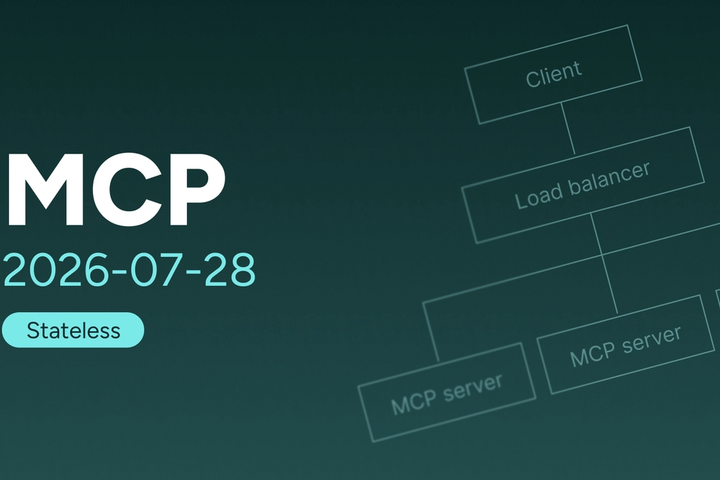
The Model Context Protocol is being redesigned for infrastructure that has to work beyond a developer’s laptop.
What happened
The 2026-07-28 MCP specification moved the protocol to a stateless core. Individual requests no longer depend on a protocol-managed session that must remain attached to one server.
The update also standardises extensions for interactive applications and long-running tasks, while improving compatibility with OAuth and OpenID Connect identity systems.
Why it matters
Stateless services are easier to distribute across ordinary cloud servers, load balancers and edge infrastructure. If one machine disappears, another can handle the next request without reconstructing a special protocol session.
Standard task and application extensions also reduce the need for every agent platform to invent its own way of displaying interfaces or tracking work that takes longer than one request.
The bigger picture
MCP began as a simple connector between AI systems and external tools. It is increasingly becoming shared infrastructure for production agents. The hard part is no longer only connecting a model to data; it is making those connections scalable, observable and secure across many users and services.