
LG and TDK Want to Build the Eyes and Skin of Robots
LG Innotek and TDK are combining vision, motion, sound and pressure sensors into integrated modules for humanoids and other robots.
A robot needs more than a clever model and a camera. It must also understand movement, contact, force and sound in the physical world.
LG Innotek and TDK are partnering to package those senses together.
What happened
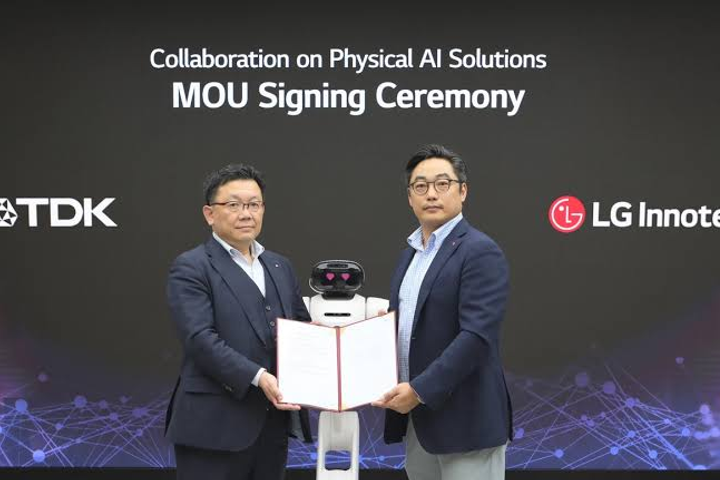
The companies signed a strategic partnership to develop integrated vision and tactile-sensing modules for humanoids and other robots.
Planned products will combine cameras with sensors that measure movement, position, sound and pressure. The first modules are targeted for 2027.
Why it matters
Robot manufacturers often integrate components from many suppliers. Each sensor needs power, space, software and calibration, and the full system must work reliably despite vibration, heat and constant movement.
Combining several functions into standard modules could reduce that integration burden. A robot maker could buy a more complete perception system rather than engineer every connection from scratch.
Vision helps a robot see objects and distance. Motion and position sensors help it understand how its own body is moving. Pressure and tactile sensors tell it when contact has occurred and how much force is being applied.
The bigger picture
As foundation models become more capable, hardware integration is emerging as a critical robotics bottleneck. Reliable sensing may determine whether a robot can move from a controlled demonstration into a factory, warehouse or home.
Established component suppliers have an advantage because they already know how to manufacture sensors at scale and maintain quality.
My take
The partnership is confirmed, but no orders, investment value or tested performance were disclosed. The products are also at least a year away. Still, the direction matters: robotics is beginning to develop standardised component layers, much like smartphones did before hardware became cheaper and easier to assemble.