
Japan puts $2.33B behind physical AI
Government-backed Noetra is assembling Japanese industrial groups, sovereign compute and billions in funding around a national physical-AI platform.
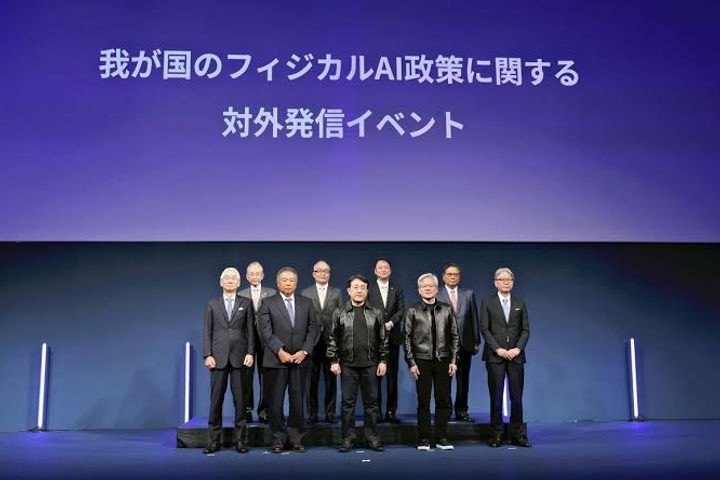
Japan is making an unusually large, coordinated bet that its strength in industrial robotics can be converted into leadership in physical AI.
What happened
Government-backed Noetra is set to receive more than ¥380 billion, approximately $2.33 billion, during its first year. The project brings together 44 companies, including SoftBank, Honda and Sony, around the development of a foundation model for robots and other systems that interact with the physical world.
Noetra plans to acquire 27,500 Nvidia Rubin chips, begin constructing its AI infrastructure in April 2027 and start operations in June 2028. The wider national ambition is to deploy 10 million AI-enabled robots by 2040.
Why it matters
Japan remains one of the world’s strongest markets for industrial robots, components and advanced manufacturing, but it has lagged the US and China in frontier AI models and hyperscale compute. Noetra is designed to close that gap by combining domestic robotics expertise with a shared model and sovereign infrastructure.
The size of the first-year commitment also changes the competitive frame. This is closer to an industrial-policy programme than a conventional startup financing round.
The bigger picture
Physical AI is becoming a national strategic category. The countries that control the models, compute and training data behind robots may capture more value than those that only manufacture hardware. Japan is betting that coordinated capital and industrial participation can prevent its robotics advantage from being displaced by foreign AI platforms.