
Immitra raises €2.58M for in-vivo gene editing
Immitra Bio is developing gene-editing treatments delivered directly inside the body, aiming to avoid patient-specific cell processing and conditioning.
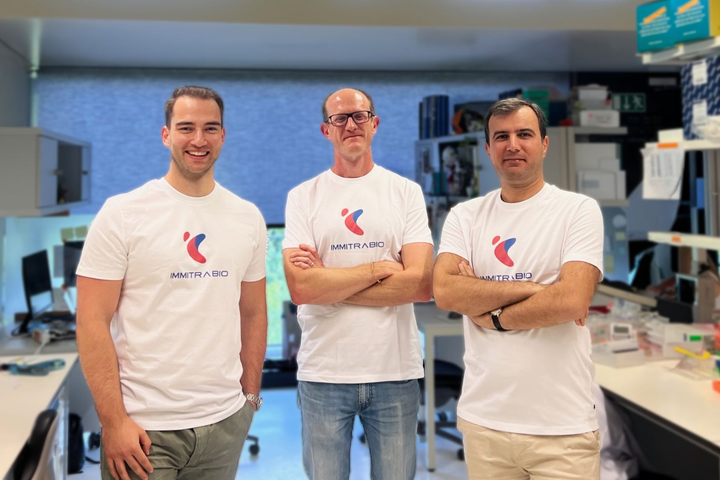
Gene-editing therapies can be powerful but operationally difficult. Many existing approaches require cells to be removed from a patient, edited in a specialist facility and returned after intensive preparation.
What happened
Swiss biotech Immitra Bio completed an upsized CHF 2.4 million, approximately €2.58 million, pre-seed financing. CHF 2.25 million came from venture and private investors, with an additional CHF 150,000 in non-dilutive funding.
Backbone Ventures led the round and OCCIDENT co-led it, alongside Another VC, Kickfund, Venture Kick, Zürcher Kantonalbank, FONGIT, the ETH Foundation and private investors.
Immitra is developing in-vivo gene-editing therapies designed to work directly inside the patient. Its lead candidate, IB-003, targets an inherited form of anaemia. The proceeds will support preclinical proof-of-concept work, platform validation and early pipeline development.
The company describes its technology as mutation-agnostic, meaning it aims to address a disease mechanism without building a separate treatment for every individual mutation. That promise remains preclinical and has not yet been validated in human trials.
Why it matters
Avoiding ex-vivo cell processing could simplify manufacturing, lower costs and remove burdens such as conditioning chemotherapy and stem-cell transplantation.
The difficult part is delivery. Editing machinery must reach the correct cells in sufficient quantities while avoiding unintended changes and immune reactions. For many genetic medicines, delivery is the central technical bottleneck.
The bigger picture
The gene-editing market is shifting from proof that DNA can be changed toward proof that therapies can be manufactured, delivered and scaled economically.
Immitra is an early-stage bet on that transition. The round is modest compared with later-stage biotech financings, but it funds the experiments that will determine whether the platform has a credible path beyond the laboratory.