
Hyperion raises €6.4M to turn infrastructure into a manufactured product
The Finnish startup combines structural software, robotic additive manufacturing and local microfactories to produce concrete infrastructure components.
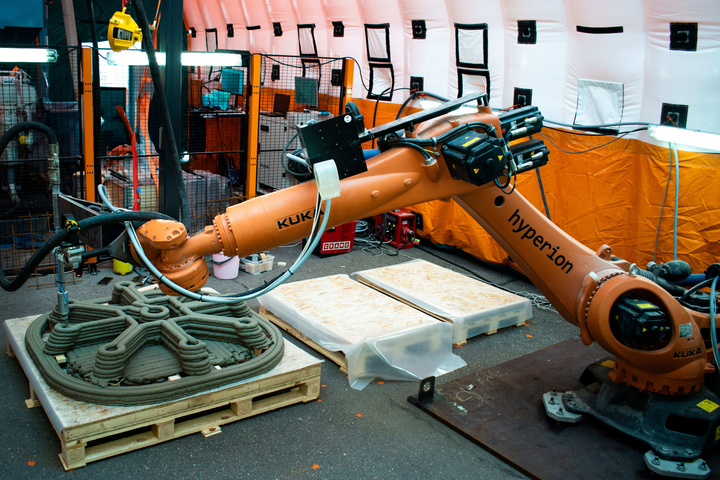
Hyperion Robotics has raised €6.4M to scale a construction model that treats infrastructure components as manufactured products rather than one-off work assembled entirely on-site.
What happened
The Finnish physical-AI startup raised €6.4M in growth funding, co-led by Course Corrected and the European Innovation Council Fund.
Hyperion operates robotic microfactories that use additive manufacturing to produce concrete foundations and infrastructure components close to construction sites. Its Forge software connects structural design, engineering requirements, regulatory compliance, robotics and factory operations.
The company plans to open its first UK facility near Scunthorpe and target projects across energy, utilities, water, data centres and carbon capture. Its model combines software and robotics with a managed production service rather than selling standalone machines to contractors.
Why it matters
Infrastructure construction suffers from labour shortages, slow project delivery, high material use and fragmented workflows. Producing standardised components in local automated facilities could reduce transport, waste and dependence on scarce specialist labour.
The integrated model may also make adoption easier because customers can purchase completed components instead of learning to operate new robots themselves.
The bigger picture
Hyperion must validate its claims across larger and more varied deployments. Construction standards differ between markets, and customers will demand evidence on structural performance, cost, speed and carbon savings. The company is effectively combining a software platform, a robotics business and a distributed manufacturing network—creating more potential value, but also more operational complexity than a conventional construction-software startup.