
Holyvolt Raises $45M for AI Battery Discovery
Holyvolt has raised $45 million to combine AI models with automated laboratory experiments for faster battery-material discovery.
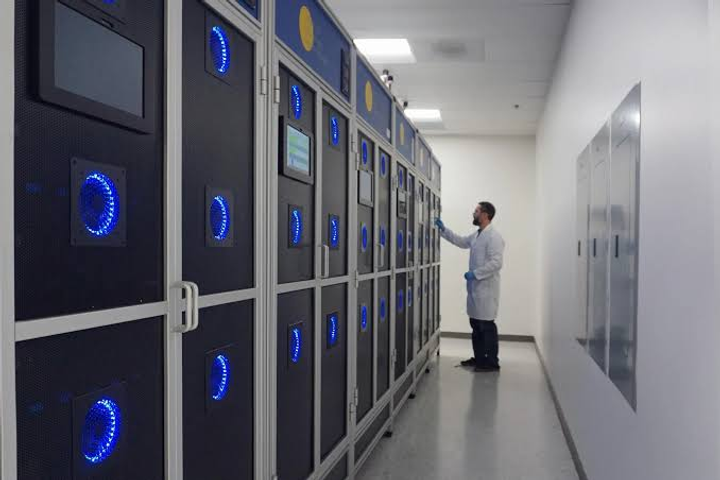
Holyvolt has raised $45 million to combine AI models with automated laboratory experiments for faster battery-material discovery.
What happened
The Stockholm-based company raised equity from investors including Zone II and CC.VC. Holyvolt merged earlier in 2026 with battery R&D specialist Wildcat Discovery Technologies, gaining access to a large experimental dataset built from years of high-throughput materials testing. The company is using that data to train AI models that predict promising battery chemistries and feed those predictions back into automated laboratory experiments. Its first major programme focuses on disordered-rocksalt, or DRX, cathodes designed without nickel or cobalt. Holyvolt is targeting initial commercialisation in 2027, beginning with drones before potentially expanding into vehicles and data-centre applications. Performance and cost claims remain company projections until validated in commercial products.
Why it matters
Battery development is often slow because each new material requires repeated physical testing. Combining a large proprietary experimental dataset with AI and automated labs can create a closed loop of prediction, experiment and model improvement. Holyvolt's existing lab data may therefore be as important as its models.
The bigger picture
The company is also targeting supply-chain concentration by developing chemistries that reduce dependence on nickel and cobalt. Its challenge is moving from promising laboratory results to manufacturable cells with competitive cost, cycle life and safety.