
Hemispheric raises $52M to turn brain signals into clinical data
Hemispheric has emerged from stealth with $52M to build a clinical AI platform around EEG and multimodal brain data, but regulatory clearance and real-world validation remain the key tests.
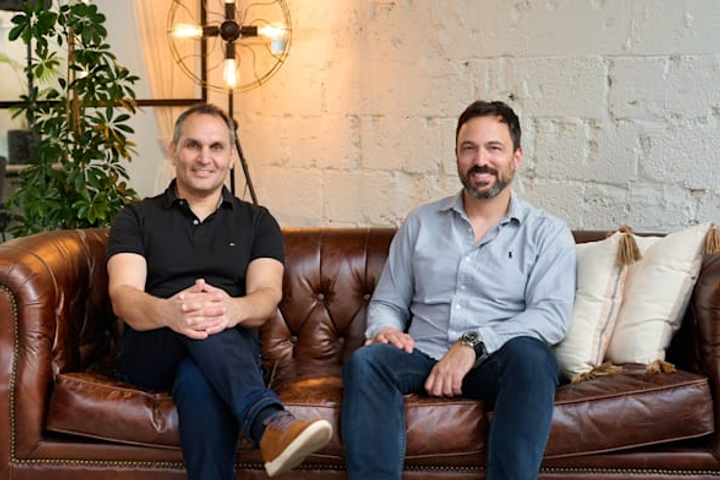
Hemispheric is trying to turn brain activity into a more measurable clinical input. The company has emerged from stealth with $52M in early-stage funding and a six-billion-parameter NeuroAI model called Descartes, built to analyse EEG, behavioural and other multimodal data.
What happened
The company was founded by neuroscientist Hagai Lalazar and Gidi Littwin, a cofounder of facial-recognition company RealFace. Its investor group includes Hanaco Ventures, OneMind/Awareness Capital, Protocol Labs, L Catterton and Arkin Capital.
Hemispheric says Descartes was trained on roughly 250,000 hours of EEG and related data from more than 100,000 participants. Its proposed clinical workflow uses a dry EEG headset and a session of around 15 minutes to generate quantitative outputs that could help clinicians assess or monitor neurological and psychiatric conditions.
The company is pursuing regulatory approval. The product should therefore be treated as an emerging clinical tool, not a cleared diagnostic system. The key unanswered questions are how consistently the model performs across patient populations, whether its outputs change treatment decisions, and how clinicians interpret false positives or ambiguous results.
Why it matters
Neurology and psychiatry still depend heavily on symptoms, interviews, specialist judgement and tests that are not always scalable. A reliable data layer built from brain signals could make monitoring more objective, support earlier intervention and help clinicians track whether treatment is working.
But healthcare AI does not become valuable simply because a model detects patterns. It must show that those patterns are clinically meaningful, reproducible and useful in real care settings.
The bigger picture
Hemispheric sits at the intersection of medical devices, foundation models and clinical diagnostics. That makes the opportunity large, but also capital-intensive and regulation-heavy. If the company can validate Descartes and integrate it into clinical workflows, it could help create a new category of NeuroAI infrastructure. If it cannot, the risk is that the technology remains an impressive research system without enough evidence for routine medical use.