
Grok 4.5 enters the model race on speed and token economics
SpaceXAI’s Grok 4.5 release targets coding, research and knowledge work while positioning token efficiency and lower cost as key competitive advantages.
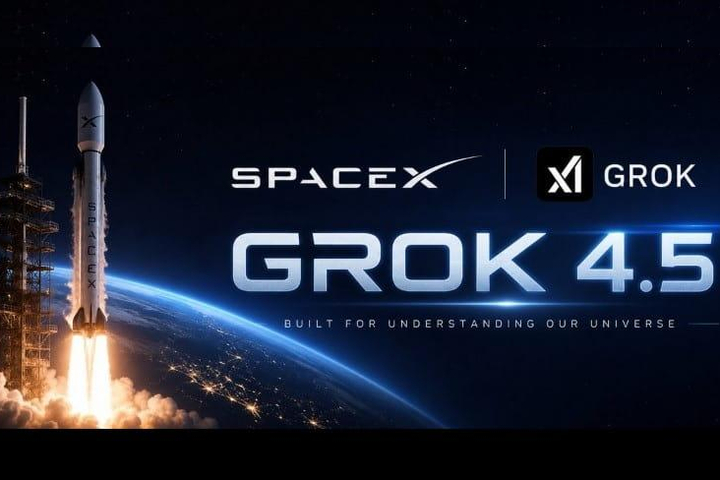
The frontier-model race is increasingly about economics as well as capability.
What happened
SpaceXAI released Grok 4.5, its latest general-purpose AI model.
The company positions the model for tasks including coding, application building, research, writing and routine knowledge work.
It also claims improved token efficiency and lower pricing relative to some leading models. Those performance and efficiency claims are company-reported and still need broader real-world validation.
Why it matters
Model buyers increasingly care about more than benchmark scores.
For large-scale deployment, speed and token cost can materially affect whether an AI workflow is economical enough to run continuously.
That means a model that is slightly below the absolute frontier on some tasks can still be highly competitive if it delivers strong capability at lower operating cost.
The bigger picture
AI competition is shifting from raw intelligence toward price-performance.
As more companies deploy agents and persistent workflows, inference economics will become a major source of differentiation. Grok 4.5 is explicitly competing on that dimension.