
Foundry Robotics Raises $100M for AI Factories
Foundry Robotics raises a $100 million Series A to build and operate AI-enabled manufacturing capacity for industrial and defence customers.
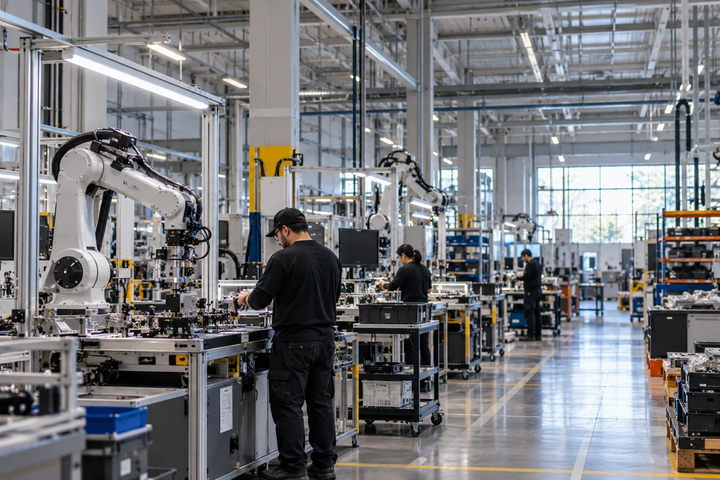
Many robotics companies sell machines or software that other manufacturers must integrate. Foundry Robotics is pursuing a more direct model: operate the factory and sell the finished work.
What happened
California-based Foundry Robotics announced a $100 million Series A led by Marlinspike Partners, with investors including Khosla Ventures, Red Glass Ventures, SE Ventures, Wing VC, Axiom Ventures, Hanabi and Zero Shot Fund.
Founded in 2026, Foundry is building AI-enabled assembly operations for industrial and defence customers. Its initial 130,000-square-foot Emeryville facility combines robotic assembly cells with engineers and manufacturing specialists to produce complex electromechanical components.
The funding is intended to expand its physical operations and develop the robotics and software underlying those facilities. Its approach makes Foundry both a technology developer and a manufacturing-services operator.
Why it matters
Manufacturing automation often fails to scale when developers must adapt a generic robot system to unfamiliar products and factory processes. Operating its own facilities could give Foundry control over machinery, workflow design, data collection and quality standards.
The trade-off is capital intensity and operational exposure. Foundry must keep equipment utilised, deliver components on schedule and meet customer quality requirements. A capable robot alone does not create a profitable factory.
The bigger picture
Physical AI is broadening from selling robot intelligence to redesigning how manufacturing capacity is delivered. Foundry's model is a test of whether combining automation software with direct operational control can build a defensible industrial business.