
Encord tests brain waves for robot training
Encord is testing whether brain-wave signals can add intent, surprise and error awareness to the datasets used to train physical-AI systems.
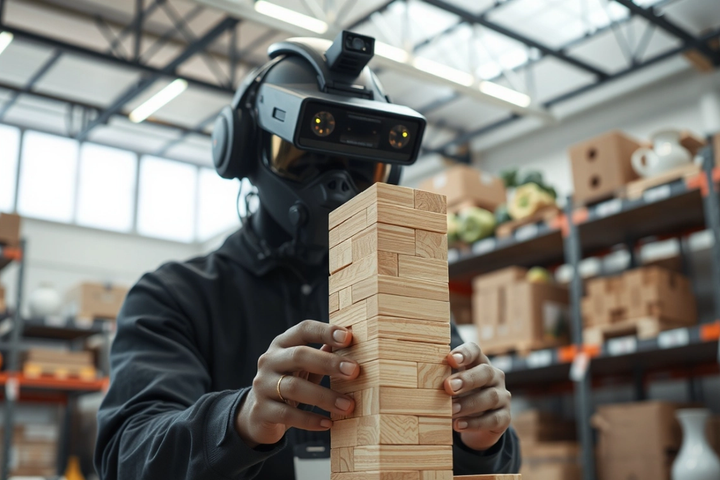
Robotics models can watch a person move an object, but video alone does not always reveal whether the movement was intentional, surprising or mistaken. Encord is testing whether brain activity can supply that missing layer of context.
What happened
Encord is working with neuroscience startup Zander Labs on an experimental dataset that pairs video of people performing physical tasks with measurements of their brain activity.
The goal is to capture signals associated with states such as intent, surprise and recognising an error. Encord can then test whether adding those signals improves the models used to train robots and other physical-AI systems.
The project sits alongside Encord’s broader robotics-data work, which includes collecting human demonstrations through wearable cameras, muscle sensors and remotely operated robotic arms. These methods generate examples of how people handle objects, respond to changing conditions and correct mistakes.
The company is still evaluating whether brain-wave-labelled data creates enough improvement to justify collecting it at larger scale. It has not yet established that the approach will become a commercial product or a standard part of robotics training.
Why it matters
Physical AI has a data problem. Language models could learn from enormous stores of online text, while useful manipulation data often has to be deliberately created in real environments.
A video may show what happened without clearly showing why. A person may pause because an object feels unstable, correct a grip before dropping it or recognise a mistake before the failure becomes visible. Brain and muscle signals could help label those hidden moments more precisely.
The bigger picture
The robotics data stack is expanding beyond cameras and teleoperation. Startups are experimenting with richer human signals to make each training example more informative.
The economic question is whether the extra information produces a meaningful improvement in robot performance. Brain-wave collection is more complex, expensive and intrusive than ordinary video. The approach will matter only if better labels reduce the much larger cost of training and deploying robots in unpredictable physical environments.